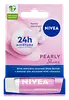
This lip moisturizer is formulated around Ricinus Communis Seed Oil and Butyrospermum Parkii Butter to hydrate lips.
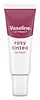
This lip moisturizer is formulated around Petrolatum to hydrate lips.


What's inside
What's inside
 Key Ingredients
No key ingredients
Benefits
Concerns
Ingredients Side-by-side
Helianthus Annuus Hybrid Oil
Emollient


Ricinus Communis Seed Oil
Masking

Cera Alba
Emollient


Helianthus Annuus Seed Cera
Emollient
Butyrospermum Parkii Butter
Skin Conditioning
Mica
Cosmetic ColorantHydrogenated Castor Oil
Emollient
Tocopherol
Antioxidant





Ascorbyl Palmitate
Antioxidant

Helianthus Annuus Seed Oil
Emollient
Lecithin
Emollient
Neohesperidin Dihydrochalcone
Masking

Hydrolyzed Pearl
Skin ConditioningLinalool
Perfuming

Aroma
CI 77891
Cosmetic ColorantCI 77492
Cosmetic ColorantCI 15850
Cosmetic ColorantHelianthus Annuus Hybrid Oil, Ricinus Communis Seed Oil, Cera Alba, Helianthus Annuus Seed Cera, Butyrospermum Parkii Butter, Mica, Hydrogenated Castor Oil, Tocopherol, Ascorbyl Palmitate, Helianthus Annuus Seed Oil, Lecithin, Neohesperidin Dihydrochalcone, Hydrolyzed Pearl, Linalool, Aroma, CI 77891, CI 77492, CI 15850
Reviews
Ingredients Explained
These ingredients are found in both products.
Ingredients higher up in an ingredient list are typically present in a larger amount.
Ci 77891 is a white pigment from Titanium dioxide. It is naturally found in minerals such as rutile and ilmenite.
It's main function is to add a white color to cosmetics. It can also be mixed with other colors to create different shades.
Ci 77891 is commonly found in sunscreens due to its ability to block UV rays.
Learn more about CI 77891Linalool is a small, naturally occurring scent molecule found in plants like lavender, coriander, bergamot, and more.
It is one of the two most-used fragrance ingredients in cosmetics and added purely for smell. Since it's not used for a skin benefit, there's no "effective dose". Concentration depends on the fragrance load of the product.
The EU requires it to be named on the label above 0.001% in leave-on and 0.01% in rinse-off products.
Fresh linalool is a weak sensitizer but air exposure turns some of it into hydroperoxides, which are strong sensitizers. Those oxidation products are the actual allergy concern.
Patch-test clinics see positive reactions to linalool hydroperoxides in about 4% to 12% of dermatitis patients depending on country and test concentration.
Resassuringly, one analytical study found hydroperoxide levels in real fragranced products to be orders of magnitude below what induced sensitization in animal studies with no evidence of oxidation building up during normal storage.
The practical takeaway is that linalool is fine for most people but worth avoiding if you have a confirmed fragrance contact allergy or a badly compromised barrier.
Products stored a long time after opening are also the high-risk scenario since that is when oxidation happens.
The scent of linalool is described as floral, spicy tropical, and citrus-like.
Learn more about Linalool

