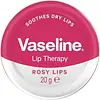
This lip moisturizer is formulated around Petrolatum to hydrate lips.
This lip moisturizer is formulated around Petrolatum to hydrate lips.

What's inside
What's inside
 Benefits
Concerns
Ingredients Side-by-side









Reviews
Ingredients Explained
These ingredients are found in both products.
Ingredients higher up in an ingredient list are typically present in a larger amount.
Ci 73360 is a synthetic red-pink dye.
It is soluble in water and remains chemically stable across a range of pH levels typically used in cosmetics. This helps manufacturers maintain uniform color throughout a product’s shelf life.
Because this ingredient is a regulated cosmetic colorant, its purity, manufacturing standards, and allowed uses are defined by cosmetic regulations in major markets.
Learn more about CI 73360Ci 77891 is a white pigment from Titanium dioxide. It is naturally found in minerals such as rutile and ilmenite.
It's main function is to add a white color to cosmetics. It can also be mixed with other colors to create different shades.
Ci 77891 is commonly found in sunscreens due to its ability to block UV rays.
Learn more about CI 77891Petrolatum is more commonly known as petroleum jelly. It is created by mixing waxes and mineral oils.
This ingredient is effective at reducing water loss by 99%. This is because it is an occlusive. Occlusives create a hydrophobic barrier on the skin to prevent evaporation. This property makes it great for hydrating dry skin.
Pro tip: Use occlusives, such as this ingredient, on damp skin for the best results.
The quality or origin of petrolatum is only known when disclosed by the brand. Most cosmetic petrolatum has gone through several purification stages.
Another benefit of occlusives is it protects your skin against infection or allergies.
Petrolatum is fungal acne safe. It is a hydrocarbon with no fatty acid structure, so Malassezia cannot metabolize it. In-vitro studies support negligible growth stimulation as well.
It's also worth noting that petrolatum has a comedogenic rating of 0. In updated rabbit ear testing (and in human testing), petrolatum was found to be not comedogenic. This means it didn’t promote comedone formation in standard models.
Learn more about Petrolatum

