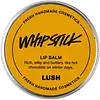
This barrier-repair lip moisturizer is formulated around Butyrospermum Parkii Butter and Prunus Amygdalus Dulcis Oil to strengthen the lip barrier and hydrate lips.
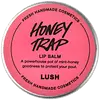
This barrier-repair lip moisturizer is formulated around Butyrospermum Parkii Butter and Honey to strengthen the lip barrier and hydrate lips.

What's inside
What's inside
 Key Ingredients
Benefits
Concerns
Ingredients Side-by-side
Butyrospermum Parkii Butter
Skin Conditioning






Prunus Amygdalus Dulcis Oil
Skin Conditioning
Beeswax
Emulsion Stabilising
Honey
Humectant
Olea Europaea Fruit Oil
Masking
Theobroma Cacao Fruit Powder
Skin ConditioningGlycerin
Humectant
Triticum Vulgare Germ Oil
Emollient
Aroma

Avena Sativa Kernel Meal
Abrasive
Citrus Reticulata Fruit
Skin ConditioningCitrus Aurantium Sinensis Fiber
Emulsion StabilisingVanilla Planifolia Fruit Extract
Skin Conditioning
Theobroma Cacao Husk
Abrasive
Limonene
Perfuming

Linalool
Perfuming
Anise Alcohol
Perfuming
Citral
Perfuming
Butyrospermum Parkii Butter, Prunus Amygdalus Dulcis Oil, Beeswax, Honey, Olea Europaea Fruit Oil, Theobroma Cacao Fruit Powder, Glycerin, Triticum Vulgare Germ Oil, Aroma, Avena Sativa Kernel Meal, Citrus Reticulata Fruit, Citrus Aurantium Sinensis Fiber, Vanilla Planifolia Fruit Extract, Theobroma Cacao Husk, Limonene, Linalool, Anise Alcohol, Citral
Butyrospermum Parkii Butter
Skin Conditioning
Prunus Amygdalus Dulcis Oil
Skin Conditioning
Beeswax
Emulsion Stabilising
Honey
Humectant
Olea Europaea Fruit Oil
Masking
Glycerin
Humectant
Aroma
Triticum Vulgare Germ Oil
Emollient
Avena Sativa Kernel Meal
Abrasive
Mentha Piperita Oil
Masking

Vanilla Planifolia Fruit Extract
Skin Conditioning
Citrus Aurantium Sinensis Fiber
Emulsion StabilisingAnise Alcohol
Perfuming
Benzyl Alcohol
Perfuming

Limonene
Perfuming
Linalool
Perfuming
Alpha-Isomethyl Ionone
Perfuming
Butyrospermum Parkii Butter, Prunus Amygdalus Dulcis Oil, Beeswax, Honey, Olea Europaea Fruit Oil, Glycerin, Aroma, Triticum Vulgare Germ Oil, Avena Sativa Kernel Meal, Mentha Piperita Oil, Vanilla Planifolia Fruit Extract, Citrus Aurantium Sinensis Fiber, Anise Alcohol, Benzyl Alcohol, Limonene, Linalool, Alpha-Isomethyl Ionone
Reviews
Alternatives
Ingredients Explained
These ingredients are found in both products.
Ingredients higher up in an ingredient list are typically present in a larger amount.
Anise Alcohol is a colorless liquid and a type of benzyl alcohol. It is often described to have a "vanilla-like" or "lilac-like" scent.
Anise Alcohol is a known EU allergen, meaning it is known to cause contact dermatitis.
Aroma refers to an ingredient, or mixture of ingredients, that impart or mask a flavor.
The name is slightly confusing. This is because INCI associates aroma with flavor instead of smell.
Here is the official definition from the The International Cosmetic Ingredient Dictionary and Handbook:
“Aroma is a term for ingredient labeling used to identify that a product contains a material or combination of materials normally added to a cosmetic to produce or to mask a particular flavor.”
INCI shows the only purpose of aroma to be "flavouring".
However, due to regulation differences, some companies may use aroma in place of parfum.
In Canada, this ingredient only has to be listed in concentrations above 1%.
Learn more about AromaAlso known as "oatmeal". This ingredient is made by grinding down the kernels of oat.
According to INCI, or International Nomenclature Cosmetic Ingredient, this ingredient has abrasive properties and functions as a mild exfoliant.
If you are looking for skin soothing oat - check out Avena Sativa Kernel Extract.
Learn more about Avena Sativa Kernel MealBeeswax is natural wax produced by honey bees to build their honeycomb.
Because it forms a protective layer on your skin, it can help lock in moisture and reduce water loss. It is also widely used as a thickener and emulsifier in lip balms and lotions. Research suggests beeswax containing moisturizers can support skin barrier integrity.
In comedogenic testing, Beeswax scored a 0-2, which is on the low end. Whether or not a product clogs your pores really comes down to the formula as a whole (not any single ingredient on its own) and your skin.
Cera Alba is the white, bleached form of this ingredient.
Just so you know, beeswax is not vegan since it is animal-derived. It cannot be removed with water, but can be taken off with an oil cleanser.
People with a known Propolis allergy also report to have reactions from beeswax.
Beeswax's wax esters are derived primarily from palmitic and oleic acid (C16 and C18:1). Both of these fall within the C11-C24 feeding window.
The Malassezia yeast can potentially cleave these esters and release usable fatty acids, so this ingredient may not be fungal acne safe. However, not everyone will react to this ingredient.
Learn more about BeeswaxThis ingredient is also known as shea butter. It is a plant-derived extract from the nuts of the Africa shea tree and one of the most well-studied emollients.
Because it has a high concentration of fatty acids (primarily oleic, stearic, and linoleic) it is able to form a protective barrier on the skin's surface. This helps seal in moisture and prevents transepidermal water loss (TEWL).
In vitro research found an increase in skin hydration by 58% and a decrease in TEWL by 37.8% after 24 hours of applying this ingredient (pretty impressive for a single ingredient!).
Besides hydration, shea butter also contains triterpenes that have anti-inflammatory potential. In particule, lupeol cinnamate has shown the highest anti-inflammatory activity in vivo.
Shea butter also contains vitamins A and E which may contribute to antioxidant activity.
While Shea Butter has an SPF rating of about 3-4, it is not a sunscreen replacement.
This ingredient may not be fungal acne safe because its fatty acids fall within the C11-C24 range that the Malassezia yeast can metabolize.
This ingredient shows up on a lot of "pore-clogging" lists but there's no real evidence behind that. It doesn't even have a comedogenic rating from an actual study; the numbers you'll find online come from blogs citing other blogs.
Ratings for other ingredients mostly come from a 1980s rabbit ear test. This test doesn't translate well to human skin or to real products because the ingredient sits at a much lower percentage.
Some people still find it breaks them out. So if that's you, definitely trust your skin. Just know this one's based on experience and not evidence.
Learn more about Butyrospermum Parkii ButterWe don't have a description for Citrus Aurantium Sinensis Fiber yet.
Glycerin (or glycerol) is a compound naturally found in your skin. It's a powerhouse humectant that pulls water into the stratum corneum.
Topically, glycerin does several things at once:
Your skin makes glycerin on its own (mostly from sebaceous oil breakdown) and shuttles it to your outermost layer of skin, or your epidermis, via aquaporin-3.
Aquaporin-3 is a transporter that is essential for normal skin hydration, elasticity, and repair. Interestingly, mice lacking in AQP3 have dry and less elastic skin that can be fully corrected with glycerin.
This ingredient is non-irritating, plays well with almost every ingredient, and works across all skin types. Typical use is anywhere between 3-10% but can go up to 79% in some leave-on products.
Just know very high concentrations (>40%) can feel tacky in low humidity.
Glycerin is the name for this ingredient in American English. British English uses Glycerol/Glycerine.
Learn more about GlycerinHoney mostly shows up in skincare as a humectant and skin conditioning agent. This is because its natural sugars (fructose and glucose) help hold onto water so skin feels softer and more hydrated.
Beyond hydration, honey also has antibacterial and wound-supporting properties. Its antibacterial action comes from a mix of things:
Manuka-type honey has an extra bacteria-killing compound called methylglyoxal, while all Honey contains a natural antibacterial protein called bee defensin-1.
Honey also nudges your immune cells to release signals that start the healing process. This is why medical-grade Honey is actually used in real wound dressings.
Just keep in mind that most of the strong clinical evidence is for wound care and not everyday cosmetic claims.
On concentrations and safety:
According to industry data, honey is used up to 22% in paste/mud packs, 7% as a honey extract in body/hand products, and face skincare levels sit well below that.
A human repeat insult patch test of 7% honey extract in 112 subjects showed no sensitization.
Allergy-wise, honey itself is a rare sensitizer. The bigger culprit is usually propolis that sometimes tags along in less-refined honey.
People allergic to propolis, conifer, poplar, salicylates, or Balsam of Peru are advised to avoid this ingredient due to shared allergens.
You might see this ingredient listed as either Honey or Mel (they're the same thing). Mel is simply the Latin word for honey.
A lot of people wonder if Honey is vegan, and technically it isn't.
Honey is made by bees; they gather nectar and their natural enzymes turn it into the Honey we know. So because it comes from an animal, it doesn't fit a vegan lifestyle.
And please remember to be kind to bees :). They're vital to so many ecosystems, and many species are struggling so they're worth protecting.
Learn more about HoneyLimonene is the compound that gives citrus peel its smell.
In skincare, it shows up as a standalone fragrance ingredient or as a natural compound of citrus and other essential oils.
You'll typically see this ingredient used in very small amounts; anything above 0.001% in a leave-on product or 0.01% in a rinse-off has to be named on the label in the EU. The citrus oils that carry it sit around 0.5-1% in a finished formula.
Fresh limonene is a weak allergen; the real issue is that it slowly reacts with air and then breaks down from oxidation to create hydroperoxides (which are strong sensitizers). This is why suppliers are required to keep the peroxide value below 20 mmol.
Positive reactions in people being investigated for eczema vary:
It's worth skipping if you have a known fragrance allergy or a compromised barrier, but the risk is low for most people.
Older or long-opened products are also more likely to bother you than fresh ones due to oxidation.
Learn more about LimoneneLinalool is a small, naturally occurring scent molecule found in plants like lavender, coriander, bergamot, and more.
It is one of the two most-used fragrance ingredients in cosmetics and added purely for smell. Since it's not used for a skin benefit, there's no "effective dose". Concentration depends on the fragrance load of the product.
The EU requires it to be named on the label above 0.001% in leave-on and 0.01% in rinse-off products.
Fresh linalool is a weak sensitizer but air exposure turns some of it into hydroperoxides, which are strong sensitizers. Those oxidation products are the actual allergy concern.
Patch-test clinics see positive reactions to linalool hydroperoxides in about 4% to 12% of dermatitis patients depending on country and test concentration.
Resassuringly, one analytical study found hydroperoxide levels in real fragranced products to be orders of magnitude below what induced sensitization in animal studies with no evidence of oxidation building up during normal storage.
The practical takeaway is that linalool is fine for most people but worth avoiding if you have a confirmed fragrance contact allergy or a badly compromised barrier.
Products stored a long time after opening are also the high-risk scenario since that is when oxidation happens.
The scent of linalool is described as floral, spicy tropical, and citrus-like.
Learn more about LinaloolThis ingredient is also known as olive oil. It has been used in skincare for centuries and science largely backs up its reputation as a nourishing emollient.
The main components of olive oil are oleic acid (55-83%), linoleic acid (3.5-20%), and palmitic acid (7-20%). Oleic acid promotes skin regeneration and helps regulate inflammatory responses.
Squalene is also naturally present in olive oil and exhibits moisturizing and antioxidant properties.
The polyphenols in olive oil also show anti-aging promise; one clinical study found a measurable improvement in skin appearance after 30 days of topical serum use.
Just be aware that applying olive oil directly to skin can weaken the barrier and cause redness. One study with volunteers found even people without sensitive skin experienced a significant reduction in stratum corneum integrity and induced mild erythema.
It's best to use this ingredient as part of a carefully crafted formula (instead of putting it on skin directly from the bottle).
Because it has a 0-2 on the comedogenic scale, it is low risk for acne-prone skin. Just remember the overall formulation of a product matters more than a few ingredients with comedogenic ratings.
This ingredient may not be fungal acne safe because of the oleic and palmitic acid content. These fall within the C11-24 fatty acid range that the Malassezia yeast can metabolize to grow.
Overall, olive oil is a well-studied and nourishing skincare ingredient.
Learn more about Olea Europaea Fruit OilThis ingredient is also known as sweet almond oil. It is a lightweight, cold-pressed oil from the ripe seeds of the sweet almond tree.
Sweet almond oil is rich in skin-nourishing fatty acids such as oleic acid (55-86%) and linolenic acid (7-35%).
As an emollient, it softens and hydrates skin by forming a thin barrier that locks in moisture.
Clinical studies have found it to be non-irritating and non-sensitizing. The CIR Expert Panel has evaluated the available safety data and concluded it is safe for topical use.
Because of the oleic acid content, this ingredient may not be fungal acne safe.
This ingredient does have a comedogenic rating of 3, but this doesn't mean a formula with this ingredient will clog pores.
Human testing has proved that any finished product with a comedogenic ingredient won't automatically make you break out; it really comes down to concentration, formula, and your skin.
Learn more about Prunus Amygdalus Dulcis OilTriticum Vulgare Germ Oil is better known as wheat germ oil. It's a golden oil that softens skin as an emollient and deliver antioxidants.
Most of its fatty acid profile is dominated by linoleic acid (~55%) with smaller amounts of palmitic, oleic, and linolenic. Linoleic acid helps reinforce the skin barrier and slow moisture loss.
Wheat germ oil's real claim to fame is its vitamin E content; it has the highest vitamin E of any vegetable oil. This gives is strong antioxidant properties and helps the oil resist going rancid.
Patch-testing of wheat-germ products has shown no irritation or sensitization, and this ingredient is a great choice for dry skin. It might be a bit heavy for acne-prone or oily skin.
There are just three caveats worth knowing:
Like other plant oils, it contains the C11-24 fatty acids that Malassezia can metabolize. Therefore, this ingredient may not be fungal acne safe.
Refined oils carry very little protein, but anyone diagnosed with a wheat or gluten allergy should patch test just to be cautious.
While blogs like to list this ingredient with a comedogenic rating of 5, the original study was actually done on a different ingredient: wheat germ triglycerides. Wheat germ triglycerides actually scored a 3 and not a 5. The 5 appears to be a mix-up that spread across charts over the years, with no actual data behind it. Some people still find it breaks them out. So if that's you, definitely trust your skin.
Learn more about Triticum Vulgare Germ OilVanilla Planifolia Fruit Extract comes from the vanilla orchid native to central America. It is a skin-soothing ingredient.
This ingredient is skin-soothing and contains polyphenols that give it antioxidant properties.
This ingredient is not known to sensitize or irritate skin (unlike Vanilla Tahitensis). Vanilla tahitensis has shown to irritate skin in low amounts.
Learn more about Vanilla Planifolia Fruit Extract

