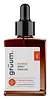
This hydrating oil is formulated around Oenothera Biennis Oil and Rosa Rubiginosa Seed Oil to hydrate skin and strengthen the skin barrier.
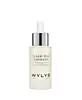
This hydrating oil is formulated around Rosa Rubiginosa Seed Oil and Oenothera Biennis Oil to hydrate skin.


What's inside
What's inside
 Key Ingredients
Benefits
Concerns
Ingredients Side-by-side







Prunus Amygdalus Dulcis Oil
Skin Conditioning





Sesamum Indicum Seed Oil
Emollient
Salvia Officinalis Oil
Masking
Helianthus Annuus Seed Oil
Emollient
Rosa Rubiginosa Seed Oil
Emollient






Prunus Amygdalus Dulcis Oil, Sesamum Indicum Seed Oil, Salvia Officinalis Oil, Helianthus Annuus Seed Oil, Rosa Rubiginosa Seed Oil, Oenothera Biennis Oil, Pelargonium Graveolens Oil, Rosa Damascena Flower Oil, Pimenta Acris Leaf Oil, Salicornia Herbacea Extract, Lavandula Stoechas Extract, Citrus Paradisi Seed Extract, Melaleuca Alternifolia Leaf Oil
Ingredients Explained
These ingredients are found in both products.
Ingredients higher up in an ingredient list are typically present in a larger amount.
Helianthus Annuus Seed Oil is a plant oil derived from the seeds of a sunflower.
It is rich in fatty acids, primarily linoleic acid and oleic acid. This gives it emollient and skin conditioning properties.
The reason this ingredient is so effective is because it forms a thin film on the skin that reduces transepidermal water loss (TEWL) while supplying linoleic acid to the stratum corneum to improve barrier strength.
The high linoleic acid content is particularly noteworthy for acne-prone skin.
Research suggests that acne-prone skin tends to be deficient in linoleic acid in sebum. Topical application may help replenish this to support a healthier follicular environment and less comedone-promoting sebum.
One randomized study found sunflower seed oil preserved skin barrier integrity in adult volunteers with and without atopic dermatitis (outperforming olive oil).
This ingredient is well-studied, gentle, and an effective emollient suitable for most skin types.
On fungal acne: This ingredient may not be Fungal acne (Malassezia folliculitis) safe. This is because it contains fatty acids with carbon chain lengths in the C11-C24 range.
Learn more about Helianthus Annuus Seed OilOenothera Biennis Oil (aka Evening Primrose Oil) is a non-fragrant oil from the evening primrose. Like other botanical oils, it is an emollient that helps hydrate and nourish skin.
It has an interesting fatty acid profile: linoleic (70-74%) and γ-linolenic (8-10%), with some amounts ofoleic palmitic, and stearic acids.
The gamma-linoleic acid (GLA) is the headliner here; it's relatively rare in plant oils and acts as a precursor for anti-inflammatory signaling molecules in the skin.
There's a mixed body of clinical research with this ingredient as well, mostly on eczema/atopic dermatitis skin.
Some controlled trials showed improvement in inflammation, dryness, scaling, and overall severity. Other studies and large meta-analysis failed to show a significant effect; the honest takeaway here is "promising but inconsistent" rather than "miracle oil".
On the safety front, this ingredient is found to be safe as used in cosmetics and even has a history of safe food use.
This ingredient does have a comedogenic rating of 3, but this doesn't mean a formula with this ingredient will clog pores. Human testing has proved that any finished product with this ingredient won't automatically make you break out; it really comes down to concentration, formula, and your skin.
Since this oil is contains oleic acid and palmitic acid, it may not be fungal acne safe. The Malassezia yeast feeds on fatty acids with carbon chain lengths between C11-C24. Oleic Acid sits at C18 and Palmitic acid sits at C16.
In vitro studies have shown that oleic acid and palmitic acid are some of the fatty acids that induce rapid Malassezia growth in lab settings.
Learn more about Oenothera Biennis OilThis ingredient is also known as rosehip seed oil. It helps smooth skin, soften rough patches, and support a healthy moisture barrier as an emollient.
Rosehip seed oil is one of the more polyunsaturated plant oils in cosmetics; it's loaded with fatty acids like linoleic acid (~44%), alpha-linoleic acid (~34%), and oleic acid (~14).
Another interesting compound that makes it stand out from other oils is the trace amount of all-trans retinoic acid (the same molecule as prescription tretinoin), along with some carotenoids and tocopherols.
The linoleic acid is a precursor to ceramide 1, one of the essential lipids in the stratum corneum. Topical linoleic acid application has been shown to improve barrier function and reduce comedone size in clinical studies.
One study found that linoleic acid and alpha-linoleic acid lighten UV-induced hyperpigmentation. A 2015 study found that participants who used rosehip twice daily for eight weeks saw improvements in crow's feet, skin moisture, and skin elasticity compared to the placebo.
If you're hoping to get tretinoin benefits from this ingredient, it's worth noting the trans-retinoid acid is trace-level and minimal compared to the amount of retinol or tretinoin found in formulas.
A 2024 review highlighted the fatty acid composition in rosehip-based dermatological products for:
Typical usage rates range from 1-100% with 5-10% being the most common in moisturizers.
Since the oil is high in polyunsaturated fatty acids, it's prone to oxidation. Look for formulations stabilized with ingredients like vitamin E and be sure to store away from light/heat.
Fungal acne: This oil is not considered fungal acne safe because dominant fatty acids fall into the C11-24 range that Malassezia can metabolize.
Learn more about Rosa Rubiginosa Seed Oil

