This brightening ampoule is formulated around Ascorbic Acid to brighten dull-looking skin and fade the look of dark spots.


What's inside
What's inside
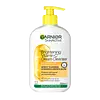 Key Ingredients
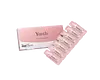
Benefits
Concerns
Ingredients Side-by-side
Water
Skin ConditioningGlycerin
Humectant


Cocamidopropyl Betaine
Cleansing



Sodium C14-16 Olefin Sulfonate
Cleansing
Glycol Distearate
Emollient
Triethyl Citrate
Masking

PEG-55 Propylene Glycol Oleate
Surfactant
Sodium Chloride
MaskingSodium Hydroxide
BufferingCoco-Betaine
Cleansing
Ascorbyl Glucoside
Antioxidant



Propylene Glycol
Humectant
Citric Acid
Buffering
Acrylates Copolymer
Sodium Benzoate
Masking
Benzoic Acid
Masking
Linalool
Perfuming
Limonene
Perfuming
Parfum
Masking
Water, Glycerin, Cocamidopropyl Betaine, Sodium C14-16 Olefin Sulfonate, Glycol Distearate, Triethyl Citrate, PEG-55 Propylene Glycol Oleate, Sodium Chloride, Sodium Hydroxide, Coco-Betaine, Ascorbyl Glucoside, Propylene Glycol, Citric Acid, Acrylates Copolymer, Sodium Benzoate, Benzoic Acid, Linalool, Limonene, Parfum


Ingredients Explained
These ingredients are found in both products.
Ingredients higher up in an ingredient list are typically present in a larger amount.
Propylene Glycol is a synthetic, colorless, odorless liquid that has been a staple in cosmetics for decades. It is a skin conditioning agent, humectant, and solvent.
As a humectant, it draw water to the skin to reduce flaking and restore suppleness. It's also a solvent that helps dissolve other actives and keeps formulas stable across temperature changes.
The CIR Expert Panel has confirmed this ingredient to be nontoxic and clinical studies show no sensitization at cosmetic use concentrations.
True allergic reactions are quite rare: a 15-year retrospective study of 6,751 patients found only 0.31% had a positive reaction (and less than half were considered clinically relevant).
It seemed that when sensitization does occur, it's most commonly linked to topical medication (like corticosteroids) and not cosmetics. Allergic contact dermatitis also appears largely limited to individuals with underlying skin conditions.
Overall, propylene glycol is a well-studied ingredient that most people can tolerate without issue.
Learn more about Propylene Glycol

