Rudolph Care Nourishing Cleansing Oil
A makeup remover with 11 ingredients, including vitamin E.
This oil-based makeup remover is made to dissolve makeup, sunscreen, and daily buildup.
We independently verify ingredients, backed by peer-reviewed research. Suggest an update.
What's inside















Key Ingredients
Benefits
Concerns
Ingredients Explained
Helianthus Annuus Seed Oil is a plant oil derived from the seeds of a sunflower.
It is rich in fatty acids, primarily linoleic acid and oleic acid. This gives it emollient and skin conditioning properties.
The reason this ingredient is so effective is because it forms a thin film on the skin that reduces transepidermal water loss (TEWL) while supplying linoleic acid to the stratum corneum to improve barrier strength.
The high linoleic acid content is particularly noteworthy for acne-prone skin.
Research suggests that acne-prone skin tends to be deficient in linoleic acid in sebum. Topical application may help replenish this to support a healthier follicular environment and less comedone-promoting sebum.
One randomized study found sunflower seed oil preserved skin barrier integrity in adult volunteers with and without atopic dermatitis (outperforming olive oil).
This ingredient is well-studied, gentle, and an effective emollient suitable for most skin types.
On fungal acne: This ingredient may not be Fungal acne (Malassezia folliculitis) safe. This is because it contains fatty acids with carbon chain lengths in the C11-C24 range.
Learn more about Helianthus Annuus Seed OilSesamum Indicum Seed Oil is the cold-pressed oil from sesame seeds.
It is an emollient and skin conditioning agent made up of roughly 82-85% unsaturated fatty acids, mostly linoleic (~41%) and oleic acid (~39%).
This pairing gives it barrier-supporting and moisturizing properties. Linoleic acid, an essential omega-6 fatty acid, can be incorporated into complex skin lipids. Topical application has shown barrier repair, anti-inflammatory, and wound-healing effects in cell and animal studies.
Beyond fatty acids, sesame oil brings something more distinctive to the table:
It contains natural antioxidants sesamol, sesamolin, and gamma-tocopherol. These also give the oil notably high oxidative stability.
One of the oil's key lignans, sesamin, has also demonstrated anti-inflammatory activity in preclinical models.
A 2023 clinical study found that a single application of sesame seed oil to the forearms of 35 healthy women improved stratum corneum hydration (though it didn't outperform raspberry seed oil).
The comedogenic rating of 1-3 depends on the type of sesame oil; unrefined carries a rating of 3 while refined sesame oil drops to a 1.
This ingredient may not be safe for fungal acne as it contains fatty acids that can feed Malassezia.
Learn more about Sesamum Indicum Seed OilThis ingredient is also known as flaxseed oil or linseed oil. It is created by cold-pressing the seeds of the flax plant and is rich in fatty acids.
This oil is packed with omega-3 (ALA), omega-6, and omega-9 fatty acids that closely mimic the skin's own natural lipid barrier. The high omega-3 content gives it solid anti-inflammatory properties.
Clinical studies have found it can reduce water loss and improve smoothness/hydration, particularly in sensitive skin types. Studies also suggest it helps maintain the lipid layer that is compromised in atopic (eczema-prone) skin.
Wound healing studies showed that low-concentration linseed oil formulations (1-5%) produced significant barrier repair, but it should be noted that high concentrations showed diminishing returns.
Due to the rich fatty acid content, this ingredient may not be fungal acne safe.
Learn more about Linum Usitatissimum Seed OilDicaprylyl Ether is created from caprylic acid. It is a texture-enhancer and emollient.
As an emollient, Dicaprylyl Ether is non-comedogenic. It helps soften and smooth the skin by creating a barrier on top. This barrier helps trap moisture in, helping to hydrate the skin.
Dicaprylyl Ether gives a non-greasy feel and better spreadability to products.
Learn more about Dicaprylyl EtherShea Butter Ethyl Esters is basically an "eco-designed" emollient ester derived from shea butter.
You can think of it like shea butter's lighter, more elegant sibling. The creating of this ingredient preserves shea butter's beneficial fatty acid profile while dramatically improving spreadability/skin feel.
This makes it a great choice for spray formulations, serums, and lightweight moisturizers where traditional shea butter would be too heavy.
It's rapidly absorbed on skin and provides an instant moisturizing effect and velvety after-feel.
These conditioning benefits trace back to shea's well-studied bioactive profile; shea is rich in antioxidants like tocopherols and contains stearic and oleic acids that support skin barrier health.
It also contains triterpene alcohols known to reduce inflammation, cinnamic acid esters with some UV-absorbing capacity, and lupeol that protects skin proteins.
Research backs up those triterpenes: a study isolating triterpene acetates and cinnamates from shea fat found all tested compounds showed anti-inflammatory activity in mice.
Fungal acne: Because this is an ethyl ester derived from shea's long-chain fatty acids (primarily stearic C18 and oleic C18), in vitro testing has shown the Malassezia species can grow in the presence of ethyl esters. This ingredient may not be fungal acne safe.
Learn more about Shea Butter Ethyl EstersPolyglyceryl-2 Sesquioleate isn't fungal acne safe.
We don't have a description for Hydrogenated Ethylhexyl Olivate yet.
This ingredient is also known as castor oil. It is a skin conditioning ingredient.
The star component of castor oil is ricinoleic acid, an unusual fatty acid that makes up ~80-92% of its composition.
In skincare, it is an emollient that dries down to a solid film with water-binding properties. This helps keep skin hydrated and helps reduce transepidermal water loss (TEWL).
A 2026 dermatology review pulls together its broader uses:
Human clinical testing found this ingredient to be non-irritating and non-sensitizing.
Because castor oil contains fatty acids in the C11-24 range, this ingredient may not be fungal acne safe.
At this time, the literature does not support castor oil in regrowing hair. A 2022 systematic review found no strong evidence that it supports hair growth and only weak evidence that it improves hair shine.
Castor oil itself carries "perfuming" and "masking" function tags according to the official CosIng database. This is because of its mild odor and odor-dampening properties.
Learn more about Ricinus Communis Seed OilAcai oil is extracted from the pulp of the acai palm fruit. It is rich in phenolic compounds and fatty acids like oleic and palmitic acid.
Due to the presence of fatty acids, this ingredient may not be Malassezia folliculitis safe.
This plant is native to the Amazon rainforest.
Learn more about Euterpe Oleracea Fruit OilHydrogenated Olive Oil Unsaponifiables are the "leftover" part of olive oil after the fatty acids get turned into soap.
Most of what's left behind is a concentrated blend of squalene, phytosterols, and vitamin E.
Squalene is pretty cool because it's already naturally found in our skin and makes up about 13% of sebum. This makes it a great moisturizing and skin-barrier-supporting ingredient.
This ingredient is typically used at low concentrations (~1-3%) and occasionally up to 25% when acting as the main ingredient in a formula.
Fungal acne note: Though this ingredient is largely free of fatty acid esters that feed Malassezia, it may still have some residual fatty acids depending on the purity. This is why this ingredient is marked as not fungal acne safe.
People with existing olive oil allergies should be cautious as well.
Learn more about Hydrogenated Olive Oil UnsaponifiablesTocopherol is a fat-soluble antioxidant known as Vitamin E.
You'll find this ingredient in the vast majority of skincare (for good reason). It works to neutralize free radicals, or unstable molecules generated by UV exposure, pollution, and other environmental stressors, before they can cause oxidative damage to your skin cells.
Topically applied tocopherol has been shown to protect against UV damage by ramping up the skin's own natural defense enzymes.
It also acts as a skin conditioning agent; some studies show that regular topical use can improve the skin's water-binding capacity over 2-4 weeks.
This ingredient is especially loved for being a team player. When combined with Vitamin C, the photoprotective effect of both ingredients roughly doubles and the combo also helps reduce UV-induced DNA damage.
This ingredient has some brightening potential but it's more of a prevention ingredient than spot-fader. Cell studies show it can slow down melanin production but it's worth noting that it's not the most powerful brightener out there.
In formulations, it also serves as a stabilizer that helps protect other oxidation-prone ingredients from degrading.
Concentrations usually range from 0.1-1% in most leave-on products.
Learn more about TocopherolReviews
No written reviews yet. Be the first to review this product.
Recent searches
Search reviews by skin type, ingredient, or keyword.
Where it's from
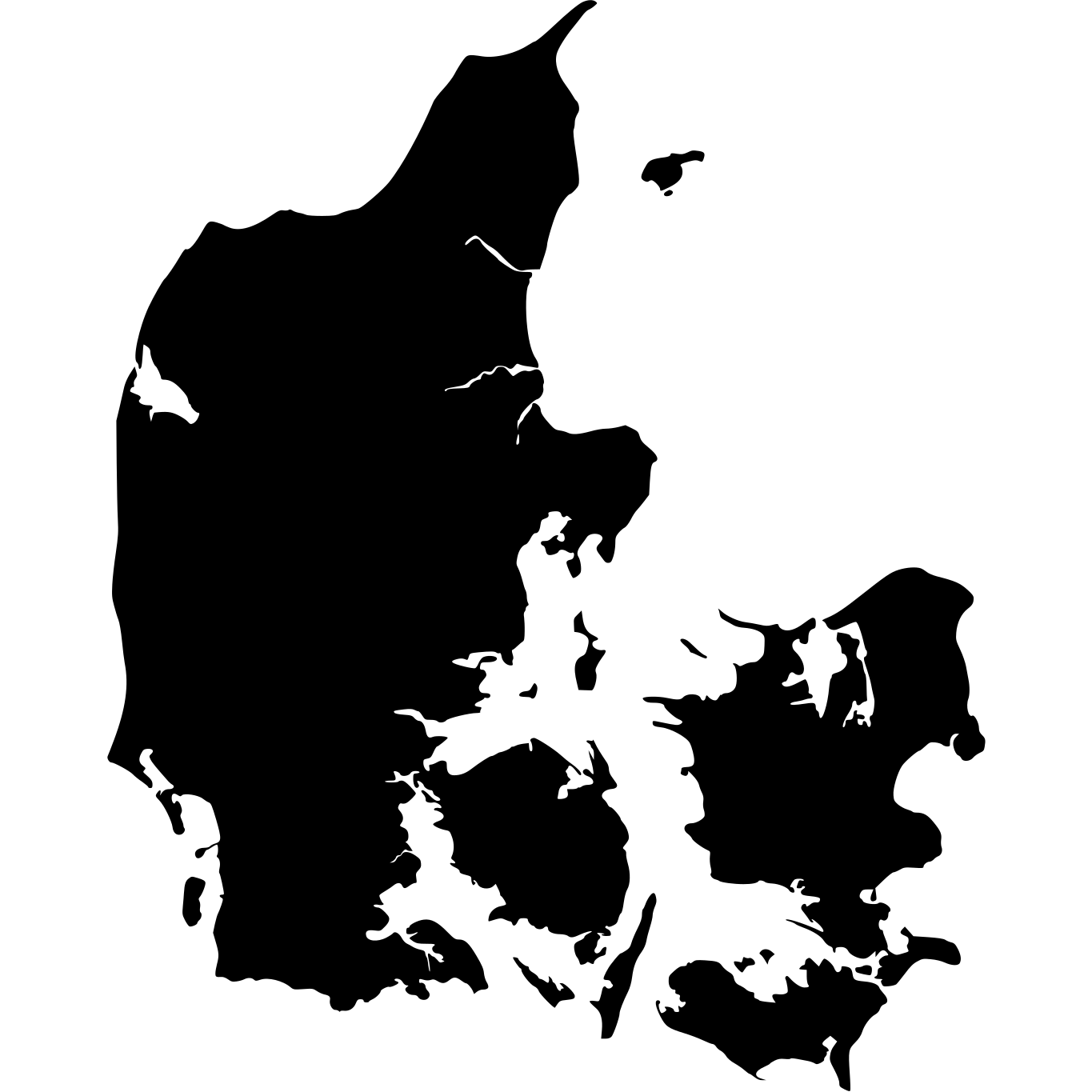
Rudolph Care is a Danish brand
Often compared with

We're dedicated to providing you with the most up-to-date and science-backed ingredient info out there.
The data we've presented on this page has been verified by a member of the SkinSort Team.
Read more about us· Updated May 6, 2025 • Added by camillaballe


