Naked Chemist Betox Power Lift Skin Shot
A serum with 18 ingredients, including vitamin E, hyaluronic acid, and peptides.
This anti-aging serum is formulated around Bakuchiol and Alpha-Arbutin to soften the look of wrinkles and fade the look of dark spots.
We independently verify ingredients, backed by peer-reviewed research. Suggest an update.
What's inside
Ingredients List
Water
Skin ConditioningGlycerin
Humectant


Bakuchiol
Antimicrobial








Panthenol
Skin Conditioning
Xanthan Gum
EmulsifyingAcetyl Tetrapeptide-3
Skin Protecting
Hyaluronic Acid
Humectant
Sodium Anisate
AntimicrobialSodium Levulinate
Skin ConditioningBee Venom
Astringent
Ubiquinone
Antioxidant
2-Dimethylamino Ethanol
Alpha-Arbutin
Antioxidant
Curcuma Longa Root Extract
Antioxidant
Tocopherol
Antioxidant
Mica
Cosmetic ColorantIron Oxides
Titanium Dioxide
Cosmetic Colorant

Key Ingredients
Benefits
Ingredients Explained
Water. It's the most common cosmetic ingredient of all. You'll usually see it at the top of ingredient lists, meaning that it makes up the largest part of the product.
So why is it so popular? Water most often acts as a solvent - this means that it helps dissolve other ingredients into the formulation.
You'll also recognize water as that liquid we all need to stay alive. If you see this, drink a glass of water. Remember to stay hydrated!
Learn more about WaterGlycerin (or glycerol) is a compound naturally found in your skin. It's a powerhouse humectant that pulls water into the stratum corneum.
Topically, glycerin does several things at once:
Your skin makes glycerin on its own (mostly from sebaceous oil breakdown) and shuttles it to your outermost layer of skin, or your epidermis, via aquaporin-3.
Aquaporin-3 is a transporter that is essential for normal skin hydration, elasticity, and repair. Interestingly, mice lacking in AQP3 have dry and less elastic skin that can be fully corrected with glycerin.
This ingredient is non-irritating, plays well with almost every ingredient, and works across all skin types. Typical use is anywhere between 3-10% but can go up to 79% in some leave-on products.
Just know very high concentrations (>40%) can feel tacky in low humidity.
Glycerin is the name for this ingredient in American English. British English uses Glycerol/Glycerine.
Learn more about GlycerinBakuchiol is a plant-derived antioxidant from the seeds of the Psoralea corylifolia plant. It has antimicrobial, emollient, skin conditioning, and antioxidant properties.
You'll likely see it called a "retinol replacement" but the two are technically not related. This is because bakuchiol is able to flip many of the same switches in your skin cells to tell them to:
1) produce more collagen (type I, III, and IV)
2) activate the same genes retinoids do
Unlike retinoids, this ingredient will not increase photosensitivity and is safe to use during pregnancy (but please still check in with your doctor!).
The flagship clinical trial from Dhaliwal et al. 2019 found 0.5% bakuchiol (twice daily) and 0.5% retinol (once daily) reduced wrinkles and hyperpigmentation equally, but bakuchiol had significantly less irritation.
Systematic reviews also back this up:
Bakuchiol is comparable to retinol for photoaging but with better tolerability. It also has mild antibacterial properties against Cutibacterium acnes and antifungal activity in vitro against Candida and dermatophytes.
The reason bakuchiol works well is due to its structure; it is a meroterpene phenol, or a hybrid molecule. The phenol half acts as an antioxidant while the terpene half is fat-loving. This helps the molecule slip through the skin barrier.
This ingredient is usually used between 0.5-2%. Only one case of contact dermatitis has ever been reported for this ingredient.
Learn more about BakuchiolPanthenol is a common ingredient that helps hydrate and soothe the skin. It is found naturally in our skin and hair.
There are two forms of panthenol: D and L.
D-panthenol is also known as dexpanthenol. Most cosmetics use dexpanthenol or a mixture of D and L-panthenol.
Panthenol is famous due to its ability to go deeper into the skin's layers. Using this ingredient has numerous pros (and no cons):
Like hyaluronic acid, panthenol is a humectant. Humectants are able to bind and hold large amounts of water to keep skin hydrated.
This ingredient works well for wound healing. It works by increasing tissue in the wound and helps close open wounds.
Once oxidized, panthenol converts to pantothenic acid. Panthothenic acid is found in all living cells.
This ingredient is also referred to as pro-vitamin B5.
Learn more about PanthenolXanthan gum is used as a stabilizer and thickener within cosmetic products. It helps give products a sticky, thick feeling - preventing them from being too runny.
On the technical side of things, xanthan gum is a polysaccharide - a combination consisting of multiple sugar molecules bonded together.
Xanthan gum is a pretty common and great ingredient. It is a natural, non-toxic, non-irritating ingredient that is also commonly used in food products.
Learn more about Xanthan GumThis biometic peptide is designed to support hair growth.
According to a manufacturer, it stimulates hair growth by:
The manufacturer has found combining this ingredient with red clover extract (Capixyl) boosted benefits. Not only does it enforce the scalp's extracellular matrix, it also inhibits the enzyme that creates DHT, a hormone that leads to hair loss.
While this ingredient is promising, more research is still needed to confirm its full effectiveness.
Learn more about Acetyl Tetrapeptide-3Hyaluronic acid (HA) is a glycosaminoglycan (basically a long sugar chain) that your skin already makes on its own. In your skin, HA lives in the extracellular matrix and acts as the body's moisture reservoir.
Topically, HA is a humectant that binds water and helps skin look more plump, smooth, and hydrated.
The only catch is that HA isn't a single thing; it actually comes in a wide range of molecular weights (~50 - 2,000+ kDA) and size matters.
Some clinical evidence links low molecular weight versions to improved wrinkle depth, elasticity, anti-inflammatory effects, and barrier repair.
This is why the best HA serums blend the two sizes together so you get the best of both worlds.
The majority of cosmetic HA is produced by bacterial fermentation, typically using Streptococcus or Bacillus strains. Typical use levels in skincare sit around 0.1-2%.
A clinical study using a 0.2% low-molecular weight HA gel showed improvement in facial seborrheic dermatitis with excellent tolerance.
These are some other common types of Hyaluronic Acid:
Learn more about Hyaluronic AcidSodium Anisate comes from fennel. It is used as a preservative and to add flavoring.
Sodium Anisate has antimicrobial properties.
Sodium levulinate is the a sodium salt of Levulinic Acid. Oncedissolved in an aqueous solution, the two ingredients become identical. It is usually derived from renewable plant sources like corn starch or sugarcane.
In skincare, it mostly acts as a skin conditioning agent that keeps skin soft and hydrated. It also acts as a preservative booster by inhibiting the growth of mold, yeast, and bacteria.
It's often paired with Sodium Anisate as the two create a broad-spectrum preservative system that is popular in "natural" formulations.
This ingredient is water-soluble.
The CIR Expert Panel for Cosmetic Ingredient Safety has concluded this ingredient to be non-irritated and there are no restrictions for use in EU cosmetics. The FDA also allows this ingredient to be used as a food-grade flavoring agent.
Learn more about Sodium LevulinateBee venom comes from bees (of course!).
There are many claims about bee venom being anti-aging. It is often called "natural botox". This is because it causes inflammation and tightening when applied to the skin. However, further studies are needed to look into the benefits of this ingredient.
Bee venom contains peptides, amino acids, and enzymes. It's main peptide is called melittin. Bee venom and its components are being studied for their antiviral and anti-inflammatory properties.
While cosmetics usually do not contain enough bee venom to cause an allergic reaction (unless you have an extreme allergy), we recommend you speaking with a professional if you have concerns.
Being cruelty-free means a brand does not experiment on animals.
If you're worried about the well-being of the bees, we recommend looking more into the company of the product.
Since bee venom is a product from bees, it is not considered vegan. However, there is much debate about this and many brands claim their bee products to be vegan.
Here at SkinSort, we are asking everyone to be kind to bees. They are important for many ecosystems and are endangered.
Learn more about Bee VenomUbiquinone (Coenzyme Q10) is a molecule already found in our bodies. It is a potent antioxidant and skin-soothing ingredient.
Aging and environmental exposure diminishes our skin's natural ubiquinone levels. This is much like our natural collagen and elastin.
The good news is: studies show applying this ingredient topically replenishes ubiquinone levels in our skin. This also comes with a ton of skin benefits. These benefits include:
Ubiquinone is considered a large molecule and cannot be absorbed into the lower layers of skin. This is why it is believed to be such an effective antioxidant: it protects our skin in the upper layers and prevents damage in the deeper layers.
When used in sunscreen, ubiquinone is shown to increase ingredient stability, increase SPF factor, and add to infrared protection.
Fun fact: ubiquinone is fat-soluble.
Learn more about UbiquinoneThis ingredient also goes by DMAE or DMEA.
According to manufacturer studies, this ingredient helps increase skin firmness.
Alpha-Arbutin is a brightening active used to fade dark spots, melasma, and post-acne marks. Structurally, it is a hydroquinone with a sugar molecule attached (but is much gentler than raw hydroquinone).
It has a pretty elegant way of working; it slots into tyrosinase, or the key enzyme that your skin uses to make melanin), and competitively blocks it so your skin produces less pigment over time.
There are two forms of arbutin and alpha is the better one to reach for: it works at lower amounts, absorbs into skin more easily, and has a strong safety record.
The science backs this up too: lab and animal studies confirm it lowers melanin by blocking tyosinase and the more you use (up to a point), the more it works.
Human studies look good too.
A 2024 trial found a cream with 5% alpha-arbutin and 2% kojic acid worked about as well as a prescription melasma cream but with fewer side effects. Another study showed 2% alpha-arbutin paired with 10% Trihydroxybenzoic Acid Glucoside and sunscreen faded dark spots and melasma without causing irritation.
Concentration-wise, most serums land in the 1-2% range.
The EU's Scientific Committee on Consumer Safety concluded that alpha-arbutin is safe in face creams up to 2% and body lotions up to 0.5%.
Overall, this is a well-studied and low-irritation brightener that's a great pick for anyone dealing with uneven skin tone. It also pairs well with vitamin C, niacinamide, and sunscreen.
Learn more about Alpha-ArbutinCurcuma Longa Root Extract comes from the rhizome (underground stem) of the turmeric plant.
While the official EU Cosing Database lists this ingredient as a fragrance, it actually does more than give products a scent.
This ingredient contains a group of yellow pigments called curcuminoids (mostly curcumin) that give it genuine antioxidant and anti-inflammatory activity in skin.
Reviews of topical clinical studies have found turmeric/curcumin to be generally well-tolerated and useful across conditions like eczema and mild inflammation.
One thing working in its favor is that curcumin barely penetrates; in lab skin-permeation testing, the curcuminoids mostly stayed in the outermost layer of skin. This is a good thing because its soothing and antioxidant activity is a surface-level job anyway.
At this time, industry data shows there's no single "correct" cosmetic percentage. It's used across a wide range depending on the product and varies from tiny fractions of a percent up to a few percent.
Allergy-wise, curcumin is a documented (but uncommon) contact allergen. It can also cross react with related plants, so anyone with a turmeric/ginger/cinnamon allergy or reactive skin should patch test first.
Learn more about Curcuma Longa Root ExtractTocopherol is a fat-soluble antioxidant known as Vitamin E.
You'll find this ingredient in the vast majority of skincare (for good reason). It works to neutralize free radicals, or unstable molecules generated by UV exposure, pollution, and other environmental stressors, before they can cause oxidative damage to your skin cells.
Topically applied tocopherol has been shown to protect against UV damage by ramping up the skin's own natural defense enzymes.
It also acts as a skin conditioning agent; some studies show that regular topical use can improve the skin's water-binding capacity over 2-4 weeks.
This ingredient is especially loved for being a team player. When combined with Vitamin C, the photoprotective effect of both ingredients roughly doubles and the combo also helps reduce UV-induced DNA damage.
This ingredient has some brightening potential but it's more of a prevention ingredient than spot-fader. Cell studies show it can slow down melanin production but it's worth noting that it's not the most powerful brightener out there.
In formulations, it also serves as a stabilizer that helps protect other oxidation-prone ingredients from degrading.
Concentrations usually range from 0.1-1% in most leave-on products.
Learn more about TocopherolMica is a naturally occurring mineral used to add shimmer and color in cosmetics. It can also help improve the texture of a product or give it an opaque, white/silver color.
Serecite is the name for very fine but ragged grains of mica.
This ingredient is often coated with metal oxides like titanium dioxide. Trace amounts of heavy metals may be found in mica, but these metals are not harmful in our personal products.
Mica has been used since prehistoric times throughout the world. Ancient Egyptian, Indian, Greek, Roman, Aztec, and Chinese civilizations have used mica.
Learn more about MicaThis ingredient is a combination of red, black, and yellow iron oxide pigments. This combination of colors is usually found in foundation, because it results in a "skin" color.
The EU typically uses CI numbers for colorants when applicable, such as CI 77489. In the US, iron oxides are regulated as color additives and "iron oxides" is the most commonly used name in US cosmetic practice.
A 2021 paper looked at skincare formulations containing iron oxides and found that they reduced transmission of blue light when measured optically. In simple terms, the pigment particles helped block or scatter part of the visible light spectrum in lab testing and the authors suggest this could translate into better protection against blue-light-related skin effects.
There is also clinical and experimental research showing that tinted products containing iron oxides can reduce visible light-induced pigmentation:
Please note, whether a product reduces visible or blue light depends on things like:
In the EU's CosIng database, iron oxides are only listed as a colorant. CosIng groups ingredients by their main cosmetic role, such as colorant, preservative, or UV filter.
Though studies say iron oxides can "attenuate blue light", they're describing an optical property and not an officially recognized cosmetic function.
So CosIng isn’t contradicting the research. It’s just classifying iron oxides by what they officially are: pigments that add color.
Learn more about Iron OxidesTitanium Dioxide (TD) is a mineral UV filter widely used in sunscreens and cosmetics.
It's one of only two UV filters officially classified as "mineral" by regulatory agencies (the other being Zinc Oxide).
A really common myth is that mineral filters work by reflecting UV light off your skin like tiny mirrors.
They don't only do that; modern research shows TD protects mostly by absorbing UV radiation, the same way chemical filters do.
When researchers measured this, reflection accounted for only about 4-5% of the protection (and less than SPF 2 on its own). The other ~95% comes from absorption: the UV photons hit the particle and their energy gets soaked up by its semiconductor band gap rather than bouncing off.
So "reflects vs. absorbs" was never really the right way to split mineral from chemical filters.
TD gives broad-spectrum protection that's strongest in the UVB and UVA-2 range and weaker in the UVA-1 range. Its UVA protection isn't quite as strong as Zinc Oxide's which is why you'll often see the two paired together.
Together, they make a solid broad-spectrum system.
TD is a great pick for sensitive, acne-prone, or redness-prone skin because it's non-irritating and chemically inert. Regulatory reviews classify it as a non-sensitizer and mild-to-non-irritant.
It's also unlikely to cause the "eye sting" some chemical filters are known for.
The main trade-off is cosmetic; TD can leave a white cast and has a thicker texture. This is why mineral sunscreens are often less cosmetically elegant than chemical or hybrid formulas (and harder to shade-match on deeper skin tones).
Formulators often use micronized or nano-sized TD to cut down on white case and improve spreadability. Smaller particles scatter less visible light so the formula looks less chalky while still filtering UV.
TD is almost always bundled with coatings like Alumina, Silica, Stearic Acid, or Dimethicone. These coatings do two important jobs:
TD can be used at up to 25% in a finished sunscreen; this is the regulatory ceiling in both the US and the EU.
In practice, the amount in any given product varies a lot depending on the target SPF and whether it's paired with other UV filters.
TD is one of the most heavily vetted sunscreen ingredients out there. It is approved as a UV filter in all major markets worldwide, including the US, EU, UK, Japan, Korea, China, Australia, and Canada.
The safety evidence is solid. There was an old worry that nano particles might absorb through skin into the body but multiple studies (including on damaged, sunburned, and UV-irradiated skin) have shown that TD stays on the surface and the layer of dead skin cells on top of everything else.
There's also no evidence of carcinogenicity, mutagenicity, or reproductive toxicity from dermal exposure of this ingredient.
For those who have seen the headline about a 2022 EU ban on TD, that was on TD as a food additive (a complete separate use from topical sunscreen).
There are ongoing questions about how nano-TD might affect marine ecosystems. As of now, there has been no conclusive evidence that any form of TD (or any other sunscreen filter) harms coral reefs or marine life.
The science is still developing and it's a space worth watching rather than packing over.
However, several destinations have reef-safety sunscreen rules that restrict certain chemical filters and steer visitors toward mineral, non-nano options. If you're traveling somewhere with these rules, a non-nano mineral sunscreen is the safe bet.
Learn more about Titanium DioxideReviews
No written reviews yet. Be the first to review this product.
Recent searches
Search reviews by skin type, ingredient, or keyword.
Where it's from
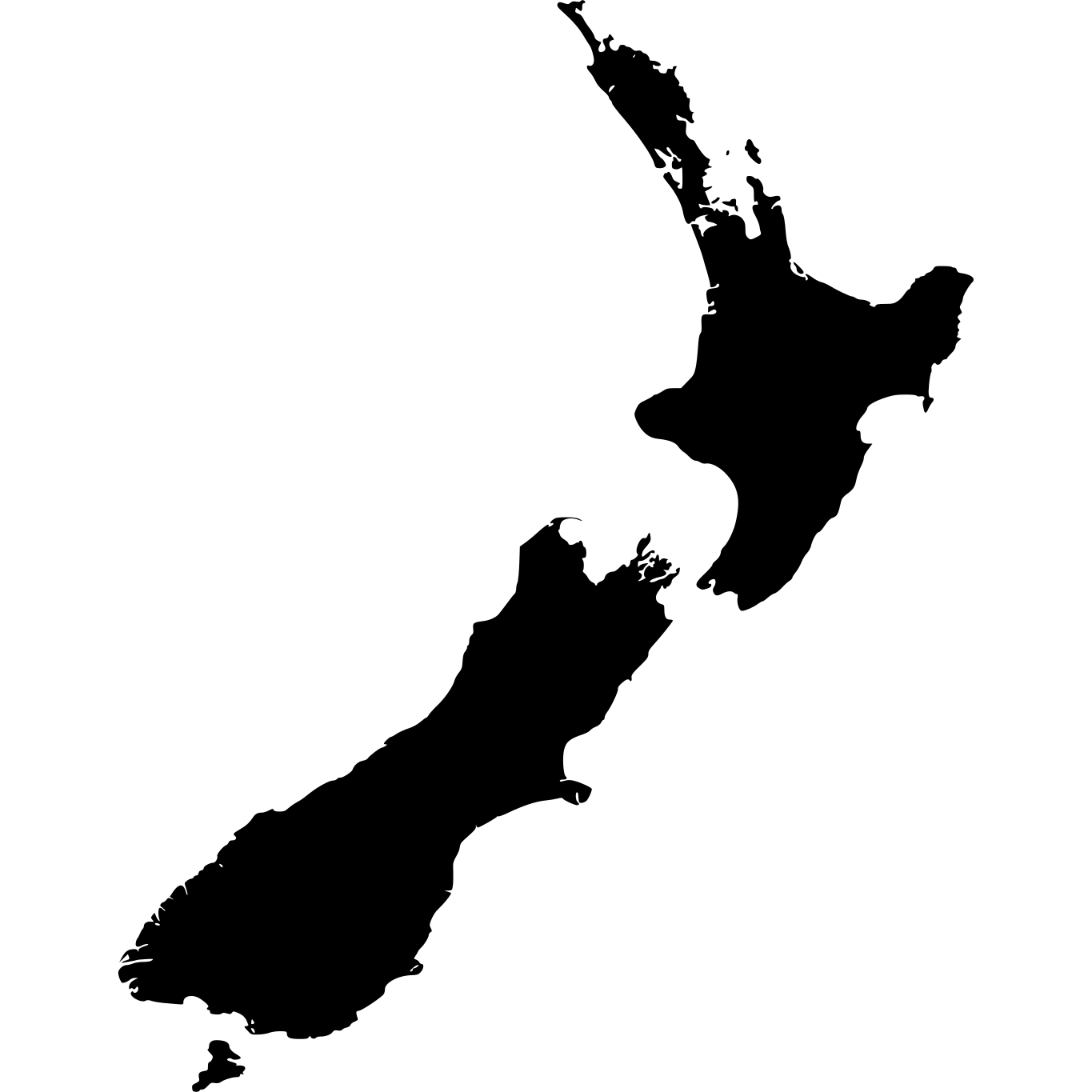
Naked Chemist is a New Zealander brand

We're dedicated to providing you with the most up-to-date and science-backed ingredient info out there.
The data we've presented on this page has been verified by a member of the SkinSort Team.
Read more about us· Updated December 5, 2025 • Added by annikajohnson1


