Garden of Eden Rosa T Mild Cleanser
A face cleanser with 10 ingredients.
This mild gel cleanser is made to cleanse while calming and soothing your skin.
We independently verify ingredients, backed by peer-reviewed research. Suggest an update.
What's inside










Benefits
Concerns
Ingredients Explained
Water. It's the most common cosmetic ingredient of all. You'll usually see it at the top of ingredient lists, meaning that it makes up the largest part of the product.
So why is it so popular? Water most often acts as a solvent - this means that it helps dissolve other ingredients into the formulation.
You'll also recognize water as that liquid we all need to stay alive. If you see this, drink a glass of water. Remember to stay hydrated!
Learn more about WaterHamamelis Virginiana Flower Water is made used flower parts of the witch hazel plant. The witch hazel plant is native to eastern North America.
The name 'Hamamelis Virginiana Water' refers to the distillation while the name 'Witch Hazel' is used when it is an active drug ingredient. Unless it is specified to be non-alcohol, many types of witch hazel are distilled in denatured alcohol.
Read more about Witch Hazel Water here.
Learn more about Hamamelis Virginiana Flower WaterAcrylates Copolymer is used as a film-forming agent and texture enhancer.
After applied, Acrylates Copolymer forms a thin film cover that helps skin feel more soft. It can help sunscreens become more water-resistant.
It is also used to make a product more thick.
Learn more about Acrylates CopolymerSodium Lauroyl Sarcosinate is a cleansing agent and emulsifier. It is a surfactant derived from sarcosine, and a common source is coconut oil.
As a surfactant, Sodium Lauroyl Sarcosinate helps lift dirts, oil, and other molecules to be washed away. In leave-on products, this ingredient is used as an emulsifier. Emulsifier help prevent ingredients such as oils and waters from separating.
Sodium Lauroyl Sarcosinate is also commonly found as a foaming agent in shampoo, toothpaste, and shaving foam. It is amphiphilic, meaning it loves both water and fats.
Learn more about Sodium Lauroyl SarcosinateSodium Cocoyl Glutamate is a gentle cleanser and surfactant. It is the sodium salt of the Cocoyl Glutamic Acid and comes from coconut oil. As a surfactant, it helps lift dirt and oil to be washed away.
Sodium Cocoyl Glutamate also has an emolliating effect and can help leave the skin feeling soft.
Tetrasodium EDTA is the salt formed from neutralizing ethylenediamine tetraacetic acid with sodium hydroxide. It is a chelating agent and used to prevent metal ions from binding to other ingredients. This helps keep the product and ingredients stable.
Tetrasodium EDTA comes as a white solid and is soluble in water.
Parfum is a catch-all term for an ingredient or more that is used to give a scent to products.
Also called "fragrance", this ingredient can be a blend of hundreds of chemicals or plant oils. This means every product with "fragrance" or "parfum" in the ingredients list is a different mixture.
For instance, Habanolide is a proprietary trade name for a specific aroma chemical. When used as a fragrance ingredient in cosmetics, most aroma chemicals fall under the broad labeling category of “FRAGRANCE” or “PARFUM” according to EU and US regulations.
The term 'parfum' or 'fragrance' is not regulated in many countries. In many cases, it is up to the brand to define this term.
For instance, many brands choose to label themselves as "fragrance-free" because they are not using synthetic fragrances. However, their products may still contain ingredients such as essential oils that are considered a fragrance by INCI standards.
One example is Calendula flower extract. Calendula is an essential oil that still imparts a scent or 'fragrance'.
Depending on the blend, the ingredients in the mixture can cause allergies and sensitivities on the skin. Some ingredients that are known EU allergens include linalool and citronellol.
Parfum can also be used to mask or cover an unpleasant scent.
The bottom line is: not all fragrances/parfum/ingredients are created equally. If you are worried about fragrances, we recommend taking a closer look at an ingredient. And of course, we always recommend speaking with a professional.
Learn more about ParfumAloe Barbadensis Leaf Juice is the filtered, stabilized liquid pressed from the inner gel of the aloe vera leaf.
In cosmetics, it shows up as either soothing active or a water-replacement base. It is roughly 98-99% water and the last 1-2% is an interesting mix of polysaccharides, amino acids, vitamins, minerals, and enzymes.
The polysaccharides do most of the work: they bind water at the skin surface for a light, non-greasy hydration boost. And one of the polysaccharides, glycomannan, is linked to fibroblast stimulation + collagen synthesis. This is also why aloe has such a long track record in wound and burn healing.
This ingredient is also calming with anti-inflammatory and mild antimicrobial activity, making it a great pick for sensitive, irritated, or post-sun skin.
Realistic expectations matter though; the solid evidence is mostly limited to hydration, soothing, and wound support. Deeper claims about anti-aging or sun protection are not well backed, and science reviews note it does not prevent radiation-induced skin injury.
Because it plays well with almost everything, it's commonly used as a base alongside other actives like niacinamide or vitamin C.
Typical usage concentrations range from 0.5% (where hydration benefits already show up) all the way to 90%+ (where it replaces water as the main base).
The safety for this ingredient is well-establish as well. Overall, this is a great supporting ingredient for those who want a boost in hydration.
Learn more about Aloe Barbadensis Leaf JuiceMethylchloroisothiazolinone, or MCI, is a synthetic preservative used to protect against the growth of bacteria, yeasts, and fungi in water-based products.
MCI is commonly combined with methylisothiazolinone (MI) in a 3:1 ratio.
This ingredient is safe in cosmetics when formulated to be non-sensitizing and concentrations must not exceed 7.5 ppm in leave-on products / 15 ppm in rinse-off products.
Unfortunately, this ingredient has a well-documented sensitization story. Studies spanning several decades have shown this ingredient + MI to cause skin irritation and allergies.
The use of this ingredient varies around the world:
This just means this ingredient is most likely non-sensitizing in rinse-off products unless you've been diagnosed with a contact allergy to isothiazolinones.
Learn more about MethylchloroisothiazolinoneMI is a preservative and known skin irritant. In the past, MI was used for its ability to prevent bacteria, yeast, and fungi growth in low doses.
Nowadays, you'll most likely see MI combined with Methylchloroisothiazolinone (MCI).
Since then, numerous studies have shown this ingredient to cause contact dermatitis, or skin irritation.
The use of this ingredient varies around the world:
Learn more about MethylisothiazolinoneReviews
No written reviews yet. Be the first to review this product.
Recent searches
Search reviews by skin type, ingredient, or keyword.
Where it's from
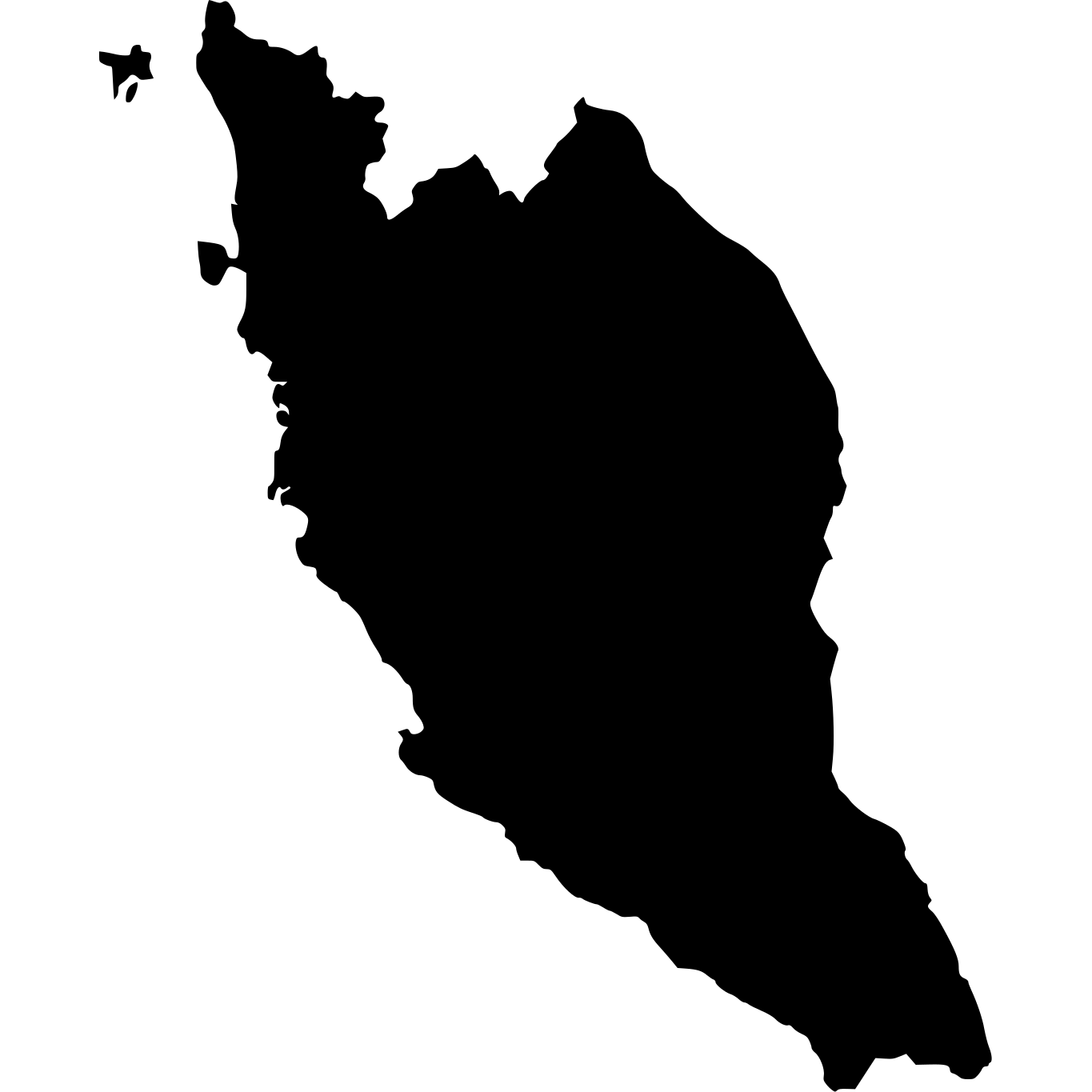
Garden of Eden is a Malaysian brand
Often compared with

We're dedicated to providing you with the most up-to-date and science-backed ingredient info out there.
The data we've presented on this page has been verified by a member of the SkinSort Team.
Read more about us· Updated December 10, 2023 • Added by starsgrave


