Camaleon Cosmetics Top Coat Nail Lacquer
A nail care with 15 ingredients, including vitamin E.
Nail care with 15 ingredients that contains Vitamin E
We independently verify ingredients, backed by peer-reviewed research. Suggest an update.
What's inside
Ingredients List
Butyl Acetate
MaskingEthyl Acetate
Perfuming

Nitrocellulose
Adipic Acid/Neopentyl Glycol/Trimellitic Anhydride Copolymer
Isopropyl Alcohol
Solvent




Acetyl Tributyl Citrate
Masking
Acrylates Copolymer
Benzophenone-3
UV Absorber

Oleyl Alcohol
Emollient



Helianthus Annuus Seed Oil
Emollient

Bambusa Vulgaris Sap Extract
EmollientTocopherol
Antioxidant






Dioleyl Tocopheryl Methylsilanol
Antioxidant
Tocopheryl Acetate
Antioxidant
CI 60725
Cosmetic ColorantButyl Acetate, Ethyl Acetate, Nitrocellulose, Adipic Acid/Neopentyl Glycol/Trimellitic Anhydride Copolymer, Isopropyl Alcohol, Acetyl Tributyl Citrate, Acrylates Copolymer, Benzophenone-3, Oleyl Alcohol, Helianthus Annuus Seed Oil, Bambusa Vulgaris Sap Extract, Tocopherol, Dioleyl Tocopheryl Methylsilanol, Tocopheryl Acetate, CI 60725
Key Ingredients
Benefits
Concerns
Ingredients Explained
We don't have a description for Butyl Acetate yet.
Ethyl Acetate is a fragrance.
We don't have a description for Nitrocellulose yet.
We don't have a description for Adipic Acid/Neopentyl Glycol/Trimellitic Anhydride Copolymer yet.
Isopropyl Alcohol is a small, fast-evaporating alcohol.
Formulators use it as a solvent, a way to think out thick liquids, an antifoaming agent, and occasionally a fragrance ingredient.
Reported use concentrations run from 0.002%-100% and any number over 50% usually comes from a nail product.
Actual skincare numbers run much lower: cleansers (0.3-26%), toners (0.07-7%), face moisturizers (0.04-0.2%).
The Cosmetic Ingredient Review Expert Panel reviewed it and concluded it is safe in the present practices of use and the International Agency for Research on Cancer classifies it as a non-carcinogenic to humans.
True allergy to this ingredient is uncommon but real: 44 out of 1,450 patients patch tested between 1992-2011 reacted with most cases clustering in people with leg ulcers, occupational hand eczema, or repeated use of Isopropyl Alcohol on already-broken skin.
Irritation and dryness are far more likely than allergy; before you throw away your skincare, just know this is dose-dependent and the risk is modest.
The irritant potential of the alcohols used in hand antiseptics is very low and skin irritation is significantly lower after alcohol application than after detergents (though isopropanol is somewhat more irritating than ethanol).
A 70% solution was a severe eye irritant in rabbit eye tests so the industry keeps this ingredient at low percentages in eye-area products.
One genuine caution: a 70% solution was a severe eye irritant in rabbit eye tests, so it belongs at low percentages in eye-area products, which is where the industry already keeps it.
According to the National Rosacea Society based in the US, you should be mindful of products with these alcohols in the top half of ingredients.
Learn more about Isopropyl AlcoholAcetyl Tributyl Citrate is a fragrance.
Acrylates Copolymer is used as a film-forming agent and texture enhancer.
After applied, Acrylates Copolymer forms a thin film cover that helps skin feel more soft. It can help sunscreens become more water-resistant.
It is also used to make a product more thick.
Learn more about Acrylates CopolymerThis ingredient is also known as oxybenzone, and is one of the older organic UV filters. Its main job is sitting in the oil phase and soaking up UV photons (primarily UVB with some short-wave UVA II range).
At low levels, oxybenzone also pulls double duty as a formula stabilizer that protects fragrance and colorants from fading in the light.
On concentrations:
So why did the EU cut back on how much you can use?
It comes down to absorption. Oxybenzone passes through skin more easily than other filters.
When the FDA tested sunscreens, every filter showed up in people's blood above the level where the agency wants extra safety testing done. But Oxybenzone showed up at by far the highest levels of the bunch.
To be clear, the FDA's point was that we need more research and not that the ingredient is dangerous. They also said to keep using sunscreen.
That high absorption, plus some animal studies pointing to effects on reproduction, is why EU regulators labeled Benzophenone-3 a hormone disruptor in 2025. An official classification is expected to follow in 2026.
It's also the most common photoallergen among sunscreen filters so it's a more frequent cause of contact/photoallergic dermatitis than most alternatives.
Places like Hawaii and Palau have also banned it over coral-reef concerns.
Learn more about Benzophenone-3Oleyl Alcohol is a fatty alcohol. Despite the name, it has nothing to do with the drying kind of alcohol like in hand sanitizers.
Fatty alcohols are a soft, oily liquid and this one is made from oleic acid (the same fat that makes up most of olive oil).
Its job in a formula is boring, but useful:
Typical concentrations range from 0.1-50% and it's usually low single digits in leave-on skincare.
One thing that sets it apart from other fatty alcohols is that it's used deliberately as a penetration enhancer in topical drug delivery. This is because it "loosens" the packing of your skin's surface lipids a bit so other ingredients can get through more easily.
A study on human skin found both Oleic Acid and Oleyl Alcohol at 0.75% increased how much topical anti-inflammatory drug got through with the effect leveling off after about 12 hours.
Allergic reactions are uncommon but documented; there's a published case of a patient with atopic dermatitis who developed severe allergic contact dermatitis from a prescription cream. A patch testing traced it specifically to the Oleyl Alcohol in the formula rather than the active drug.
The Cosmetic Ingredient Review Expert Panel concluded Oleyl Alcohol is safe as used in cosmetics. Acute toxicity testing showed very low toxicity, animal tests showed minimal to mild skin irritation, human patch testing found low irritation and sensitization potential, and no phototoxicity or photosensitization has been reported.
It's reasonable to patch test if you have eczema, a known fatty alcohol allergy, or you've reacted to Stearyl or Cetyl Alcohol before.
Oleyl Alcohol scored a 4 out of 5 for comedogenicity in the 1989 rabbit ear study. Just know the rabbit ear test has real limits:
It's worth watching if you're acne-prone and how you will react to it really comes down to concentration, formula, and your skin.
The culprit behind fungal acne, the Malassezia yeast, feeds on fatty acids with carbon chain lengths between C11-C24. Oleic Acid, at C18, falls right into that sweet spot.
In vitro studies have shown that Oleic Acid is one of the fatty acids that induce rapid Malassezia growth in lab settings. Since this ingredient is created from Oleic Acid, it may not be fungal acne safe.
Learn more about Oleyl AlcoholHelianthus Annuus Seed Oil is a plant oil derived from the seeds of a sunflower.
It is rich in fatty acids, primarily linoleic acid and oleic acid. This gives it emollient and skin conditioning properties.
The reason this ingredient is so effective is because it forms a thin film on the skin that reduces transepidermal water loss (TEWL) while supplying linoleic acid to the stratum corneum to improve barrier strength.
The high linoleic acid content is particularly noteworthy for acne-prone skin.
Research suggests that acne-prone skin tends to be deficient in linoleic acid in sebum. Topical application may help replenish this to support a healthier follicular environment and less comedone-promoting sebum.
One randomized study found sunflower seed oil preserved skin barrier integrity in adult volunteers with and without atopic dermatitis (outperforming olive oil).
This ingredient is well-studied, gentle, and an effective emollient suitable for most skin types.
On fungal acne: This ingredient may not be Fungal acne (Malassezia folliculitis) safe. This is because it contains fatty acids with carbon chain lengths in the C11-C24 range.
Learn more about Helianthus Annuus Seed OilBambusa Vulgaris Sap Extract comes from bamboo plant.
Tocopherol is a fat-soluble antioxidant known as Vitamin E.
You'll find this ingredient in the vast majority of skincare (for good reason). It works to neutralize free radicals, or unstable molecules generated by UV exposure, pollution, and other environmental stressors, before they can cause oxidative damage to your skin cells.
Topically applied tocopherol has been shown to protect against UV damage by ramping up the skin's own natural defense enzymes.
It also acts as a skin conditioning agent; some studies show that regular topical use can improve the skin's water-binding capacity over 2-4 weeks.
This ingredient is especially loved for being a team player. When combined with Vitamin C, the photoprotective effect of both ingredients roughly doubles and the combo also helps reduce UV-induced DNA damage.
This ingredient has some brightening potential but it's more of a prevention ingredient than spot-fader. Cell studies show it can slow down melanin production but it's worth noting that it's not the most powerful brightener out there.
In formulations, it also serves as a stabilizer that helps protect other oxidation-prone ingredients from degrading.
Concentrations usually range from 0.1-1% in most leave-on products.
Learn more about TocopherolDioleyl Tocopheryl Methylsilanol is an antioxidant.
Tocopheryl Acetate is a stable, shelf-friendly form of vitamin E.
Formulators love it because plain vitamin E oxidizes quickly once it hits air. This acetate version stays stable and resists going off, helping to extend a product's shelf life.
It's actually inactive on its own and works like a slow-release "storage" form; the enzymes in your skin called esterases gradually convert it into active vitamin E over time.
One in vivo study showed 5% of the acetate in the living layer of the epidermis converted to vitamin E after 5 days of application. This study also found the skin gained protection against UV damage even though the conversion was slow and small.
Once converted, vitamin E acts as a skin's main fat-soluble antioxidant that fights free radicals to protect skin from damage.
Topical vitamin E generally boosts the skin's photoprotection, and it reduced UV-damage in animal models.
This ingredient has some brightening potential but it's more of a prevention ingredient than spot-fader. Cell studies show it can slow down melanin production but it's worth noting that it's not the most powerful brightener out there.
Overall, it has a pretty solid safety profile and has been found to be non-irritating and non-comedogenic. Allergic reactions may happen but stay rare due to how widely the ingredient gets used.
The concentration will vary depending on the formula; industry data shows 0.1% in baby lotions, 3% in lipsticks, and 5% in foot powders. You can also find this ingredient at 100% in a pure vitamin E oil.
Most leave-on skincare keeps it at the lower end, often between 0.5-1%.
Learn more about Tocopheryl AcetateThis synthetic colorant is used to add a violet color to products. It is water-soluble.
Reviews
No written reviews yet. Be the first to review this product.
Recent searches
Search reviews by skin type, ingredient, or keyword.
Where it's from
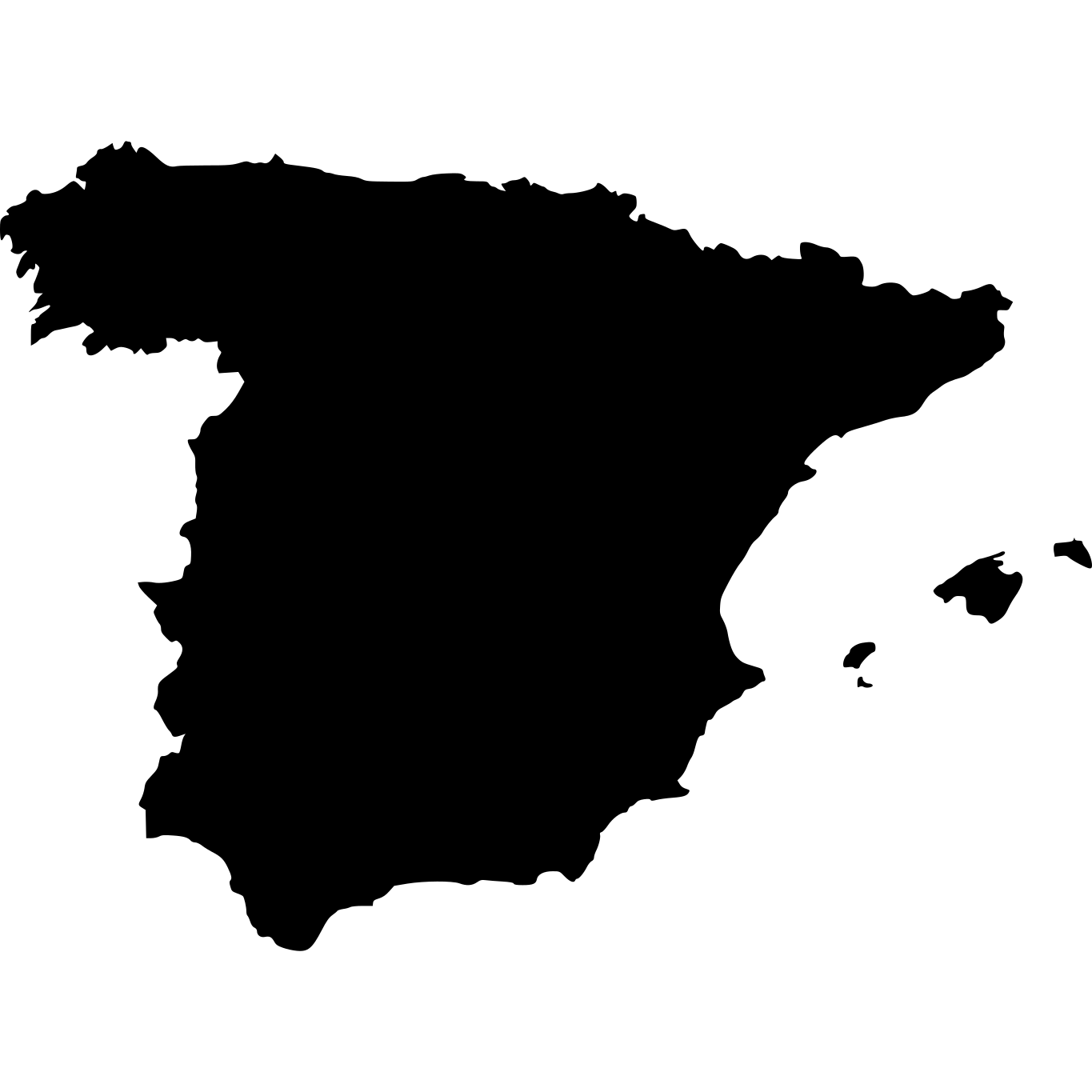
Camaleon Cosmetics is a Spanish brand

We're dedicated to providing you with the most up-to-date and science-backed ingredient info out there.
The data we've presented on this page has been verified by a member of the SkinSort Team.
Read more about us· Updated January 23, 2024 • Added by Eris


