Bite Beauty Lip Mask
This anti-aging lip mask is formulated around Resveratrol to soften the look of wrinkles.
Worth noting
Contains Vanillin, an EU-listed fragrance allergen.
We independently verify ingredients, backed by peer-reviewed research. Suggest an update.
What's inside
Ingredients List
Lanolin
Emollient




Ricinus Communis Seed Oil
Masking


Agave Tequilana Root Juice
Skin ConditioningOlea Europaea Oil Unsaponifiables
Skin Conditioning
Cera Alba
Emollient
Aroma

Vanillin
Masking
Siraitia Grosvenorii Fruit Powder
Abrasive
Vanilla Tahitensis Fruit Extract
Skin ConditioningCopernicia Cerifera Wax
Resveratrol
Antioxidant




Vitis Vinifera Oil
Perfuming
Tocopheryl Acetate
Antioxidant
Lonicera Caprifolium Flower Extract
Perfuming
Lonicera Japonica Flower Extract
Skin ConditioningSimmondsia Chinensis Seed Oil
Emollient

Lanolin, Ricinus Communis Seed Oil, Agave Tequilana Root Juice, Olea Europaea Oil Unsaponifiables, Cera Alba, Aroma, Vanillin, Siraitia Grosvenorii Fruit Powder, Vanilla Tahitensis Fruit Extract, Copernicia Cerifera Wax, Resveratrol, Vitis Vinifera Oil, Tocopheryl Acetate, Lonicera Caprifolium Flower Extract, Lonicera Japonica Flower Extract, Simmondsia Chinensis Seed Oil
Key Ingredients
Benefits
Concerns
Ingredients Explained
Lanolin is a waxy substance secreted by the sebaceous glands of wool-bearing sheep. It is an effective moisturizer that works as both a humectant and emollient.
As a humectant, it is able to absorb up to 400% of its own weight in water; this also gives it emulsifying properties as it can help stabilize water-in-oil emulsions.
On the other hand, lanolin is able to reduce transepidermal water loss (TEWL) by about 20-30%. It can also incorporate into the lipid matrix to surround skin cells and reinforce the skin barrier.
This is why you'll see lanolin as an ingredient for heavy-duty moisturizers.
You might have seen an "allergy concern" that gives lanolin a bad reputation. The rate of lanolin contact allergy in the general population is estimated to be under 0.5%, and most of these are seen in people with compromised-skin dealing with eczema, atopic dermatitis, or leg ulcers.
Healthy, intact skin tolerates lanolin well. Even people who have previously reacted to it test negative on patch tests when the test is done on normal skin.
Because lanolin comes from an animal, it is not considered vegan. Sheep secrete lanolin through sebaceous glands to help protect their skin from the environment.
Lanolin has a reputation as pore clogging but that comes almost entirely from rabbit ear testing done decades ago (and that model has aged badly).
This ingredient does have a comedogenic rating of 0-1; the tests state this score means the ingredient has low or non-existent chance of clogging your pores.
Keep in mind that the authors of the rabbit ear test proposed that a material needs to score consistently above 3 in the rabbit assay before it means anything for real skin.
A separate review found the model has serious performance problems and no correlation with human experience. Concentration matters a lot too: in one study, Acetylated Lanolin Alcohol scored 4 to 5 at full strength but dropped to a 1 when diluted to 2.5%, and finished products containing "comedogenic" ingredients didn't raise microcomedone counts in people.
Lanolin contains esters exactly in the range that the Malassezia yeast can synthesize, making this ingredient not fungal acne safe.
Learn more about LanolinThis ingredient is also known as castor oil. It is a skin conditioning ingredient.
The star component of castor oil is ricinoleic acid, an unusual fatty acid that makes up ~80-92% of its composition.
In skincare, it is an emollient that dries down to a solid film with water-binding properties. This helps keep skin hydrated and helps reduce transepidermal water loss (TEWL).
A 2026 dermatology review pulls together its broader uses:
Human clinical testing found this ingredient to be non-irritating and non-sensitizing.
Because castor oil contains fatty acids in the C11-24 range, this ingredient may not be fungal acne safe.
At this time, the literature does not support castor oil in regrowing hair. A 2022 systematic review found no strong evidence that it supports hair growth and only weak evidence that it improves hair shine.
Castor oil itself carries "perfuming" and "masking" function tags according to the official CosIng database. This is because of its mild odor and odor-dampening properties.
Learn more about Ricinus Communis Seed OilWe don't have a description for Agave Tequilana Root Juice yet.
Olive oil unsaponifiables is the part of olive oil that doesn't turn into soap.
This ingredient is rich in bioactive compounds like squalene, phytosterols, and polyphenols that make it a great skin conditioner.
Its fatty acid composition mimics that of the hydrolipidic film covering the surface of the epidermis.
This allows it to diffuse into the upper layers of the skin and integrate with the lipid matrix of the stratum corneum to improve barrier function without being greasy.
Studies have shown that it increases hydration of stratum corneum and the squalene component specifically contributes emollient properties and barrier-restoring effects.
A 2025 narrative review also highlighted olive-derived bioactives in:
Typical use levels for this ingredient run from 3-10%.
Fungal acne:
Whole olive oil contains significant triglycerides and free oleic acid that Malassezia can readily metabolize; the unsaponifiables fraction has had these fatty glycerides removed.
However, certain batches of this ingredient may contain sterol esters or free fatty acids depending on the refinement quality. These trace amounts of C12-24 fatty acids could be metabolized by Malassezia.
This ingredient may not be fungal acne safe but not everyone will react to it. It's best to patch test if you're unsure.
Learn more about Olea Europaea Oil UnsaponifiablesThis is another name for beeswax; it's a natural wax produced by honey bees to build their honeycomb.
Because it forms a protective layer on your skin, it can help lock in moisture and reduce water loss. It is also widely used as a thickener and emulsifier in lip balms and lotions. Research suggests beeswax containing moisturizers can support skin barrier integrity.
In comedogenic testing, Beeswax scored a 0-2, which is on the low end. Whether or not a product clogs your pores really comes down to the formula as a whole (not any single ingredient on its own) and your skin.
Beeswax is not vegan since it is animal-derived. It cannot be removed with water, but can be taken off with an oil cleanser.
People with a known Propolis allergy also report to have reactions from beeswax.
Beeswax's wax esters are derived primarily from palmitic and oleic acid (C16 and C18:1). Both of these fall within the C11-C24 feeding window.
The Malassezia yeast can potentially cleave these esters and release usable fatty acids, so this ingredient may not be fungal acne safe. However, not everyone will react to this ingredient.
Learn more about Cera AlbaAroma refers to an ingredient, or mixture of ingredients, that impart or mask a flavor.
The name is slightly confusing. This is because INCI associates aroma with flavor instead of smell.
Here is the official definition from the The International Cosmetic Ingredient Dictionary and Handbook:
“Aroma is a term for ingredient labeling used to identify that a product contains a material or combination of materials normally added to a cosmetic to produce or to mask a particular flavor.”
INCI shows the only purpose of aroma to be "flavouring".
However, due to regulation differences, some companies may use aroma in place of parfum.
In Canada, this ingredient only has to be listed in concentrations above 1%.
Learn more about AromaVanillin is the main compound of the vanilla bean. It is naturally occuring but can also be artificially created.
This ingredient exhibits antioxidant properties but is also a known skin-irritant.
Vanillism is the term of contact-dermatitis associated with the vanilla plant. The sap of the vanilla plant triggers skin irritation, swelling, and redness.
Learn more about VanillinSiraitia Grosvenorii Fruit Powder is an exfoliant.
Vanilla Tahitensis Fruit Extract comes from the vanilla plant now cultivated in the South Pacific.
This ingredient is known to sensitize and irritate skin.
If you are looking for a non-irritating vanilla, check out Vanilla Planifolia
Learn more about Vanilla Tahitensis Fruit ExtractCopernicia Cerifera Wax comes from a palm tree native to Brazil; another name for this ingredient is Carnauba Wax.
This ingredient is used to thicken texture and also leaves behind a film when applied.
Fun fact: This wax has the highest melting point of all natural waxes and low solubility.
Learn more about Copernicia Cerifera WaxResveratrol is a well-studied polyphenol antioxidant that has gained attention in skincare for its protective and calming effects on the skin. It’s often considered a gentler option for people who can’t tolerate retinoids.
This antioxidant is best known for its anti-aging benefits. Research suggests resveratrol helps combat visible signs of aging by:
Beyond anti-aging, resveratrol is also valued for its skin-brightening and soothing properties.
Some forms of resveratrol appear to be more effective than others. Resveratrol isobutyrate and resveratrol butyrate are often cited as more stable derivatives.
Research also suggests these two forms have stronger effects on Type I collagen stimulation and inflammation reduction compared to basic resveratrol.
Resveratrol is naturally unstable and can degrade when exposed to light and oxygen. Well-designed products often use stabilized derivatives, airless or opaque packaging, and supporting antioxidants to help maintain effectiveness on skin.
A note on resveratrol as a retinoid alternative:
While resveratrol offers antioxidant protection, inflammation control, and some collagen-supporting benefits, it does not replace retinoids in terms of cell turnover or acne treatment.
However, it can be a useful option for people with retinoid sensitivity or intolerance, or for those looking to support skin health without irritation.
Fun fact: Resveratrol is naturally found in grapes, peanuts, and berries, which is why it’s frequently associated with wine and grape-derived skincare ingredients.
Learn more about ResveratrolVitis Vinifera Oil comes from grapes.
This ingredient is used to add a scent or to cover another scent. Perfuming ingredients can be natural or synthetically created.
Tocopheryl Acetate is a stable, shelf-friendly form of vitamin E.
Formulators love it because plain vitamin E oxidizes quickly once it hits air. This acetate version stays stable and resists going off, helping to extend a product's shelf life.
It's actually inactive on its own and works like a slow-release "storage" form; the enzymes in your skin called esterases gradually convert it into active vitamin E over time.
One in vivo study showed 5% of the acetate in the living layer of the epidermis converted to vitamin E after 5 days of application. This study also found the skin gained protection against UV damage even though the conversion was slow and small.
Once converted, vitamin E acts as a skin's main fat-soluble antioxidant that fights free radicals to protect skin from damage.
Topical vitamin E generally boosts the skin's photoprotection, and it reduced UV-damage in animal models.
This ingredient has some brightening potential but it's more of a prevention ingredient than spot-fader. Cell studies show it can slow down melanin production but it's worth noting that it's not the most powerful brightener out there.
Overall, it has a pretty solid safety profile and has been found to be non-irritating and non-comedogenic. Allergic reactions may happen but stay rare due to how widely the ingredient gets used.
The concentration will vary depending on the formula; industry data shows 0.1% in baby lotions, 3% in lipsticks, and 5% in foot powders. You can also find this ingredient at 100% in a pure vitamin E oil.
Most leave-on skincare keeps it at the lower end, often between 0.5-1%.
Learn more about Tocopheryl AcetateThis Honeysuckle flower extract comes from the Italian honeysuckle. It is an antioxidant, antimicrobial, and fragrance.
Both this and the Japanese Honeysuckle are rich in a natural paraben that give it antimicrobial property. They are effective in inhibiting bacteria, yeast, and mold.
Honeysuckle contains flavonoids and saponins. Both of these components are natural antioxidants that can help soothe the skin.
As most flowers do, honeysuckle has a natural fragrance.
Learn more about Lonicera Caprifolium Flower ExtractLonicera Japonica Flower Extract comes from the honeysuckle flower.
Honeysuckles have skin protecting, anti-viral, and anti-inflammatory properties. It contains many antioxidants, such as luteolin, caffeic acid, loniflavone, and chlorogenic acids.
This honeysuckle is native to East Asia and used in traditional Chinese medicine to treat fever and inflammation.
Learn more about Lonicera Japonica Flower ExtractJojoba oil is one of the most well-studied plant-derived ingredients in cosmetics. It is an emollient with a special structure.
Because it is made up of 97-98% wax esters, it closely mirrors the linear monoesters found in human sebum. This makes it skin compatible, non-greasy, and lightweight.
Unlike other plant oils, jojoba wax doesn't easily penetrate skin. It mostly works in the uppermost layers as an emollient. This just means it forms a light barrier on the skin to help retain moisture.
Formulations with jojoba esters up to 90% reduced transepidermal water loss (TEWL) and increased barrier recovery by 81% (outperforming bisabolol at 47%).
Besides barrier support, the science also suggests jojoba to have anti-inflammatory effects and potential applications for skin infections, aging, and wound healing.
Fun fact: Indigenous cultures have used jojoba as a moisturizer and to help treat burns for centuries.
Fungal acne: The Malassezia yeast is known to metabolize fatty acids in the C11-24 range and jojoba's dominant fatty acid components fall into this range. This ingredient may not be fungal acne safe.
Learn more about Simmondsia Chinensis Seed OilReviews
No written reviews yet. Be the first to review this product.
Recent searches
Search reviews by skin type, ingredient, or keyword.
Where it's from
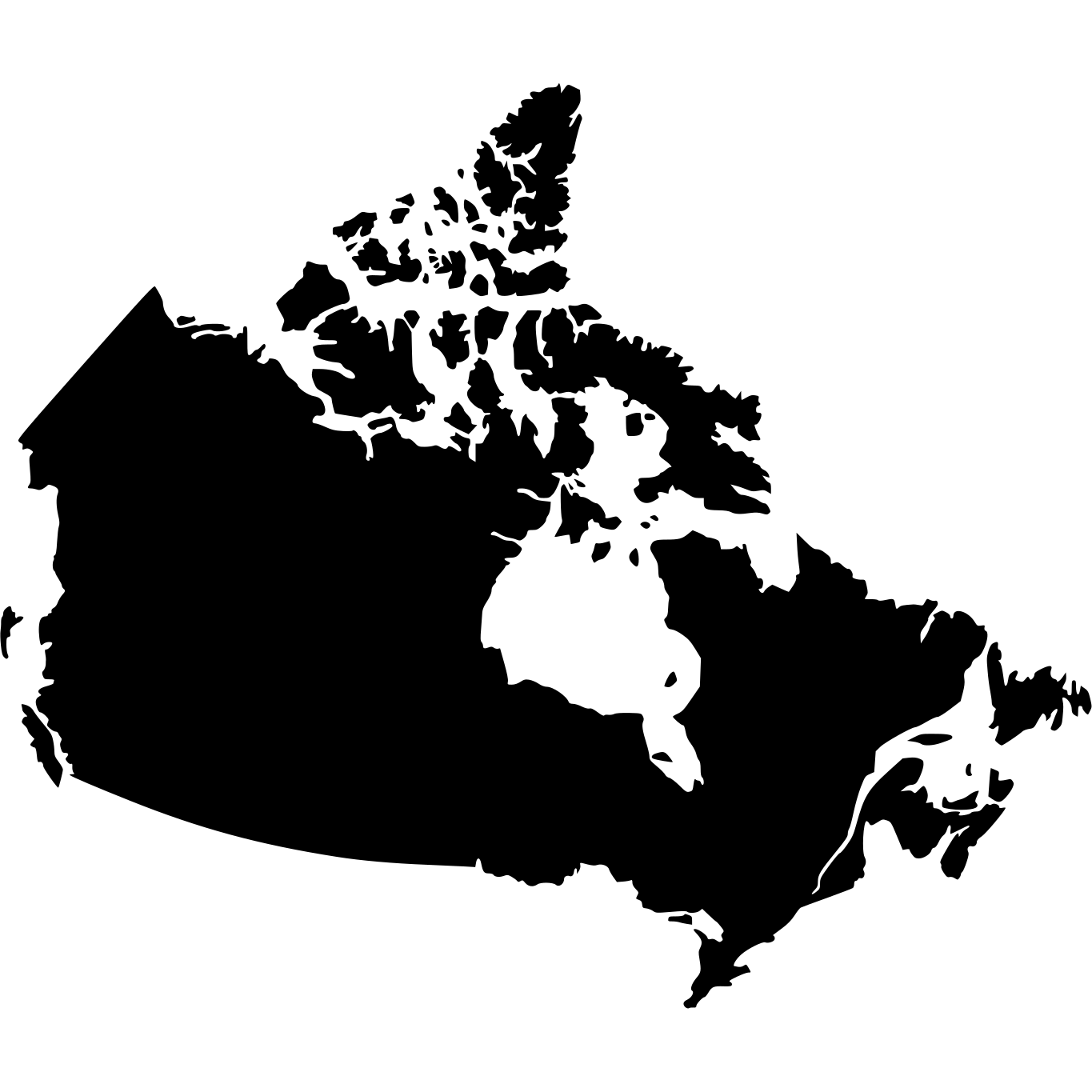
Bite Beauty is a Canadian brand
Often compared with

We're dedicated to providing you with the most up-to-date and science-backed ingredient info out there.
The data we've presented on this page has been verified by a member of the SkinSort Team.
Read more about us· Updated January 7, 2025 • Added by jaimeb17


