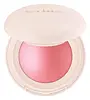
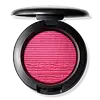
Rare Beauty Soft Pinch Luminous Powder Blush Versus Mac Cosmetics Extra Dimension Hybrid Cream Powder Blush

What's inside
What's inside
 Key Ingredients
Benefits
Concerns
Ingredients Side-by-side
Synthetic Fluorphlogopite
Dimethicone
Emollient

Dimethicone/Vinyl Dimethicone Crosspolymer
Skin Conditioning
Octyldodecyl Stearoyl Stearate
Emollient

Tapioca Starch
Boron Nitride
Absorbent
Octyldodecanol
Emollient
Diisostearyl Malate
EmollientSilica
Abrasive

1,2-Hexanediol
Skin Conditioning
Caprylyl Glycol
Emollient
Tin Oxide
Abrasive
Polymethylsilsesquioxane
CI 77891
Cosmetic ColorantCI 15850
Cosmetic ColorantCI 77491
Cosmetic ColorantCI 77492
Cosmetic ColorantCI 77499
Cosmetic ColorantSynthetic Fluorphlogopite, Dimethicone, Dimethicone/Vinyl Dimethicone Crosspolymer, Octyldodecyl Stearoyl Stearate, Tapioca Starch, Boron Nitride, Octyldodecanol, Diisostearyl Malate, Silica, 1,2-Hexanediol, Caprylyl Glycol, Tin Oxide, Polymethylsilsesquioxane, CI 77891, CI 15850, CI 77491, CI 77492, CI 77499
Mica
Cosmetic ColorantCetearyl Ethylhexanoate
Emollient
C12-20 Acid PEG-8 Ester
Emulsifying
Hdi/Trimethylol Hexyllactone Crosspolymer
Squalane
Emollient

Glycerin
Humectant
Chondrus Crispus Extract
Skin Conditioning


Ethylhexylglycerin
Skin ConditioningDicalcium Phosphate
Abrasive
Silica
Abrasive
Tin Oxide
Abrasive
Synthetic Fluorphlogopite
Polysorbate 80
Emulsifying
1,2-Hexanediol
Skin Conditioning
Caprylyl Glycol
Emollient
CI 77891
Cosmetic ColorantCI 77491
Cosmetic ColorantCI 77492
Cosmetic ColorantCI 77499
Cosmetic ColorantCI 77163
Cosmetic Colorant
CI 42090
Cosmetic ColorantCI 75470
Cosmetic ColorantCI 77289
Cosmetic ColorantCI 77288
Cosmetic ColorantCI 77510
Cosmetic ColorantCI 77742
Cosmetic ColorantCI 15850
Cosmetic ColorantCI 45410
Cosmetic ColorantCI 73360
Cosmetic ColorantCI 77007
Cosmetic ColorantCI 19140
Cosmetic ColorantCI 15985
Cosmetic ColorantMica, Cetearyl Ethylhexanoate, C12-20 Acid PEG-8 Ester, Hdi/Trimethylol Hexyllactone Crosspolymer, Squalane, Glycerin, Chondrus Crispus Extract, Ethylhexylglycerin, Dicalcium Phosphate, Silica, Tin Oxide, Synthetic Fluorphlogopite, Polysorbate 80, 1,2-Hexanediol, Caprylyl Glycol, CI 77891, CI 77491, CI 77492, CI 77499, CI 77163, CI 42090, CI 75470, CI 77289, CI 77288, CI 77510, CI 77742, CI 15850, CI 45410, CI 73360, CI 77007, CI 19140, CI 15985
Ingredients Explained
These ingredients are found in both products.
Ingredients higher up in an ingredient list are typically present in a larger amount.
1,2-Hexanediol is a synthetic liquid and another multi-functional powerhouse.
It is a:
- Humectant, drawing moisture into the skin
- Emollient, helping to soften skin
- Solvent, dispersing and stabilizing formulas
- Preservative booster, enhancing the antimicrobial activity of other preservatives
Caprylyl Glycol is a humectant, skin conditioner, emollient, and preservative booster derived from either caprylic acid or synthetically created.
Typical use levels vary from 0.3-1% as a preservative booster and go up to 2% to condition skin.
Because it is not a free-fatty acid, this ingredient is fungal acne safe (there's nothing for Malassezia to feed on).
Learn more about Caprylyl GlycolCi 15850 is the pigment color red. It is an azo dye and created synthetically.
Azo dyes need to be thoroughly purified before use. This allows them to be more stable and longer-lasting.
This ingredient is common in foundations, lipsticks, and blushes. This color is described as brown/orangey red.
It has many secondary names such as Red 6 and Red 7. According to a manufacturer, Red 6 usually contains aluminum.
Learn more about CI 15850Ci 77491 is also hydrated iron III oxide. It's sole purpose is to give a red/pink hue to products.
Iron III oxides are classified as inorganic chemicals for coloring.
Synthetically created Ci 77491 is considered safer than those naturally found. This is because the synthetically created version may contain less impurities. Iron oxides are generally non-toxic and non-allergenic.
Learn more about CI 77491CI 77492 is also hydrated iron III oxide. It's sole purpose is to give a yellow hue to products.
Iron III oxides are classified as inorganic chemicals for coloring.
Synthetically created CI 77492 is considered safer than those naturally found. This is because the synthetically created version may contain less impurities. Iron oxides are generally non-toxic and non-allergenic.
Learn more about CI 77492Ci 77499 is also hydrated iron III oxide. It is created from mixing red and black iron oxides. This helps give shades of darkness to a product.
Iron III oxides are classified as inorganic chemicals for coloring.
Ci 77891 is a white pigment from Titanium dioxide. It is naturally found in minerals such as rutile and ilmenite.
It's main function is to add a white color to cosmetics. It can also be mixed with other colors to create different shades.
Ci 77891 is commonly found in sunscreens due to its ability to block UV rays.
Learn more about CI 77891Silica, also known as silicon dioxide, is a naturally occurring mineral. It is used as a fine, spherical, and porous powder in cosmetics.
Though it has exfoliant properties, the function of silica varies depending on the product.
The unique structure of silica enhances the spreadability and adds smoothness, making it a great texture enhancer.
It is also used as an active carrier, emulsifier, and mattifier due to its ability to absorb excess oil.
In some products, tiny microneedles called spicules are made from silica or hydrolyzed sponge. When you rub them in, they lightly polish away dead skin layers and enhance the penetration of active ingredients.
Learn more about SilicaSynthetic Fluorphlogopite is the synthethic version of mica. It consists of fluorine, aluminum and silicate.
Synthetic Fluorphlogopite is used to add volume to products.
It is considered non-irritating on the skin.
Learn more about Synthetic FluorphlogopiteTin Oxide is an inorganic oxide used to add opacity and volume to a product. In nature, it is already found in mineral form. The main ore of tin is an opaque and shiny mineral called casseterite.
Tin Oxide helps remove translucency in a product, or make it more opaque. Besides adding opacity, tin oxide is used for bulking to add volume.


