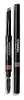
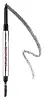
Chanel Stylo Sourcils Waterproof Defining Eyebrow Pencil Versus Benefit Cosmetics Goof Proof Waterproof Easy Shape & Fill Eyebrow Pencil


What's inside
What's inside
 Key Ingredients
Benefits
Concerns
Ingredients Side-by-side
Synthetic Fluorphlogopite
Stearic Acid
Cleansing



Rhus Succedanea Fruit Wax
Hydrogenated Castor Oil
Emollient
Sucrose Tetrastearate Triacetate
Emollient
C10-30 Cholesterol/Lanosterol Esters
Emulsifying
Triethylhexanoin
MaskingSorbitan Sesquioleate
Emulsifying
Aluminum Hydroxide
EmollientTocopherol
Antioxidant






CI 75470
Cosmetic ColorantCI 77000
Cosmetic ColorantCI 77007
Cosmetic ColorantCI 77163
Cosmetic Colorant

CI 77288
Cosmetic ColorantCI 77289
Cosmetic ColorantCI 77491
Cosmetic ColorantCI 77492
Cosmetic ColorantCI 77499
Cosmetic ColorantCI 77510
Cosmetic ColorantCI 77742
Cosmetic ColorantCI 77891
Cosmetic ColorantMica
Cosmetic ColorantSynthetic Fluorphlogopite, Stearic Acid, Rhus Succedanea Fruit Wax, Hydrogenated Castor Oil, Sucrose Tetrastearate Triacetate, C10-30 Cholesterol/Lanosterol Esters, Triethylhexanoin, Sorbitan Sesquioleate, Aluminum Hydroxide, Tocopherol, CI 75470, CI 77000, CI 77007, CI 77163, CI 77288, CI 77289, CI 77491, CI 77492, CI 77499, CI 77510, CI 77742, CI 77891, Mica
Synthetic Fluorphlogopite
Stearic Acid
Cleansing
Hydrogenated Castor Oil
Emollient
Synthetic Japan Wax
Emollient
Ethylhexyl Palmitate
Emollient
Cera Alba
Emollient
Sorbitan Sesquiisostearate
Emulsifying
Aluminum Hydroxide
EmollientTocopherol
Antioxidant
CI 19140
Cosmetic ColorantCI 42090
Cosmetic ColorantCI 77007
Cosmetic ColorantCI 77163
Cosmetic Colorant
CI 77288
Cosmetic ColorantCI 77289
Cosmetic ColorantIron Oxides
CI 77510
Cosmetic ColorantCI 77742
Cosmetic ColorantCI 77891
Cosmetic Colorant
Reviews
Ingredients Explained
These ingredients are found in both products.
Ingredients higher up in an ingredient list are typically present in a larger amount.
Aluminum Hydroxide is a form of aluminum. It can be naturally found in nature as the mineral gibbsite. In cosmetics, Aluminum Hydroxide is used as a colorant, pH adjuster, and absorbent.
As a colorant, Aluminum Hydroxide may add opacity, or reduce the transparency. Aluminum hydroxide is contains both basic and acidic properties.
According to manufacturers, this ingredient is an emollient and humectant. This means it helps hydrate the skin.
In medicine, this ingredient is used to help relieve heartburn and help heal ulcers.
There is currently no credible scientific evidence linking aluminum hydroxide in cosmetics to increased cancer risk.
Major health organizations allow the use of aluminum hydroxide in personal care products and have not flagged it as a carcinogenic risk at typical usage levels.
Learn more about Aluminum HydroxideThis pigment is called Ultramarine blue lazurite. It gives a saturated blue color, but can be used to create other colors as well.
According to the manufacturer, it is usually made from kaolin, sodium sulfate, sodium carbonate, sulfur, and charcoal.
CI 77163 is the color-index name for Bismuth Oxychloride, a lab-made white powder that acts as a pearl pigment.
It's what gives a lot of pressed powders, eyeshadows, highlighteres, and mineral foundations that soft pearly glow.
Due to its structure as flat, plate-like crystals that stack like tiles, it feels silky and sticks to skin well. This also makes it very chemically stable and insoluble under normal skin conditions (this just means it sits on top of skin rather than going into it).
It has an interesting quirk: it slowly goes gray in sunlight and the graying is partly reversible in the dark.
At this time, there's no legal cap on how much a brand can use. Both the FDA and the EU permit it without restriction so real-world concentration levels come down to formulation:
Allergy risk is low as well since it's insoluble and doesn't release free metal ions into skin. True allergic contact dermatitis to it is rare enough that there's very little published cases.
However, mineral makeup users do report itching or stinging. The leading explanation for this is irritation from those stiff platelet crystals rubbing on skin (also more likely with heavy, high-percentage loose mineral powders) rather than an immune reaction.
This ingredient shows up on a lot of "pore-clogging" lists but there's no real evidence behind that. It doesn't even have a comedogenic rating from an actual study; the numbers you'll find online come from blogs citing other blogs.
Some people still find it breaks them out. So if that's you, definitely trust your skin.
Learn more about CI 77163Ci 77288 is used to add green pigment to products.
We don't have a description for CI 77289 yet.
This ingredient is used to impart a blue color. It is not water-soluble.
It goes by two different names:
1. Ferric Ferrocyanide: a synthetic dark blue pigment
2. Ferric Ammonium Ferrocyanide: a synthetic blue pigment, also called Prussian blue
In the EU, both of these colors must be labeled as 'CI 77510'.
Learn more about CI 77510This ingredient is used to add a violet color to cosmetics.
It is created by reacting phosphoric acid, ammonium dihydrogen orthophosphate, and manganese dioxide.
Ci 77891 is a white pigment from Titanium dioxide. It is naturally found in minerals such as rutile and ilmenite.
It's main function is to add a white color to cosmetics. It can also be mixed with other colors to create different shades.
Ci 77891 is commonly found in sunscreens due to its ability to block UV rays.
Learn more about CI 77891Hydrogenated Castor Oil (aka "castor wax") is what you get when castor oil is turned into a wax.
Its dominant fatty acid is ricinoleic acid, giving it both emollient and mild humectant properties.
According to EU CosIng, this ingredient helps soften skin, keep oil and water stay mixed, and thickens products.
Hydrogenated castor oil at 30% did not trigger a positive patch-test reaction and is well-tolerated.
Since this ingredient is based on an 18-carbon fatty acid, it falls into the chain-length range that Malassezia can feed on and may not be fungal acne safe.
Learn more about Hydrogenated Castor OilStearic Acid is a fatty acid that is already found in your skin. It's one of the free fatty acids that works alongside ceramides and cholesterols to maintain your barrier.
In cosmetics, it is a multitasker:
Safety-wise, the CIR Expert Panel has concluded it to be safe in cosmetics when formulated to be non-irritating and non-sensitizing.
Free stearic acid is a C18 fatty acid that the Malassezia yeast can substrate, so this ingredient may not be fungal acne safe.
This ingredient does have a comedogenic rating of 2-3, but this doesn't mean a formula with this ingredient will clog pores.
Human testing has proved that any finished product with this ingredient won't automatically make you break out; it really comes down to concentration, formula, and your skin.
Learn more about Stearic AcidSynthetic Fluorphlogopite is the synthethic version of mica. It consists of fluorine, aluminum and silicate.
Synthetic Fluorphlogopite is used to add volume to products.
It is considered non-irritating on the skin.
Learn more about Synthetic FluorphlogopiteTocopherol is a fat-soluble antioxidant known as Vitamin E.
You'll find this ingredient in the vast majority of skincare (for good reason). It works to neutralize free radicals, or unstable molecules generated by UV exposure, pollution, and other environmental stressors, before they can cause oxidative damage to your skin cells.
Topically applied tocopherol has been shown to protect against UV damage by ramping up the skin's own natural defense enzymes.
It also acts as a skin conditioning agent; some studies show that regular topical use can improve the skin's water-binding capacity over 2-4 weeks.
This ingredient is especially loved for being a team player. When combined with Vitamin C, the photoprotective effect of both ingredients roughly doubles and the combo also helps reduce UV-induced DNA damage.
This ingredient has some brightening potential but it's more of a prevention ingredient than spot-fader. Cell studies show it can slow down melanin production but it's worth noting that it's not the most powerful brightener out there.
In formulations, it also serves as a stabilizer that helps protect other oxidation-prone ingredients from degrading.
Concentrations usually range from 0.1-1% in most leave-on products.
Learn more about Tocopherol

