Salubrin Aloe Vera Gel
A body treatment with 8 ingredients.
Body treatment with 8 ingredients
We independently verify ingredients, backed by peer-reviewed research. Suggest an update.
What's inside







Benefits
Ingredients Explained
Water. It's the most common cosmetic ingredient of all. You'll usually see it at the top of ingredient lists, meaning that it makes up the largest part of the product.
So why is it so popular? Water most often acts as a solvent - this means that it helps dissolve other ingredients into the formulation.
You'll also recognize water as that liquid we all need to stay alive. If you see this, drink a glass of water. Remember to stay hydrated!
Learn more about WaterPEG-40 Hydrogenated Castor Oil is an emulsifier derived from castor oil.
As an emulsifying agent, it helps other ingredients like fragrances and fat-soluble vitamins dissolve cohesively.
Due to its large molecule size, it doesn't penetrate beyond the skin's surface.
This ingredient has a solid regulatory track record; the CIR Expert Panel first concluded it was safe for use in cosmetics at concentrations up to 100% in 1997. A 2012 reassessment reaffirmed that finding. Safety studies have also found no irritation or evidence of toxicity.
A 2019 study did find this ingredient to grow Malassezia, so this ingredient may not be fungal acne safe.
Learn more about PEG-40 Hydrogenated Castor OilPhenoxyethanol is one of the most widely used preservatives in skincare (and for good reason!).
It has a large spectrum of antimicrobial activity and especially effective bacteria, yeast, and mold while only having a weak effect on your skin's natural microbiome.
On a cellular level, it disrupts the cell membranes of microbes by poking holes that make the cell leak. This shuts down the chemical reactions the microbe needs to make energy so it can no longer survive.
Another perk of this ingredient is that it stays functional across a wide pH range (3-10).
You'll often see it paired with boosters like Ethylhexylglycerin; one study showed that a 1:9 ratio of Ethylhexylglycerin to Phenoxyethanol damages bacterial membranes as effectively as doubling the Phenoxyethanol concentration on its own.
Typical use concentrations range from 0.3-1% depending on the formula, and this ingredient is capped at 1% int the EU.
Safety-wise, the fear mongering does not hold up to the evidence. The EU's Scientific Committee on Consumer Safety and FDA consider it safe as a preservative at up to 1%, including for children of all ages.
Adverse systemic effects only showed up in animal studies at exposures roughly 200x higher than what people get from cosmetics. And despite its very widespread use, this ingredient is a rare sensitizer and allergic reactions are uncommon.
Learn more about PhenoxyethanolAcrylates/C10-30 Alkyl Acrylate Crosspolymer is a synthetic polymer. It is used to thicken, emulsify, and improve the texture of products.
As an emulsifier, it helps stabilize oil-in-water emulsions to give products an elegant feel when applied.
It can also form a thin protective film on skin. One study found that a formula using this polymer helped slow down how quickly other ingredients (like DEET) were absorbed through skin.
A 2024 study of over 1,300 patients confirmed that sensitization to this ingredient is rare. It is also non-mutagenic and has a clean track record.
Learn more about Acrylates/C10-30 Alkyl Acrylate CrosspolymerAloe Barbadensis Leaf Juice is the filtered, stabilized liquid pressed from the inner gel of the aloe vera leaf.
In cosmetics, it shows up as either soothing active or a water-replacement base. It is roughly 98-99% water and the last 1-2% is an interesting mix of polysaccharides, amino acids, vitamins, minerals, and enzymes.
The polysaccharides do most of the work: they bind water at the skin surface for a light, non-greasy hydration boost. And one of the polysaccharides, glycomannan, is linked to fibroblast stimulation + collagen synthesis. This is also why aloe has such a long track record in wound and burn healing.
This ingredient is also calming with anti-inflammatory and mild antimicrobial activity, making it a great pick for sensitive, irritated, or post-sun skin.
Realistic expectations matter though; the solid evidence is mostly limited to hydration, soothing, and wound support. Deeper claims about anti-aging or sun protection are not well backed, and science reviews note it does not prevent radiation-induced skin injury.
Because it plays well with almost everything, it's commonly used as a base alongside other actives like niacinamide or vitamin C.
Typical usage concentrations range from 0.5% (where hydration benefits already show up) all the way to 90%+ (where it replaces water as the main base).
The safety for this ingredient is well-establish as well. Overall, this is a great supporting ingredient for those who want a boost in hydration.
Learn more about Aloe Barbadensis Leaf JuiceSodium Hydroxide is also known as lye or caustic soda. It is used to adjust the pH of products; many ingredients require a specific pH to be effective.
In small amounts, sodium hydroxide is considered safe to use. However, large amounts may cause chemical burns due to its high alkaline.
Your skin has a natural pH and acid mantle. This acid mantle helps prevent harmful bacteria from breaking through. The acid mantle also helps keep your skin hydrated.
"Alkaline" refers to a high pH level. A low pH level would be considered acidic.
Learn more about Sodium HydroxideButyrospermum Parkii Butter Extract is from the fruit of the Shea Tree. It is an effective skin hydrator and emollient.
Shea butter is rich in antioxidants. Antioxidants help fight free-radicals, or molecules that may harm the body. It is also full of fatty acids including stearic acid and linoleic acid. These acids help replenish the skin and keep skin moisturized.
Ethylhexylglycerin is created from glycerin. It is a multitasker ingredient that:
The CIR Expert Panel found minimal skin absorption or sensitization of any kind in a safety assessment. Though this ingredient is considered well-tolerated, a small number of cases of allergic dermatitis have been published since 2002. Just be sure to patch test if you are unsure.
Industry-reported use ranges from 8% in rinse-off products and 2% in leave-on formulations.
Learn more about EthylhexylglycerinReviews
No written reviews yet. Be the first to review this product.
Recent searches
Search reviews by skin type, ingredient, or keyword.
Where it's from
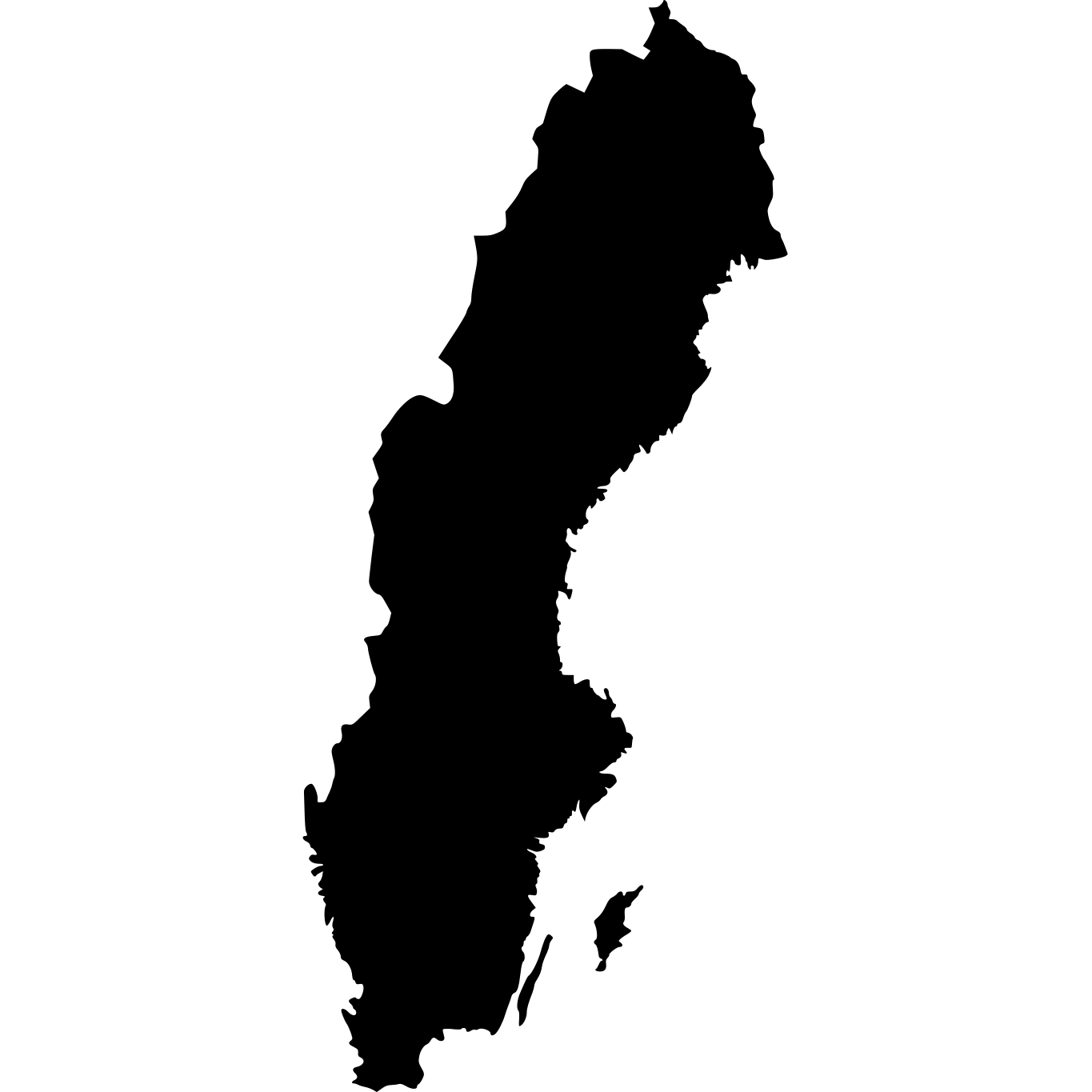
Salubrin is a Swedish brand

We're dedicated to providing you with the most up-to-date and science-backed ingredient info out there.
The data we've presented on this page has been verified by a member of the SkinSort Team.
Read more about us· Updated June 18, 2024 • Added by starstellastar_407


