Okana Mango + Apricot Sorbet Cleanser
A face cleanser with 4 ingredients.
This oil-based cleanser is mild enough to cleanse without leaving skin feeling tight or stripped.
We independently verify ingredients, backed by peer-reviewed research. Suggest an update.
What's inside






Benefits
Concerns
Ingredients Explained
This ingredient is also known as Apricot kernel oil, and it comes form the seed kernels of apricot (a member of the Rosaceae family like almond, peach, cherry, and plum).
It's mostly made up of triglycerides: oleic acid (43.9-78.5%), linoleic acid (9.7-37%), and palmitic acid (4.9-7.3%). These numbers vary depending on the variety of Prunus and the ripeness of the fruit; oleic tends to go up at late harvest while linoleic goes down.
Vitamin E is also prevalent in this ingredient and the most dominant form is gamma-tocopherol.
These compounds give the ingredient emollient and skin conditioning properties that keep the skin soft and hydrated.
There's no regulatory maximum cap for this ingredient so you'll see it across a huge concentration range (100% as a single ingredient facial oil).
On allergies: refined cosmetic-grade oils carry almost no protein. The CIR notes that people allergic to a food generally do not react to the refined oil because the allergenic protein does not partition into it (though cold-pressed grades retain more).
However, it's worth patch testing if you have a stone fruit or tree nut allergy because manufacturer processes for removing the protein can vary.
Malassezia lacks the cytosolic fatty acid synthase gene so the yeast cannot make palmitate on its own and instead uses lipases and phospholipases to release fatty acids from host lipids. Since apricot kernel oil is entirely C16-18 (right in the usable range of C11-24), this ingredient may not be fungal acne safe.
Old rabbit-ear testing did assign this ingredient a comedogenic rating of 1-2. The original author has stated that testing on rabbit ears is not an ideal model for human comedogenicity.
Human testing has proved that any finished product with a comedogenic ingredient won't automatically make you break out; it really comes down to concentration, formula, and your skin.
Just know high-oleic oils tend to feel heavier on oily skin so it's worth patch testing.
Learn more about Prunus Armeniaca Kernel OilThis ingredient is also known as Macadamia Seed Oil. It's an emollient with a fatty acid profile that closely mirrors the skin's own lipid makeup.
The palmitoleic acid content is especially notable as it's somewhat rare in plant oils. Palmitoleic acid is something your skin already makes naturally. It helps keep cell membranes structured and plays a role in fighting off harmful microbes.
This palmitoleic content is also part of why macademia seed oil absorbs quickly and doesn't leave much of a greasy residue.
It also contains oleic acid, linoleic acid, and phytosterols that can help reduce redness.
In vitro research has shown the oil to have meaningful antioxidant activity, protect fats in the skin from oxidative damage, and slow down the enzyme that breaks down hyaluronic acid.
A 2024 clinical study found it effective at improving skin hydratino and reducing wrinkle appearance when formulated into nanoemulsions.
Because it carries oleic acid (C18) and palmitic acid (C16), this ingredient may not be fungal acne safe. This is because the Malassezia yeast metabolizes in the C11-24 chain length range.
You'll also see this ingredient listed as: Macadamia Ternifolia Seed Oil.
This is the same ingredient; M. ternifolia is an older INCI naming convention for the edible macadamia nut, while M. integrifolia is the species actually cultivated for oil production. Both names refer to the same oil.
Learn more about Macadamia Integrifolia Seed OilHydrogenated Rapeseed Oil comes from the rapeseed plant. This plant is closely related to mustard, cabbage, broccoli, cauliflower and turnip.
To be hydrogenated means to be combined with hydrogen.
Like other vegetable oils, Hydrogenated Rapeseed Oil helps keep your skin hydrated.
Rapeseed Oil and Canola Oil are derived from the same plant; rapeseed oil is industrial while canola oil is culinary.
Canola oil has an erucic acid level of 2% or less, while rapeseed oil is higher. Erucic acid is a monounsaturated omega-9 fatty acid.
Learn more about Hydrogenated Rapeseed OilThough this ingredient might sound like a juicy fruit extract, it's actually the fat pressed from the mango seed kernel (or the pit).
In skincare, it behaves more like shea butter and cocoa butter than like a plant active.
The fatty acid makeup of mango seed butter makes it special; it's typically rich in stearic acid and oleic acid, with small amounts of palmitic and linoleic acid.
This combo helps it melt on skin, feel creamy, and leave behind a protective "seal" that slows down water loss.
It also contains a small amount of "extras" like tocopherols (vitamin E) and phytosterols, which are often used to support skin soothing.
Due to its fatty acid content (like oleic acid), this ingredient may not be fungal acne safe. In vitro studies have shown that Oleic Acid is one of the fatty acids that induce rapid Malassezia growth in lab settings.
Learn more about Mangifera Indica Seed ButterReviews
No written reviews yet. Be the first to review this product.
Recent searches
Search reviews by skin type, ingredient, or keyword.
Where it's from
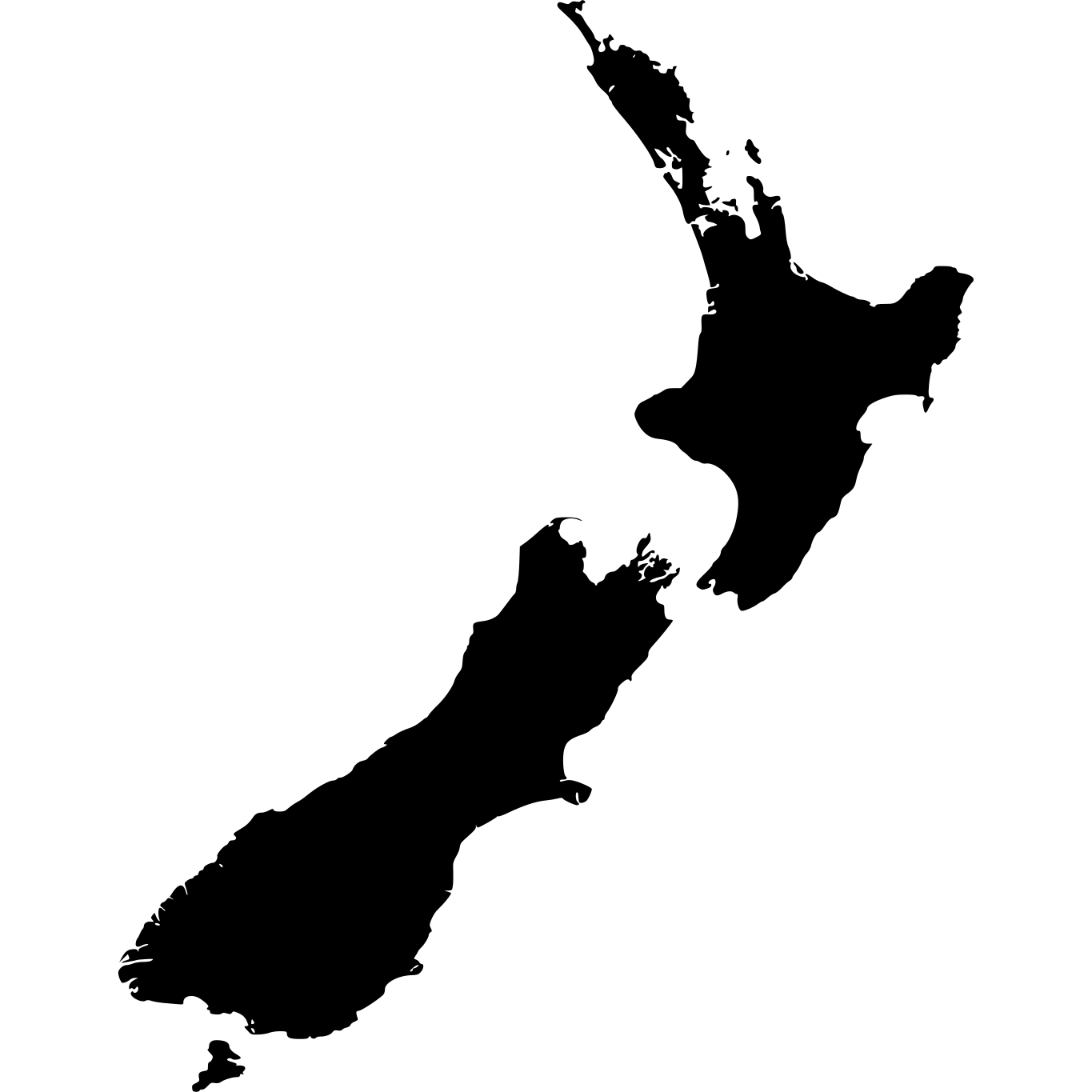
Okana is a New Zealander brand

We're dedicated to providing you with the most up-to-date and science-backed ingredient info out there.
The data we've presented on this page has been verified by a member of the SkinSort Team.
Read more about us· Updated October 30, 2025 • Added by ajmegc


