Mae Clarity
A wash off mask with 23 ingredients.
This wash off mask is made with Tremella Fuciformis Extract for a rinse-off calming boost.
Worth noting
Contains Mentha Piperita Oil, an EU-listed fragrance allergen.
We independently verify ingredients, backed by peer-reviewed research. Suggest an update.
What's inside
Ingredients List
Oryza Sativa Powder
Glycine Soja Extract
Skin ConditioningLinum Usitatissimum Seed Powder
Skin ConditioningPearl Powder
Fucus Vesiculosus Extract
Emollient
Cucumis Sativus Extract
Skin Conditioning

Tremella Fuciformis Extract
Humectant
Opuntia Vulgaris Leaf Extract
Skin ConditioningChaenomeles Sinensis Callus Culture Extract
Skin ConditioningCalendula Officinalis Extract
Skin Conditioning
Mentha Piperita Oil
Masking







Calendula Officinalis Flower Oil
Masking
Melaleuca Alternifolia Leaf Oil
Antioxidant


Hibiscus Sabdariffa Flower Extract
Skin ConditioningVaccinium Macrocarpon Fruit Extract
AstringentCarthamus Tinctorius Flower Powder
Skin ConditioningIpomoea Batatas Root Powder
Skin ConditioningHydrolyzed Yeast Protein
Skin ConditioningCoenzyme A
Skin ConditioningLauramide
Beta-Glucan
Skin Conditioning
Paeonia Suffruticosa Seed Oil
Emollient
Nelumbo Nucifera Seed Oil
Emollient
Oryza Sativa Powder, Glycine Soja Extract, Linum Usitatissimum Seed Powder, Pearl Powder, Fucus Vesiculosus Extract, Cucumis Sativus Extract, Tremella Fuciformis Extract, Opuntia Vulgaris Leaf Extract, Chaenomeles Sinensis Callus Culture Extract, Calendula Officinalis Extract, Mentha Piperita Oil, Calendula Officinalis Flower Oil, Melaleuca Alternifolia Leaf Oil, Hibiscus Sabdariffa Flower Extract, Vaccinium Macrocarpon Fruit Extract, Carthamus Tinctorius Flower Powder, Ipomoea Batatas Root Powder, Hydrolyzed Yeast Protein, Coenzyme A, Lauramide, Beta-Glucan, Paeonia Suffruticosa Seed Oil, Nelumbo Nucifera Seed Oil
Key Ingredients
Benefits
Concerns
Ingredients Explained
Oryza Sativa Powder is created by grinding dried seeds of rice, Oryza Sativa.
It is used to add volume and increase the thickness of a product. This ingredient may also have mildly exfoliating properties.
Rice contains numerous antioxidants which may help with anti-aging, such as vitamin E.
Learn more about Oryza Sativa PowderThis ingredient comes from the wild soybean. It has skin conditioning and moisturizing properties due to its interesting bioactive compounds.
The two key bioactive compounds like genistein, daidzein, soybean trypsin inhibitor, Bowman-Birk inhibitor, and phenolic acids give it a broad range of studied effects.
Studies have shown soy proteins can inhibit melanin transfer to the skin's surface to potentially help with uneven skin tone. There's also some in-vitro evidence that soybean extract stimulate collagen and elastin synthesis. A 2025 mouse study found Glycine Soja leaf/stem extract reduced markers of atopic dermatitis-like inflammation and improved skin barrier function.
Just remember this ingredient still lacks robust human clinical trials. However, it would be a great supportive ingredient in any routine unless you have a known soy allergy.
Learn more about Glycine Soja ExtractWe don't have a description for Linum Usitatissimum Seed Powder yet.
Pearl Powder is made by grinding up fresh-water or salt-water pearls. Pearls are rich in amino-acids, magnesium, potassium, calcium, and antioxidant compounds.
Two antioxidants found in pearls include: superoxide dismutase (SOD) and glutathione. Antioxidants aid in reducing the signs of aging. Gluthatione has been shown to help prevent the melanin creation process, though further research is needed.
Studies show pearls can aid in wound healing.
Pearls are harvested from oysters. To be vegan, an ingredient cannot be from an animal source.
Learn more about Pearl PowderFucus Vesiculosus Extract is derived from a type of brown algae.
Algae is an informal term for a group of aquatic organisms that can photosynthesize. It is estimated there are at least 30,000 types of Algae.
Fucus Vesiculosus Extract contains antioxidants. Antioxidants help fight free-radicals. Free-radicals are molecules that may damage your skin cells, such as pollution.
Fucus Vesiculosus Extract is also rich in sodium, potassium, and amino acids.
Many different types of algae have different benefits.
Learn more about Fucus Vesiculosus ExtractCucumis Sativus Extract comes from the cucumber. Cucumbers have anti-aging, anti-inflammatory, and hydrating properties.
Cucumbers are mostly made up of water (95%), and the other 5% is composed of: vitamin C, caffeic acid, fatty acids, amino acids, and other minerals.
Tremella Fuciformis Extract comes from the tremella fuciformis mushroom, also known as snow mushroom or white jelly mushroom.
The snow mushroom has moisturizing and antioxidant properties.
Snow mushroom is rich in polysaccharides, giving it moisturizing benefits. As a humectant, snow mushroom helps draw moisture from the air to the skin. Polysaccharides are able to mimic our skin's natural carbohydrates to help the skin retain water.
Snow mushroom has been shown to help with anti-aging due to its antioxidants. It increases the presence of superoxide dismutase in our brain and liver. Superoxide is a by-product of oxygen metabolism. It left unregulated, superoxide causes cell damage. Thus, superoxide dismutase acts as an antioxidant to protect our living cells.
Another study from 2016 showed snow mushroom extract blocks the skin from creating melanin when exposed to UVB. Thus, it may help protect against the signs of aging from sun exposure. However, more studies are needed to confirm this. Another study from 2021 found snow mushroom to protect against UVA damage as well.
This white mushroom is native to Asian countries such as China, Korea, Japan, and Thailand. It is a common ingredient in traditional Chinese cuisine and medicine.
Learn more about Tremella Fuciformis ExtractWe don't have a description for Opuntia Vulgaris Leaf Extract yet.
We don't have a description for Chaenomeles Sinensis Callus Culture Extract yet.
Calendula Officinalis Extract comes from the common Marigold plant.
Marigold flowers contain flavonoids. Flavonoids are a group of substances found naturally in plants. They possess antioxidant and inflammation properties.
This ingredient may help soothe your skin by reducing inflammation. Emerging studies show it inhibits nitrous oxide production safely, therefore reducing inflammation.
Marigolds have been used in traditional medicine throughout Asia and Europe.
Learn more about Calendula Officinalis ExtractThis essential oil is steam-distilled from peppermint leaves, also known as peppermint oil. It's mainly used for scent in skincare but also provides that signature "cooling" sensation.
Peppermint oil is a "feels amazing" ingredient until it doesn't.
At higher doses or for those with sensitive skin, methol-type cooling can quickly turn into burning/irritation. It can also trigger irritant dermatitis or even allergic contact dermatitis. In a large patch-test dataset, peppermint oil had a low but positive rate for this.
In cosmetics, Cosmetic Safety Reviews (CIR) concludes that peppermint oil is safe to use when formulated to be non-sensitizing with some restrictions; for instance, pulegone, a naturally occurring component of peppermint oil, should not exceed 1%.
Since peppermint oil contains fragrance allergens such as limonene, linalool, and menthol, it can be sensitizing for those with rosacea, eczema, a broken skin barrier, or just sensitive skin in general.
In Japan, this ingredient is known as Hakka Yu.
Learn more about Mentha Piperita OilCalendula Officinalis Flower Oil comes from the common Marigold plant. Marigolds have antioxidant and anti-inflammatory properties.
This is due to their flavonoid content. Flavonoids are a group of substances found naturally in plants. They possess antioxidant and inflammation properties.
This ingredient is skin soothing and helps reduce inflammation. Emerging studies show it inhibits NO (nitric oxide) production to reduce inflammation. NO acts as a signaling molecule that can tell the skin to become inflammed. By regulating NO, marigold can effectively soothe the skin.
A study from 2008 found marigold to have potential anti-fungal properties against 23 types of fungus found on the human body. Please note - fungal acne comes from a yeast (not a fungus).
Marigolds have been used in traditional medicine throughout Asia and Europe.
Learn more about Calendula Officinalis Flower OilThis ingredient is also known as tea tree oil. It has antioxidant, anti-inflammatory, and antimicrobial properties.
Tea tree oil is a complex lipophilic (fat-loving) oil that contains around 100 compounds with terpinen-4-ol being the most abundant (~40%).
Terpinen-4-ol is responsible for tea tree oil's broad-spectrum antimicrobial activity and makes it a well-researched option for acne.
Clinical studies support 5% tea tree oil as an effective topical treatment for mild to moderate acne. A study with 124 patients compared 5% tea tree oil gel to 5% benzoyl peroxide and both reduced acne (though tea tree oil worked more slowly).
Besides acne, it is also seen in anti-dandruff shampoos and scalp treatments for it's antimicrobial and anti-seborrheic properties.
Safety-wise, the allergic potential of low concentrations on healthy skin is considered low. However, oxidized (old or improperly stored) tea tree oil is a stronger sensitizer.
Irritation can also occur if using the undiluted oil on skin; it's best to use this ingredient as part of a carefully crafted cosmetic formula. This is because regulations require tea tree oil in cosmetics to be stabilized to prevent degradation.
This ingredient has been deemed safe up to 2% in shampoo, 1% in cleansers, and 0.1% in face cream by the EU's Scientific Committee on Consumer Safety (SCCS).
There is some lab evidence that tea tree oil is antifungal against Malassezia, but it is a supportive option at best and not a replacement for proven antifungal treatments.
Learn more about Melaleuca Alternifolia Leaf OilThis extract comes from the Roselle flower, or Hibiscus Sabdariffa. Roselle flowers are rich in antioxidants.
Studies found the antioxidants in Roselle flowers to potentially help reduce UV-B damage.
Vaccinium Macrocarpon Fruit Extract comes from the cranberry fruit. Vaccinium Macrocarpon is the North American species of cranberries native to eastern Canada.
As an astringent, cranberry extract helps tighten the pores by constricting the cells.
Cranberries contain Vitamin E and Vitamin C, both potent antioxidants. It also contains minerals such as manganese and copper.
Learn more about Vaccinium Macrocarpon Fruit ExtractWe don't have a description for Carthamus Tinctorius Flower Powder yet.
We don't have a description for Ipomoea Batatas Root Powder yet.
We don't have a description for Hydrolyzed Yeast Protein yet.
We don't have a description for Coenzyme A yet.
We don't have a description for Lauramide yet.
Beta-Glucan is a soluble polysaccharide (a chain of glucose sugars) sourced from the cells walls of oats, baker's yeast, mushrooms, and seaweed.
It's a rare ingredient that pulls double-duty as a heavy-duty hydrator and skin-soothing repair agent.
On the surface, it acts as a humectant that holds water in place and reduces moisture loss for a plumper, smoother feel, while its anti-inflammatory and antioxidant properties make it a great pick for calming redness or sensitive skin
The more interesting story is underneath:
Despite its large molecular size, oat beta-glucan has been shown to penetrate the epidermis and reach the dermis by slipping between skin cells. Here, it interacts with fibroblasts and macrophages to nudge collagen synthesis and support wound repair.
A small 2005 split-face clinical study of 27 subjects found topical beta-glucan produced measurable reductions in wrinkle depth, height, and roughness after 8 weeks of use.
It is worth noting the trial was small and the penetration testing used frozen, irradiated skin so the anti-aging data is encouraging rather than definitive.
This ingredient gets along with pretty much everything and is typically used around 0.1-1%.
Fungal acne: This ingredient is not a food source for the Malassezia yeast because it is a glucose polysaccharide with no fatty acid or ester component.
Learn more about Beta-GlucanPaeonia Suffruticosa Seed Oil is an oil and isn't fungal acne safe.
Nelumbo Nucifera Seed Oil is an oil.
Reviews
No written reviews yet. Be the first to review this product.
Recent searches
Search reviews by skin type, ingredient, or keyword.
Where it's from
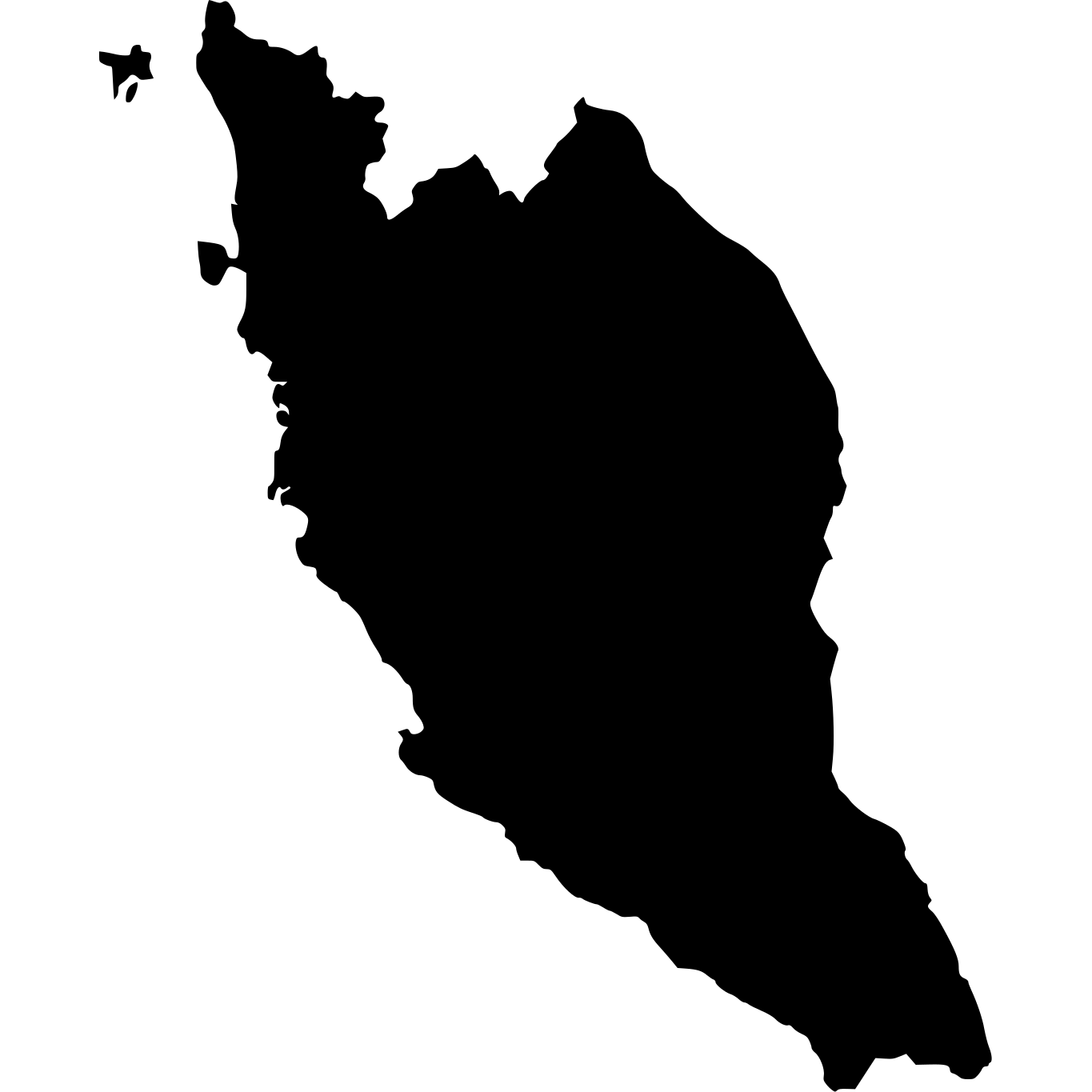
Mae is a Malaysian brand
Often compared with

We're dedicated to providing you with the most up-to-date and science-backed ingredient info out there.
The data we've presented on this page has been verified by a member of the SkinSort Team.
Read more about us· Published May 31, 2023 • Added by kxy.jan


