Granado Sabonete Sulfuroso
A face cleanser with 15 ingredients, including exfoliants.
This sulfur foaming cleanser is formulated around Sulfur to clear breakouts.
We independently verify ingredients, backed by peer-reviewed research. Suggest an update.
What's inside











Key Ingredients
Benefits
Concerns
Ingredients Explained
This ingredient is also known as African Palm Oil. It is a plant-based emollient that is slightly occlusive leaning.
As an emollient, it helps moisturize the skin and supports the lipid barrier. Clinical testing found it improved skin hydration, reduced transepidermal water loss (TEWL), and increased skin elasticity.
The Cosmetic Ingredient Review Panel has assessed the available safety data and found it to safe in cosmetics.
The comedogenic rating of 2/5 means it is low-to-moderate risk of pore clogging; please remember comedogenic ratings cannot predict how the overall formula will behave on skin.
Because its dominant fatty acids (palmitic and oleic acid) fall within the C11-24 range that Malassezia can use as a growth substrate, this ingredient may not be fungal acne safe.
Learn more about Elaeis Guineensis OilWater. It's the most common cosmetic ingredient of all. You'll usually see it at the top of ingredient lists, meaning that it makes up the largest part of the product.
So why is it so popular? Water most often acts as a solvent - this means that it helps dissolve other ingredients into the formulation.
You'll also recognize water as that liquid we all need to stay alive. If you see this, drink a glass of water. Remember to stay hydrated!
Learn more about WaterPalm kernel oil comes from the African oil palm fruit's outer pulp (different from palm oil). It is an emollient that creates a thin film on skin to smooth roughness and lock in moisture.
This oil has a fatty acid profile of mostly lauric (~42%), stearic, and oleic acid.
Overall, this ingredient works well for dry skin but it might be too heavy for oily or acne-prone skin.
Because it is rich in lauric acid, this ingredient may not be fungal acne (Malassezia folliculitis) safe.
Learn more about Elaeis Guineensis Kernel OilWe don't have a description for Tristearin yet.
Sulfur is one of skincare's oldest ingredients that has been used to treat acne, rosacea, seborrheic dermatitis, scabies, and tinea versicolor.
How does it work?
When sulfur touches skin, it reacts with an amino acid in skin cells (called cysteine) to create cystine and hydrogen sulfide.
That hydrogen sulfide helps loosen dead skin cells to exfoliate. And here's a geeky detail: the smaller the Sulfur particles, the more they interact with skin and the better they work.
Sulfur also has antifungal and antibacterial activity, which is why you'll see it in both acne treatments and dandruff shampoos.
In the US, acne products can use 3-10% sulfur while dandruff products use 2-5%. It's also often paired with Sodium Sulfacetamide, and using that combo twice daily for 12 weeks reduced inflammatory acne spots by about 80%.
The most common complains are the smell and dryness. Otherwise, side effects are uncommon.
If you have a "sulfa" allergy, that's an allergy to sulfonamide drugs and this doesn't mean you'll react to elemental sulfur.
A 1972 study suggested sulfur might clog pores. Elemental sulfur caused some clogged pores on rabbit ears and human backs (though the researchers noted the effect was mild).
A 1978 follow-up tested this on 52 people. After six weeks of patches with 5% Sulfur, skin biopsies showed no link between Sulfur and clogged pores. The surprise? The base the Sulfur was mixed into was what caused clogged pores. Later reviewers also noted that other studies couldn't repeat the 1972 results.
So why does Sulfur have a comedogenic rating of 3?
That number comes from a 1989 rabbit ear study by dermatologist James Fulton, which gave a 3 to water-soluble sulfur specifically. Even so, a 3 isn't a big red flag. Fulton's own scale treats 2 to 3 as borderline.
Human testing has also proved that any finished product with a comedogenic ingredient won't automatically make you break out; it really comes down to concentration, formula, and your skin.
Learn more about SulfurZea Mays Starch is starch made from corn. You might know this as cornstarch . It is used to thicken a product. It can replace talc as an absorbent.
The pH of cornstarch is 5.92.
Cornstarch is a common food ingredient used to thicken soups or to make corn syrup.
Learn more about Zea Mays StarchSodium Hydroxide is also known as lye or caustic soda. It is used to adjust the pH of products; many ingredients require a specific pH to be effective.
In small amounts, sodium hydroxide is considered safe to use. However, large amounts may cause chemical burns due to its high alkaline.
Your skin has a natural pH and acid mantle. This acid mantle helps prevent harmful bacteria from breaking through. The acid mantle also helps keep your skin hydrated.
"Alkaline" refers to a high pH level. A low pH level would be considered acidic.
Learn more about Sodium HydroxideTalc is a clay mineral. It helps absorb moisture and improve the texture of products. Like other types of clay, Talc can have a slight exfoliating effect on skin. Talc can be added to increase the volume of products.
Some Baby powders are made by combining talc with corn starch. The word "talc" comes from Latin and originates from Arabic. Talc is a mineral commonly found throughout the world.
If you have any concerns about using talc, we recommend checking out the FDA's official page.
Learn more about TalcWe don't have a description for CI 77220 yet.
Tetrasodium EDTA is the salt formed from neutralizing ethylenediamine tetraacetic acid with sodium hydroxide. It is a chelating agent and used to prevent metal ions from binding to other ingredients. This helps keep the product and ingredients stable.
Tetrasodium EDTA comes as a white solid and is soluble in water.
We don't have a description for Etidronic Acid yet.
We don't have a description for Disodium Distyrylbiphenyl Disulfonate yet.
Cellulose Gum is a water-soluble polymer that comes from cellulose. It is used to change the texture of a product and to help stabilize emulsions.
As an emulsifier, cellulose gum specifically thicken the texture of water-based products.
This ingredient is considered hypoallergenic and non-toxic. Cellulose Gum can be found in cosmetics, food, and other household goods such as paper products.
Learn more about Cellulose GumCI 19140 is also known as Tartrazine. Tartrazine is a synthetic dye used in cosmetics, foods, and medicine to add a yellow color.
Tartrazine is created from petroleum and is water-soluble.
Some people may experience allergies from this dye, especially asthmatics and those with an aspirin intolerance.
Learn more about CI 19140This is a cosmetic colorant that gives an orange color to products. It is water-soluble.
Reviews
No written reviews yet. Be the first to review this product.
Recent searches
Search reviews by skin type, ingredient, or keyword.
Where it's from
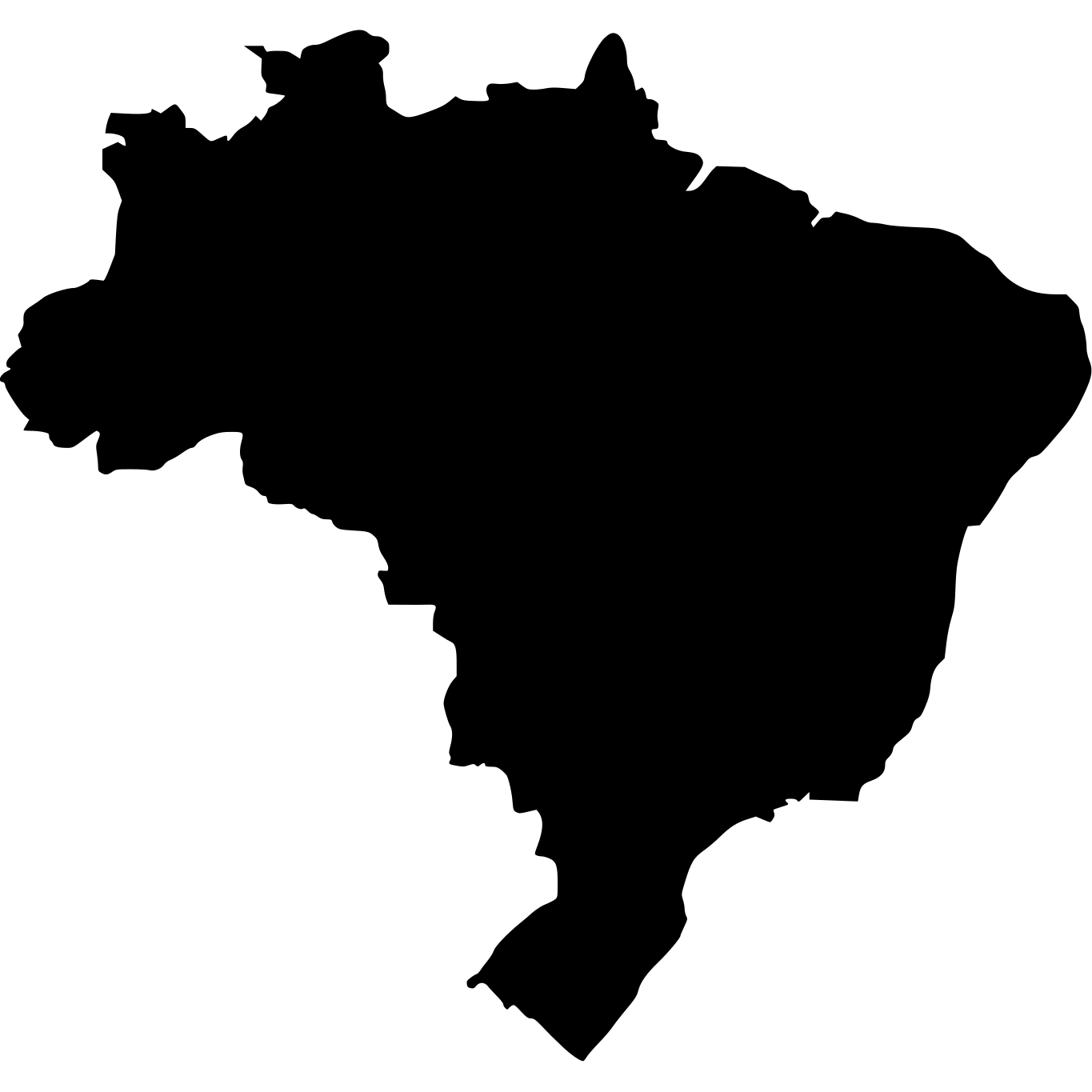
Granado is a Brazilian brand

We're dedicated to providing you with the most up-to-date and science-backed ingredient info out there.
The data we've presented on this page has been verified by a member of the SkinSort Team.
Read more about us· Updated April 16, 2024 • Added by anitititi


