Beeo Sivilce Ve Yağlanma Karşıtı Serum
A serum with 13 ingredients, including hyaluronic acid and propolis.
This acne serum is formulated around Propolis Extract and Melaleuca Alternifolia Leaf Oil to clear breakouts and balance excess oil.
We independently verify ingredients, backed by peer-reviewed research. Suggest an update.
What's inside
















Key Ingredients
Benefits
Concerns
Ingredients Explained
Water. It's the most common cosmetic ingredient of all. You'll usually see it at the top of ingredient lists, meaning that it makes up the largest part of the product.
So why is it so popular? Water most often acts as a solvent - this means that it helps dissolve other ingredients into the formulation.
You'll also recognize water as that liquid we all need to stay alive. If you see this, drink a glass of water. Remember to stay hydrated!
Learn more about WaterGlycerin (or glycerol) is a compound naturally found in your skin. It's a powerhouse humectant that pulls water into the stratum corneum.
Topically, glycerin does several things at once:
Your skin makes glycerin on its own (mostly from sebaceous oil breakdown) and shuttles it to your outermost layer of skin, or your epidermis, via aquaporin-3.
Aquaporin-3 is a transporter that is essential for normal skin hydration, elasticity, and repair. Interestingly, mice lacking in AQP3 have dry and less elastic skin that can be fully corrected with glycerin.
This ingredient is non-irritating, plays well with almost every ingredient, and works across all skin types. Typical use is anywhere between 3-10% but can go up to 79% in some leave-on products.
Just know very high concentrations (>40%) can feel tacky in low humidity.
Glycerin is the name for this ingredient in American English. British English uses Glycerol/Glycerine.
Learn more about GlycerinWe don't have a description for Rosa Multiflora Fruit Extract yet.
We don't have a description for Actinidia Polygama Fruit Extract yet.
Beta Vulgaris Root Extract comes from the beet root plant. Beet Root has high Vitamin C content.
Beet roots also contain antioxidants. Antioxidants help fight free-radicals. Free-radicals are molecules that may damage your skin cells, such as pollution.
Beet root has many benefits when eaten. More research is needed on applying beetroot in skincare.
Beet Root is used to add pink/red color.
Learn more about Beta Vulgaris Root ExtractPropanediol is an all-star ingredient. It softens, hydrates, and smooths the skin.
It’s often used to:
Propanediol is not likely to cause sensitivity and considered safe to use. It is derived from corn or petroleum with a clear color and no scent.
Learn more about PropanediolXylitol is a humectant and prebiotic. It can help with dry skin.
In studies, xylitol has been shown to improve dry skin. It decreased transepidermal water loss, or when water passes through the skin and evaporates. Xylitol also showed to help improve the biomechanical properties of the skin barrier.
The prebiotic property of xylitol may also help reinforce our skin's natural microbiome. Having a healthy microbiome prevents infection by bad bacteria and helps with hydration.
As a humectant, Xylitol helps draw moisture from both the air and from deeper skin layers. This helps keep skin hydrated.
Xylitol is a sugar alcohol and commonly used as a sugar substitute. It is naturally occurring in plants such as strawberries and pumpkin.
Learn more about XylitolThis ingredient is also known as octanoic acid. It is a fatty acid that is naturally found in (and sourced from) coconut oil and palm kernel oil.
In cosmetics, it plays several roles:
The antimicrobial activity has been documented: Caprylic Acid is able to disrupt microbial cell membranes and is confirmed to be effective against some bacteria and yeasts.
Cosmetic use levels are often under 5% because very high concentrations (70-99%) can be corrosive as shown in patch-testing.
On the fungal acne side, Caprylic Acid sits outside the C11-24 range that the Malassezia yeast can metabolize. It is also one of the more studied fatty acids for anti-Malassezia activity; a study from 2020 showed that just 0.2 caprylic acid was enough to disrupt Malassezia furfur under a Transmission Electron Microscope.
The comedogenic rating of 1 and irritancy rating of 3 comes from the 1989 Rabbit Ear Study. Since rabbit ear models produce a lot of false positives, anything scoring 0-1 means it is unlikely to cause comedones in humans.
The 3 for irritancy reflects that capylic acid is a weak organic acid that is corrosive in undiluted form.
Just so you know, both of these numbers came from being tested at 100% on hypersensitive rabbit skin. This is going to look very different at the <5% use levels in your cosmetics.
Plus, comedogenicity is more about the finished formula rather than individual ingredients. Be sure to patch test if you're unsure!
Learn more about Caprylic AcidHydroxyethylcellulose is used to improve the texture of products. It is created from a chemical reaction involving ethylene oxide and alkali-cellulose. Cellulose is a sugar found in plant cell walls and help give plants structure.
This ingredient helps stabilize products by preventing ingredients from separating. It can also help thicken the texture of a product.
This ingredient can also be found in pill medicines to help our bodies digest other ingredients.
Learn more about HydroxyethylcellulosePropolis Extract is a natural ingredient derived from propolis (also known as bee glue). Bees make propolis by mixing their saliva and beeswax with resins collected from tree buds and plants.
This ingredient is packed with bioactive compounds like flavonoids, phenolic acids, and amino acids that give it antioxidant and anti-inflammatory properties.
Research shows it can help:
It also pairs nicely with hydrating ingredients like niacinamide and ceramides.
Just so you know, Propolis Extract is recognized as a contact allergen. In patch tests done in the EU, roughly 1-6% of patients react to it. Be sure to steer clear of this ingredient if you have a known allergy to bee products.
Since it is an animal-derived product, this ingredient is not considered vegan. For vegan alternatives, check out Galactomyces Ferment Filtrate or Centella Asiatica Extract.
Learn more about Propolis ExtractThis ingredient is also known as tea tree oil. It has antioxidant, anti-inflammatory, and antimicrobial properties.
Tea tree oil is a complex lipophilic (fat-loving) oil that contains around 100 compounds with terpinen-4-ol being the most abundant (~40%).
Terpinen-4-ol is responsible for tea tree oil's broad-spectrum antimicrobial activity and makes it a well-researched option for acne.
Clinical studies support 5% tea tree oil as an effective topical treatment for mild to moderate acne. A study with 124 patients compared 5% tea tree oil gel to 5% benzoyl peroxide and both reduced acne (though tea tree oil worked more slowly).
Besides acne, it is also seen in anti-dandruff shampoos and scalp treatments for it's antimicrobial and anti-seborrheic properties.
Safety-wise, the allergic potential of low concentrations on healthy skin is considered low. However, oxidized (old or improperly stored) tea tree oil is a stronger sensitizer.
Irritation can also occur if using the undiluted oil on skin; it's best to use this ingredient as part of a carefully crafted cosmetic formula. This is because regulations require tea tree oil in cosmetics to be stabilized to prevent degradation.
This ingredient has been deemed safe up to 2% in shampoo, 1% in cleansers, and 0.1% in face cream by the EU's Scientific Committee on Consumer Safety (SCCS).
There is some lab evidence that tea tree oil is antifungal against Malassezia, but it is a supportive option at best and not a replacement for proven antifungal treatments.
Learn more about Melaleuca Alternifolia Leaf OilHyaluronic acid (HA) is a glycosaminoglycan (basically a long sugar chain) that your skin already makes on its own. In your skin, HA lives in the extracellular matrix and acts as the body's moisture reservoir.
Topically, HA is a humectant that binds water and helps skin look more plump, smooth, and hydrated.
The only catch is that HA isn't a single thing; it actually comes in a wide range of molecular weights (~50 - 2,000+ kDA) and size matters.
Some clinical evidence links low molecular weight versions to improved wrinkle depth, elasticity, anti-inflammatory effects, and barrier repair.
This is why the best HA serums blend the two sizes together so you get the best of both worlds.
The majority of cosmetic HA is produced by bacterial fermentation, typically using Streptococcus or Bacillus strains. Typical use levels in skincare sit around 0.1-2%.
A clinical study using a 0.2% low-molecular weight HA gel showed improvement in facial seborrheic dermatitis with excellent tolerance.
These are some other common types of Hyaluronic Acid:
Learn more about Hyaluronic AcidBee venom comes from bees (of course!).
There are many claims about bee venom being anti-aging. It is often called "natural botox". This is because it causes inflammation and tightening when applied to the skin. However, further studies are needed to look into the benefits of this ingredient.
Bee venom contains peptides, amino acids, and enzymes. It's main peptide is called melittin. Bee venom and its components are being studied for their antiviral and anti-inflammatory properties.
While cosmetics usually do not contain enough bee venom to cause an allergic reaction (unless you have an extreme allergy), we recommend you speaking with a professional if you have concerns.
Being cruelty-free means a brand does not experiment on animals.
If you're worried about the well-being of the bees, we recommend looking more into the company of the product.
Since bee venom is a product from bees, it is not considered vegan. However, there is much debate about this and many brands claim their bee products to be vegan.
Here at SkinSort, we are asking everyone to be kind to bees. They are important for many ecosystems and are endangered.
Learn more about Bee VenomReviews
No written reviews yet. Be the first to review this product.
Recent searches
Search reviews by skin type, ingredient, or keyword.
Where it's from
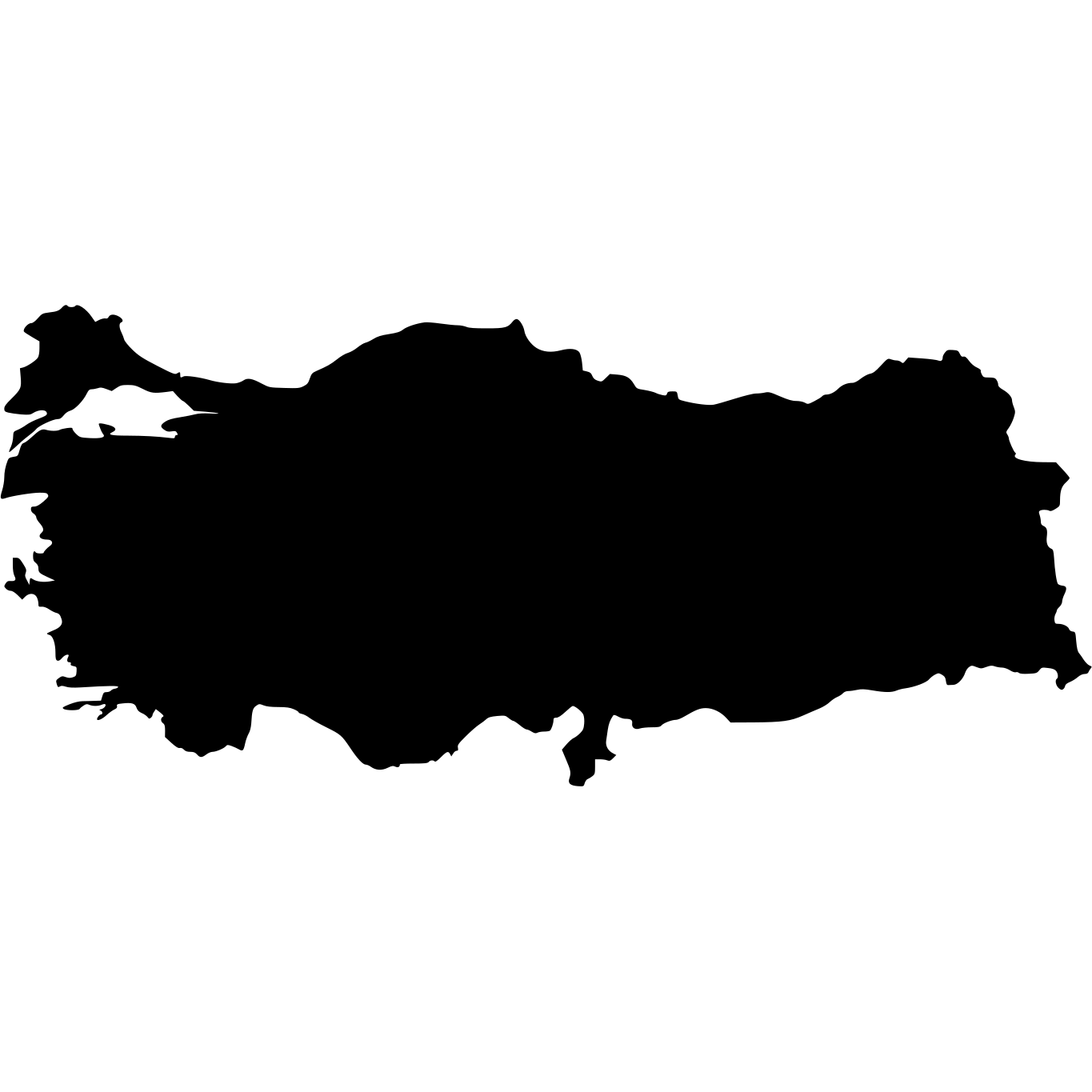
Beeo is a Turkish brand

We're dedicated to providing you with the most up-to-date and science-backed ingredient info out there.
The data we've presented on this page has been verified by a member of the SkinSort Team.
Read more about us· Updated December 8, 2025 • Added by ren666


