Abelin Barrier Fortifying Cleanser
A highly rated face cleanser with 12 ingredients, including PHA.
Face cleanser with 12 ingredients that contains PHA
We independently verify ingredients, backed by peer-reviewed research. Suggest an update.
What's inside
Ingredients List
Sodium C14-16 Olefin Sulfonate
Cleansing

Cyamopsis Tetragonoloba Gum
Emulsion StabilisingAnanas Sativus Fruit Extract
Skin ConditioningFragaria Ananassa Fruit Extract
Skin Conditioning
Mangifera Indica Fruit Extract
Skin Conditioning














Sodium C14-16 Olefin Sulfonate, Cyamopsis Tetragonoloba Gum, Ananas Sativus Fruit Extract, Fragaria Ananassa Fruit Extract, Mangifera Indica Fruit Extract, Musa Sapientum Fruit Extract, Allantoin, Aloe Barbadensis Sprout, Bixa Orellana Seed Extract, Citrus Reticulata Peel Oil, Gluconolactone, Sodium Benzoate
Key Ingredients
Benefits
Concerns
Ingredients Explained
Sodium C14-16 Olefin Sulfonate is a surfactant that helps water and oil mix so that dirt, sweat, sebum, and sunscreen can rinse away easily. It's not technically a sulfate, but behaves similarly in formulas.
What it does:
Sodium C14-16 Olefin Sulfonate is a strong cleansing surfactant and is much stronger than many mild cleansers. Because it works deeply, it can disrupt the skin's barrier. This can lead to dryness or irritation for those with sensitive skin.
Compared to gentler surfactants, it's effective but more likely to dry or irritate if not balanced with soothing ingredients.
CIR considers sodium α-olefin sulfonates (including C14-16) to be safe for use in rinse-off products when properly formulated. It is poorly absorbed through normal skin but absorption increases if the skin barrier is already damaged.
Learn more about Sodium C14-16 Olefin SulfonateGuar gum is made from the guar bean, a plant native to India. It is considered a form of polysaccharide and naturally contains sugar.
This ingredient is often used to thicken a product or create a gel-like consistency.
It also has emulsion properties to help keep ingredients together.
Learn more about Cyamopsis Tetragonoloba GumThis extract comes from the pineapple fruit. Its main claim to fame is bromelain, a gentle exfoliator that helps remove dead skin cells from the outermost layer of skin.
Exfoliation from bromelain is considered a gentler alternative to physical or chemical exfoliants; this makes it suitable for sensitive skin types.
Beyond exfoliation, this extract also contains natural sugars with humectant properties and some vitamin C.
Overall, this is a well-tolerated and low-risk ingredient unless you have a pineapple allergy.
Learn more about Ananas Sativus Fruit ExtractFragaria Ananassa Fruit extract comes from garden strawberry. It is a hybrid strawberry created from wild strawberries.
Strawberries have antioxidant and hydrating properties. They contain many compounds that are potent antioxidants, such as anthocyanins and Vitamin C.
The polysaccharides in strawberry help moisturize our skin.
Strawberries also contain acids such as ellagic acid, a compound that may protect our skin against UVB damage. Another acid present is citric acid.
This strawberry is the kind most commonly eaten and found at grocery stores.
Learn more about Fragaria Ananassa Fruit ExtractWe don't have a description for Mangifera Indica Fruit Extract yet.
This ingredient is also known as banana fruit extract. It has moisturizing and antioxidant properties.
Bananas are nutrient rich in vitamins A, B, C, E, and minerals like magnesium.
Early studies suggest it may also help reduce hyperpigmentation by interrupting certain skin processes but more research is needed.
Learn more about Musa Sapientum Fruit ExtractAllantoin is a soothing ingredient known for its protective and moisturizing properties; it's basically a quiet workhorse ingredient you can find in a huge range of cosmetics.
Though it can be derived from the comfrey plant, allantoin is produced synthetically for cosmetic products to ensure purity.
Research shows it can encourage your skin cells to turn over and renew by stimulating keratinocyte and fibroblast proliferation.
It also has mild keratolytic properties to help loosen and shed dead skin cells without being harsh.
Studies also suggest allantoin can help calm inflammation by dialing down some of the chemical signals your skin sends out when it is irritated.
This ingredient is typically used in the 0.1-0.5% range, and the FDA recognizes it as a skin protectant in OTC products up to 2%.
Overall, allantoin is a wonderful addition to most routines; it is stable across a wide pH range (~4-8), works well with other ingredients, and is considered non-sensitizing/non-irritating.
Fun fact: Allantoin is naturally occurring in comfrey root, beets, chamomile, and wheat sprouts. Our bodies even produce it as a byproduct of uric acid metabolism.
Learn more about AllantoinWe don't have a description for Aloe Barbadensis Sprout yet.
We don't have a description for Bixa Orellana Seed Extract yet.
Citrus Reticulata Peel Oil is a fragrance and is an oil.
Gluconolactone is a PHA. PHAs are a great gentle alternative to traditional AHAs.
When applied, Gluconolactone has the same affect on skin as AHAs such as lactic acid. It helps dissolve the dead skin cells in the top layer of your skin. This improves texture and brightens the skin.
PHAs are more gentle than AHAs due to their larger structure. They do not penetrate as deeply as AHAs and take a longer time to dissolve dead cells. Studies show PHAs do not cause as much irritation.
Gluconolactone has some interesting properties:
In a 2004 study, Gluconolactone was found to prevent UV damage in mouse skin cells and has not been found to increase sun sensitivity. However, we still recommend wearing SPF daily.
This ingredient is is an created by reacting gluconic acid with an alcohol.
Learn more about GluconolactoneSodium Benzoate is a preservative. It's used in both cosmetic and food products to inhibit the growth of mold and bacteria. It is typically produced synthetically.
Both the US FDA and EU Health Committee have approved the use of sodium benzoate. In the US, levels of 0.1% (of the total product) are allowed.
Sodium benzoate works as a preservative by inhibiting the growth of bacteria inside of cells. It prevents the cell from fermenting a type of sugar using an enzyme called phosphofructokinase.
It is the salt of benzoic acid. Foods containing sodium benzoate include soda, salad dressings, condiments, fruit juices, wines, and snack foods.
Studies for using ascorbic acid and sodium benzoate in cosmetics are lacking, especially in skincare routines with multiple steps.
We always recommend speaking with a professional, such as a dermatologist, if you have any concerns.
Learn more about Sodium BenzoateReviews
Recent searches
Search reviews by skin type, ingredient, or keyword.
Where it's from
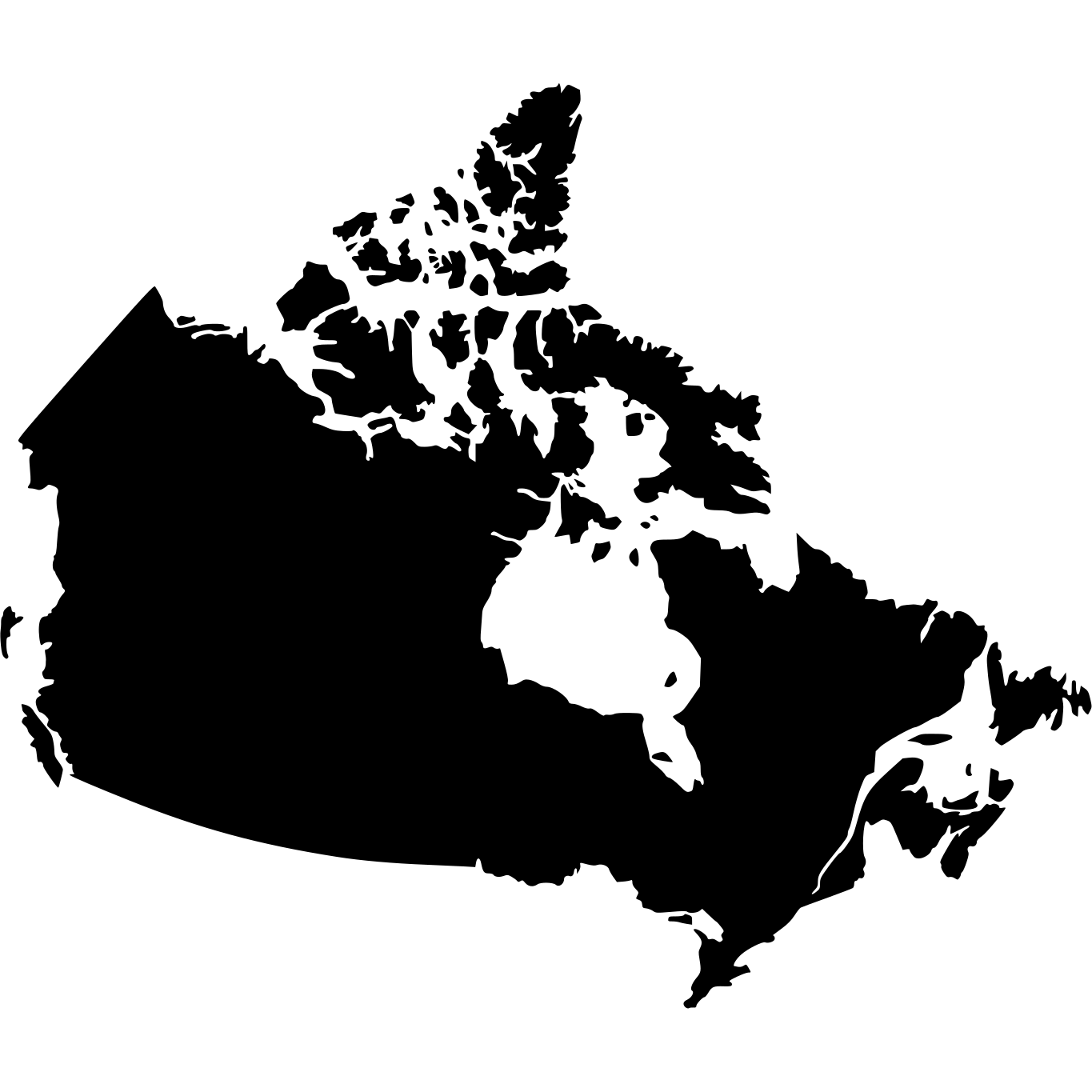
Abelin is a Canadian brand

We're dedicated to providing you with the most up-to-date and science-backed ingredient info out there.
The data we've presented on this page has been verified by a member of the SkinSort Team.
Read more about us· Updated September 30, 2025 • Added by ladiiiiiiiiiiiii_


