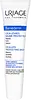
This barrier-repair lip moisturizer is formulated around Butyrospermum Parkii Butter to strengthen the lip barrier and hydrate lips.
This barrier-repair lip moisturizer is formulated around Squalane to strengthen the lip barrier and hydrate lips.


What's inside
What's inside
 Key Ingredients
Benefits
Concerns
Ingredients Side-by-side





Paraffinum Liquidum
Emollient


Cera Microcristallina
Emulsion StabilisingParaffin
Skin Conditioning
Hydrogenated Polydecene
EmollientDimethicone
Emollient

Triacontanyl Pvp
HumectantDipentaerythrityl Tetrahydroxystearate/Tetraisostearate
Skin Conditioning

Glycerin
Humectant

Squalane
Emollient
Brassica Campestris Sterols
EmollientTocopheryl Acetate
Antioxidant


Synthetic Wax
Abrasive
Ethylene/Propylene Copolymer
Abrasive
Polyethylene
Abrasive
Polyquaternium-61
Skin ConditioningBHT
Antioxidant
Paraffinum Liquidum, Cera Microcristallina, Paraffin, Hydrogenated Polydecene, Dimethicone, Triacontanyl Pvp, Dipentaerythrityl Tetrahydroxystearate/Tetraisostearate, Glycerin, Squalane, Brassica Campestris Sterols, Tocopheryl Acetate, Synthetic Wax, Ethylene/Propylene Copolymer, Polyethylene, Polyquaternium-61, BHT
Reviews
Ingredients Explained
These ingredients are found in both products.
Ingredients higher up in an ingredient list are typically present in a larger amount.
Paraffin is a solid wax that pulls its weight as an emollient, occlusive, and consistency-booster.
It softens skin and lays down a protective film to slow water loss and gives products a stable body and structure.
The cosmetic grade stuff is highly refined with a solid safety record. The CIR Expert Panel has repeatedly reaffirmed this ingredient to be safe in current practices of use and concentration.
The worry about carcinogenic compounds only applies to industrial grades, not the purified version used in skincare.
Despite its reputation, the highly reformed form is non-comedogenic and doesn't penetrate deeply into skin.
The good news for fungal-acne prone folks: the Malassezia yeast feeds on fatty acids and lipids and paraffin doesn't contain any of these (so there's nothing for the yeast to metabolize). This ingredient is considered fungal acne safe.
Learn more about ParaffinParaffinum Liquidum is a highly-refined cosmetic-grade mineral oil. It is also known as liquid paraffin.
Despite its controversial reputation, the science is pretty clear: it's one of the most well-studied and effective moisturizing ingredients out there.
As an occlusive, it forms a protective layer on the skin that locks in moisture and prevents transepidermal water loss (TEWL). This makes it especially great for compromised skin barriers.
The "it clogs your pores" myth has been around for decades; a study found that industrial-grade mineral oil may be comedogenic but cosmetic-grade mineral oil is not (these two are very, very different).
A 2017 review concluded that cosmetic use of mineral oils and waxes does not present a risk to consumers due to absorption.
Mineral oil got a bad rap from the old rabbit ear studies. When tested on actual human skin, cosmetic-grade mineral oil showed no comedogenic activity. The rating of 0 is a correction of outdated science.
Mineral oil is an inert substance with no fatty acids so there's nothing to feed Malassezia. This ingredient is fungal acne safe.
Learn more about Paraffinum LiquidumSynthetic Wax is a manufactured hydrocarbon wax. In formulas, it works as an occlusive emollient that helps reduce water loss and improves the spreadability of products.
Research comparing synthetic wax to traditional mineral-derived products found that formulas containing it perform as well for skin hydration.
It is considered non-comedogenic and vegan-friendly.
This ingredient has a well-established safety record by the CIR Expert Panel for Cosmetic Ingredient Safety.
Synthetic Waxes are straight/branched-chain hydrocarbons with no ester bond or fatty acids. That means there is nothing for the Malassezia yeast to feed on.
Learn more about Synthetic Wax

