Iroha Nature XL Pimple Patches
A facial treatment with 10 ingredients, including BHA and exfoliants.
This blemish patch uses Hydrocolloid to cover open blemishes and absorb the fluid they release.
Worth noting
Contains Salicylic Acid, an exfoliating acid best introduced gradually.
We independently verify ingredients, backed by peer-reviewed research. Suggest an update.
What's inside






















Key Ingredients
Benefits
Concerns
Ingredients Explained
We don't have a description for Styrene/Isoprene Copolymer yet.
Hydrogenated Poly(C6-20 Olefin) is an exfoliant.
Cellulose Gum is a water-soluble polymer that comes from cellulose. It is used to change the texture of a product and to help stabilize emulsions.
As an emulsifier, cellulose gum specifically thicken the texture of water-based products.
This ingredient is considered hypoallergenic and non-toxic. Cellulose Gum can be found in cosmetics, food, and other household goods such as paper products.
Learn more about Cellulose GumParaffinum Liquidum is a highly-refined cosmetic-grade mineral oil. It is also known as liquid paraffin.
Despite its controversial reputation, the science is pretty clear: it's one of the most well-studied and effective moisturizing ingredients out there.
As an occlusive, it forms a protective layer on the skin that locks in moisture and prevents transepidermal water loss (TEWL). This makes it especially great for compromised skin barriers.
The "it clogs your pores" myth has been around for decades; a study found that industrial-grade mineral oil may be comedogenic but cosmetic-grade mineral oil is not (these two are very, very different).
A 2017 review concluded that cosmetic use of mineral oils and waxes does not present a risk to consumers due to absorption.
Mineral oil got a bad rap from the old rabbit ear studies. When tested on actual human skin, cosmetic-grade mineral oil showed no comedogenic activity. The rating of 0 is a correction of outdated science.
Mineral oil is an inert substance with no fatty acids so there's nothing to feed Malassezia. This ingredient is fungal acne safe.
Learn more about Paraffinum LiquidumSalicylic Acid (also known as beta hydroxy acid or BHA) is a well-known ingredient for treating skin that struggles with acne and clogged pores. It exfoliates both the skin's surface and deep within the pores to help clear out buildup, control oil, and reduce inflammation.
Unlike AHAs (alpha hydroxy acids), salicylic acid is oil-soluble. This allows it to penetrate into pores which makes it especially effective for treating blackheads and preventing future breakouts.
Salicylic acid is also known for its soothing properties. It has a similar structure to aspirin and can calm inflamed or irritated skin, making it a good option for acne-prone skin that is also sensitive.
Concentrations of 0.5-2% are recognized by the U.S. FDA as an over-the-counter topical acne product.
It can cause irritation and/or dryness if one's skin already has a compromised moisture barrier, so it's best to focus on repairing that before introducing this ingredient into your routine.
While salicylic acid does not increase sun sensitivity, it’s still important to wear sunscreen daily to protect your skin.
If you are looking for the ingredient called BHA or Butylated Hydroxyanisole, click here.
Learn more about Salicylic AcidThis ingredient is also known as tea tree oil. It has antioxidant, anti-inflammatory, and antimicrobial properties.
Tea tree oil is a complex lipophilic (fat-loving) oil that contains around 100 compounds with terpinen-4-ol being the most abundant (~40%).
Terpinen-4-ol is responsible for tea tree oil's broad-spectrum antimicrobial activity and makes it a well-researched option for acne.
Clinical studies support 5% tea tree oil as an effective topical treatment for mild to moderate acne. A study with 124 patients compared 5% tea tree oil gel to 5% benzoyl peroxide and both reduced acne (though tea tree oil worked more slowly).
Besides acne, it is also seen in anti-dandruff shampoos and scalp treatments for it's antimicrobial and anti-seborrheic properties.
Safety-wise, the allergic potential of low concentrations on healthy skin is considered low. However, oxidized (old or improperly stored) tea tree oil is a stronger sensitizer.
Irritation can also occur if using the undiluted oil on skin; it's best to use this ingredient as part of a carefully crafted cosmetic formula. This is because regulations require tea tree oil in cosmetics to be stabilized to prevent degradation.
This ingredient has been deemed safe up to 2% in shampoo, 1% in cleansers, and 0.1% in face cream by the EU's Scientific Committee on Consumer Safety (SCCS).
There is some lab evidence that tea tree oil is antifungal against Malassezia, but it is a supportive option at best and not a replacement for proven antifungal treatments.
Learn more about Melaleuca Alternifolia Leaf Oil4-Terpineol is the main component of tea tree oil.
This ingredient is the reason tea tree oil has most of its reputation. Research points to a broad range of biological activity including antimicrobial, antioxidant, and anti-inflammatory effects.
Studies show it can significantly block the pathway involved in skin inflammation. It has also been shown to work against acne-causing bacteria, fungi, and even some viruses (and seems to be more effective on its own rather than part of tea tree oil).
Overall, this botanical extract is well-researched and skin-friendly.
Learn more about 4-TerpineolAsiaticoside comes from the super popular skin-soothing ingredient, Centella asiatica. It's the reason centella-based products have a strong reputation for repairing and calming skin, along with its sibling compound Madecassoside.
Research from 2016-2025 supports its role in:
You'll usually find this in concentrations between 0.2-5%.
Learn more about AsiaticosideMadecassic Acid is one of the four star actives in Centella Asiatica. In skincare, it earns its keep as a calming and repairing ingredient.
It works through the same core pathways as the rest of the centella family.
First, it turns down inflammation so it helps with things like redness and general upset skin.
Second, it acts as an antioxidant which means it helps protect skin from daily stress and damage.
And third, it nudges the skin to make more collagen and rebuild its support structure.
That combination is why the whole Centella family is known for calming skin, strengthening the barrier, fading redness, and giving anti-aging benefits.
It's worth being honest about the evidence here; a lot of the strongest data is on the full extract or a Madecassoside/Asiaticoside rather than Madecassic Acid alone. Reviewers also note more long-term clinical trials are needed to confirm the full potential.
Concentration-wise, this ingredient is rarely used pure and usually shows up as part of a standardized centella extract where reported content ranges from 0.02-3.06%.
Finished products typically run somewhere in the 0.1-10% range depending on the format.
In real-world tolerance tests, a repeat-insult patch test on an eye lotion with 0.2% Centella extract showed no irritation or allergic contact dermatitis in 54 subjects. And a mascara with 0.5% Madecassoside caused neither irritation nor sensitization in 109 subjects.
Allergy risk is very low, but not zero. Centella and its constituents are classified as weak contact sensitizers and some rare cases of allergic contact dermatitis exist.
Learn more about Madecassic AcidAsiatic Acid is one of the four main actives found in Centella Asiatica. Its headline job is stimulating collagen.
Lab tests on human skin cells show Asiatic Acid tells your skin to make more collagen, the protein that keeps skin firm and bouncy.
It also calms inflammation and acts as an antioxidant so it can help skin heal faster, rebuild itself, and repair a damaged barrier.
And on naming, even though "acid" is in the name, it's nothing like an AHA or BHA exfoliant. It's a gentle firming and soothing ingredient that supports your skin barrier.
Concentration-wise, Asiatic Acid is potent at very low doses and usually shows up as a small fraction of a broader centella extract.
Analyses of centella material put Asiatic Acid reported in the range of 0.2-3% of the extract.
This ingredient is non-sensitizing and guinea pig sensitization testing also found it to be a weak sensitizer. That means the risk of acquiring contact sensitivty is quite low.
Allergic contact dermatitis does exist but is also very rare; documented cases tend to involve prolonged use on broken skin plus co-sensitization to fragrance ingredients.
Learn more about Asiatic AcidReviews
No written reviews yet. Be the first to review this product.
Recent searches
Search reviews by skin type, ingredient, or keyword.
Where it's from
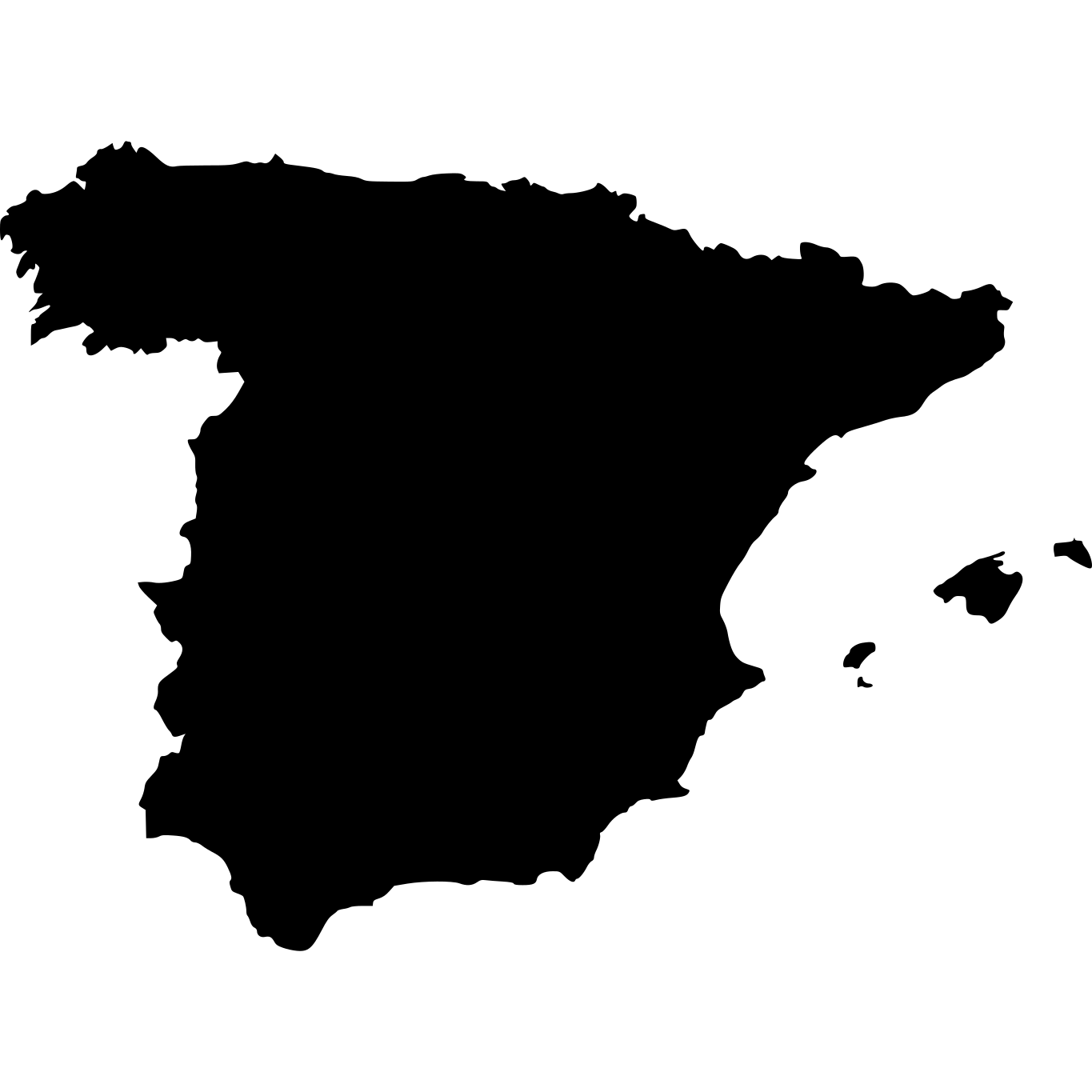
Iroha Nature is a Spanish brand

We're dedicated to providing you with the most up-to-date and science-backed ingredient info out there.
The data we've presented on this page has been verified by a member of the SkinSort Team.
Read more about us· Updated June 24, 2026 • Added by mugi


