Handmade Heroes French Green Clay Mask
A wash off mask with 6 ingredients, including exfoliants and vitamin E.
This wash off mask is made with Kaolin for a rinse-off oil-control boost.
Worth noting
Contains Mentha Piperita Oil, an EU-listed fragrance allergen.
We independently verify ingredients, backed by peer-reviewed research. Suggest an update.
What's inside






















Key Ingredients
Benefits
Concerns
Ingredients Explained
Montmorillonite is a clay (aluminomagnesium silicate) with strong absorption properties. It has a similar pH to skin.
This clay is named after Montmorillon in France.
Learn about other types of clay, such as Kaolin, Bentonite, or Fuller's Earth.
Learn more about MontmorilloniteKaolin is a clay. It is used for oil control and to help minimize pores. Like other clays, kaolin has the ability to absorb excess sebum or oil. This can help clean out pores and mattify the skin.
Some types of kaolin may have exfoliating properties. When water is added to kaolin, it becomes a paste with small abrasive particles.
Most kaolin is a white color, but may be pink/orange/red depending on where it comes from.
The name 'kaolin' comes from a Chinese village named 'Gaoling'. Kaolin clay comes from rocks rich in kaolinite. Kaolinite, the mineral, has a silicate layered structure. Kaolinite is formed from chemical weathering of aluminum siilicate minerals.
Besides skincare, kaolin is commonly used to make glossy paper, in ceramics, toothpaste, and as medicine to soothe stomach issues.
Learn more about KaolinThis ingredient is also called turmeric. Turmeric has great skin benefits, including anti-inflammatory, antioxidant, and anti-microbial properties.
Read more about the benefits of turmeric here.
This ingredient is also known as sweet almond oil. It is a lightweight, cold-pressed oil from the ripe seeds of the sweet almond tree.
Sweet almond oil is rich in skin-nourishing fatty acids such as oleic acid (55-86%) and linolenic acid (7-35%).
As an emollient, it softens and hydrates skin by forming a thin barrier that locks in moisture.
Clinical studies have found it to be non-irritating and non-sensitizing. The CIR Expert Panel has evaluated the available safety data and concluded it is safe for topical use.
Because of the oleic acid content, this ingredient may not be fungal acne safe.
Learn more about Prunus Amygdalus Dulcis OilTocopherol is a fat-soluble antioxidant known as Vitamin E.
You'll find this ingredient in the vast majority of skincare (for good reason). It works to neutralize free radicals, or unstable molecules generated by UV exposure, pollution, and other environmental stressors, before they can cause oxidative damage to your skin cells.
Topically applied tocopherol has been shown to protect against UV damage by ramping up the skin's own natural defense enzymes.
It also acts as a skin conditioning agent; some studies show that regular topical use can improve the skin's water-binding capacity over 2-4 weeks.
This ingredient is especially loved for being a team player. When combined with Vitamin C, the photoprotective effect of both ingredients roughly doubles and the combo also helps reduce UV-induced DNA damage.
This ingredient has some brightening potential but it's more of a prevention ingredient than spot-fader. Cell studies show it can slow down melanin production but it's worth noting that it's not the most powerful brightener out there.
In formulations, it also serves as a stabilizer that helps protect other oxidation-prone ingredients from degrading.
Concentrations usually range from 0.1-1% in most leave-on products.
Learn more about TocopherolThis essential oil is steam-distilled from peppermint leaves, also known as peppermint oil. It's mainly used for scent in skincare but also provides that signature "cooling" sensation.
Peppermint oil is a "feels amazing" ingredient until it doesn't.
At higher doses or for those with sensitive skin, methol-type cooling can quickly turn into burning/irritation. It can also trigger irritant dermatitis or even allergic contact dermatitis. In a large patch-test dataset, peppermint oil had a low but positive rate for this.
In cosmetics, Cosmetic Safety Reviews (CIR) concludes that peppermint oil is safe to use when formulated to be non-sensitizing with some restrictions; for instance, pulegone, a naturally occurring component of peppermint oil, should not exceed 1%.
Since peppermint oil contains fragrance allergens such as limonene, linalool, and menthol, it can be sensitizing for those with rosacea, eczema, a broken skin barrier, or just sensitive skin in general.
In Japan, this ingredient is known as Hakka Yu.
Learn more about Mentha Piperita OilReviews
No written reviews yet. Be the first to review this product.
Recent searches
Search reviews by skin type, ingredient, or keyword.
Where it's from
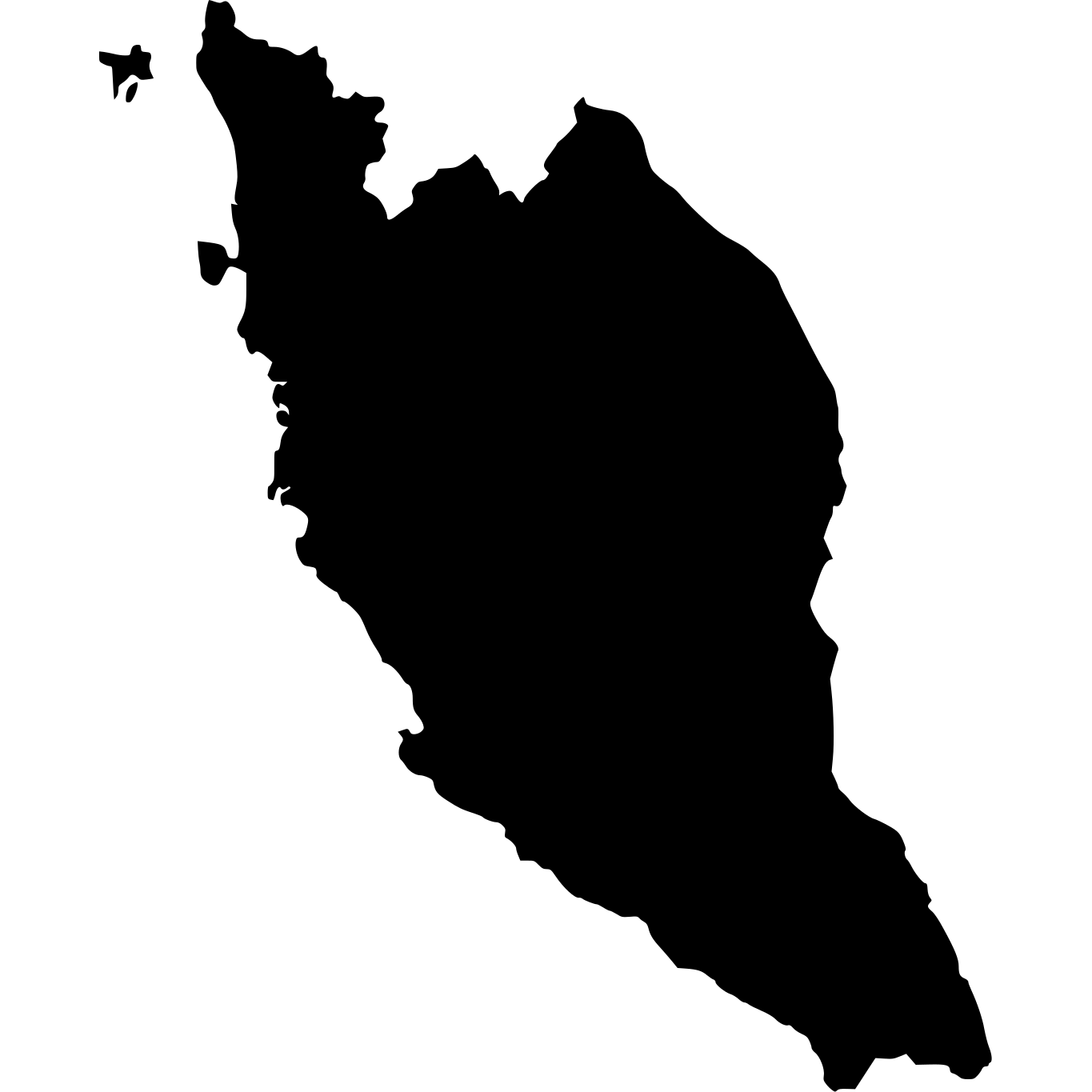
Handmade Heroes is a Malaysian brand
Often compared with

We're dedicated to providing you with the most up-to-date and science-backed ingredient info out there.
The data we've presented on this page has been verified by a member of the SkinSort Team.
Read more about us· Published May 30, 2023


