Dermax Bio Perform Acne Cleanser 1A
A face cleanser with 12 ingredients, including BHA.
This salicylic acid gel cleanser is formulated around Salicylic Acid to clear breakouts and unclog pores.
Worth noting
Contains Salicylic Acid, an exfoliating acid best introduced gradually.
We independently verify ingredients, backed by peer-reviewed research. Suggest an update.
What's inside



















Key Ingredients
Benefits
Concerns
Ingredients Explained
Water. It's the most common cosmetic ingredient of all. You'll usually see it at the top of ingredient lists, meaning that it makes up the largest part of the product.
So why is it so popular? Water most often acts as a solvent - this means that it helps dissolve other ingredients into the formulation.
You'll also recognize water as that liquid we all need to stay alive. If you see this, drink a glass of water. Remember to stay hydrated!
Learn more about WaterPotassium Cocoyl Glycinate is an amino acid-based surfactant and cleaning agent. This ingredient can be derived from animals or plants. It may also be synthetically created from fatty acids of the coconut and glycine.
Potassium Cocoyl Glycinate is a gentle surfactant. Surfactants help gather the dirt, oil, and other pollutants from your skin to be rinsed away. It is a mild cleanser and naturally produces foam.
This ingredient is a surfactant and foam producer.
We don't have a description for Palm Kernelamide DEA yet.
Butylene Glycol (or BG) is used within cosmetic products for a few different reasons:
Overall, Butylene Glycol is a safe and well-rounded ingredient that works well with other ingredients.
Though this ingredient works well with most skin types, some people with sensitive skin may experience a reaction such as allergic rashes, closed comedones, or itchiness.
Learn more about Butylene GlycolGlycerin (or glycerol) is a compound naturally found in your skin. It's a powerhouse humectant that pulls water into the stratum corneum.
Topically, glycerin does several things at once:
Your skin makes glycerin on its own (mostly from sebaceous oil breakdown) and shuttles it to your outermost layer of skin, or your epidermis, via aquaporin-3.
Aquaporin-3 is a transporter that is essential for normal skin hydration, elasticity, and repair. Interestingly, mice lacking in AQP3 have dry and less elastic skin that can be fully corrected with glycerin.
This ingredient is non-irritating, plays well with almost every ingredient, and works across all skin types. Typical use is anywhere between 3-10% but can go up to 79% in some leave-on products.
Just know very high concentrations (>40%) can feel tacky in low humidity.
Glycerin is the name for this ingredient in American English. British English uses Glycerol/Glycerine.
Learn more about GlycerinSalicylic Acid (also known as beta hydroxy acid or BHA) is a well-known ingredient for treating skin that struggles with acne and clogged pores. It exfoliates both the skin's surface and deep within the pores to help clear out buildup, control oil, and reduce inflammation.
Unlike AHAs (alpha hydroxy acids), salicylic acid is oil-soluble. This allows it to penetrate into pores which makes it especially effective for treating blackheads and preventing future breakouts.
Salicylic acid is also known for its soothing properties. It has a similar structure to aspirin and can calm inflamed or irritated skin, making it a good option for acne-prone skin that is also sensitive.
Concentrations of 0.5-2% are recognized by the U.S. FDA as an over-the-counter topical acne product.
It can cause irritation and/or dryness if one's skin already has a compromised moisture barrier, so it's best to focus on repairing that before introducing this ingredient into your routine.
While salicylic acid does not increase sun sensitivity, it’s still important to wear sunscreen daily to protect your skin.
If you are looking for the ingredient called BHA or Butylated Hydroxyanisole, click here.
Learn more about Salicylic AcidPhenoxyethanol is one of the most widely used preservatives in skincare (and for good reason!).
It has a large spectrum of antimicrobial activity and especially effective bacteria, yeast, and mold while only having a weak effect on your skin's natural microbiome.
On a cellular level, it disrupts the cell membranes of microbes by poking holes that make the cell leak. This shuts down the chemical reactions the microbe needs to make energy so it can no longer survive.
Another perk of this ingredient is that it stays functional across a wide pH range (3-10).
You'll often see it paired with boosters like Ethylhexylglycerin; one study showed that a 1:9 ratio of Ethylhexylglycerin to Phenoxyethanol damages bacterial membranes as effectively as doubling the Phenoxyethanol concentration on its own.
Typical use concentrations range from 0.3-1% depending on the formula, and this ingredient is capped at 1% int the EU.
Safety-wise, the fear mongering does not hold up to the evidence. The EU's Scientific Committee on Consumer Safety and FDA consider it safe as a preservative at up to 1%, including for children of all ages.
Adverse systemic effects only showed up in animal studies at exposures roughly 200x higher than what people get from cosmetics. And despite its very widespread use, this ingredient is a rare sensitizer and allergic reactions are uncommon.
Learn more about PhenoxyethanolThis ingredient is also known as tea tree oil. It has antioxidant, anti-inflammatory, and antimicrobial properties.
Tea tree oil is a complex lipophilic (fat-loving) oil that contains around 100 compounds with terpinen-4-ol being the most abundant (~40%).
Terpinen-4-ol is responsible for tea tree oil's broad-spectrum antimicrobial activity and makes it a well-researched option for acne.
Clinical studies support 5% tea tree oil as an effective topical treatment for mild to moderate acne. A study with 124 patients compared 5% tea tree oil gel to 5% benzoyl peroxide and both reduced acne (though tea tree oil worked more slowly).
Besides acne, it is also seen in anti-dandruff shampoos and scalp treatments for it's antimicrobial and anti-seborrheic properties.
Safety-wise, the allergic potential of low concentrations on healthy skin is considered low. However, oxidized (old or improperly stored) tea tree oil is a stronger sensitizer.
Irritation can also occur if using the undiluted oil on skin; it's best to use this ingredient as part of a carefully crafted cosmetic formula. This is because regulations require tea tree oil in cosmetics to be stabilized to prevent degradation.
This ingredient has been deemed safe up to 2% in shampoo, 1% in cleansers, and 0.1% in face cream by the EU's Scientific Committee on Consumer Safety (SCCS).
There is some lab evidence that tea tree oil is antifungal against Malassezia, but it is a supportive option at best and not a replacement for proven antifungal treatments.
Learn more about Melaleuca Alternifolia Leaf OilAcrylates/C10-30 Alkyl Acrylate Crosspolymer is a synthetic polymer. It is used to thicken, emulsify, and improve the texture of products.
As an emulsifier, it helps stabilize oil-in-water emulsions to give products an elegant feel when applied.
It can also form a thin protective film on skin. One study found that a formula using this polymer helped slow down how quickly other ingredients (like DEET) were absorbed through skin.
A 2024 study of over 1,300 patients confirmed that sensitization to this ingredient is rare. It is also non-mutagenic and has a clean track record.
Learn more about Acrylates/C10-30 Alkyl Acrylate CrosspolymerWe don't have a description for Sorbitan Caprylate yet.
Triethanolamine (TEA) is an emulsifier and pH adjuster. It is created using ethylene oxide and ammonia. This gives Triethanolamine a nitrogen core and a similar scent to ammonia.
As an emulsifier, it prevents ingredients from separating and enhances texture by adding volume to a product.
PH adjusters are common in cosmetic products. The pH of a product can affect the effectiveness of other ingredients. A product with a high pH may also irritate the skin.
If you are looking for the tea leaf ingredient, click here.
Learn more about TriethanolamineReviews
No written reviews yet. Be the first to review this product.
Recent searches
Search reviews by skin type, ingredient, or keyword.
Where it's from
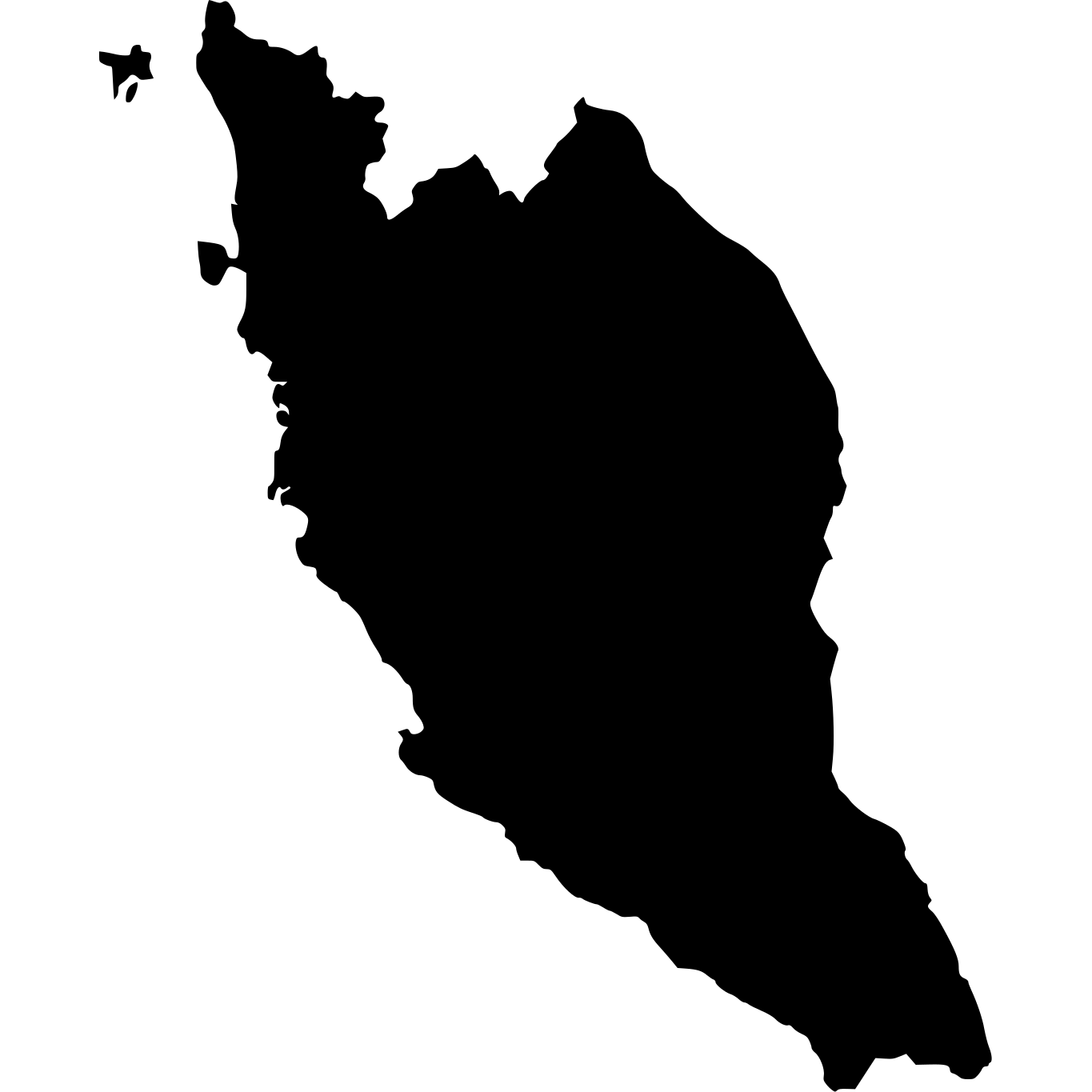
Dermax is a Malaysian brand
Often compared with

We're dedicated to providing you with the most up-to-date and science-backed ingredient info out there.
The data we've presented on this page has been verified by a member of the SkinSort Team.
Read more about us· Updated April 7, 2026 • Added by C.Natalia.F_56
Brands reformulate often, so always check the packaging before use. SkinSort is for reference only, not medical advice. Talk to a doctor or pharmacist about any skin or health concerns.


