BeCurly Flexy Curl
A gel, pomade & wax with 14 ingredients.
Gel, pomade & wax with 14 ingredients
We independently verify ingredients, backed by peer-reviewed research. Suggest an update.
What's inside
Ingredients List
Water
Skin ConditioningHydrolyzed Wheat Protein
Skin ConditioningPullulan
Hydrolyzed Corn Starch
HumectantXanthan Gum
EmulsifyingGlycerin
Humectant


Aloe Barbadensis Leaf Juice
Skin Conditioning

Equisetum Arvense Extract
AstringentDaucus Carota Sativa Extract
Perfuming
Hippophae Rhamnoides Kernel Extract
MaskingRosmarinus Officinalis Leaf Extract
AntimicrobialDehydroacetic Acid
Preservative
Benzyl Alcohol
Perfuming




Citrus Aurantium Dulcis Oil
Masking
Water, Hydrolyzed Wheat Protein, Pullulan, Hydrolyzed Corn Starch, Xanthan Gum, Glycerin, Aloe Barbadensis Leaf Juice, Equisetum Arvense Extract, Daucus Carota Sativa Extract, Hippophae Rhamnoides Kernel Extract, Rosmarinus Officinalis Leaf Extract, Dehydroacetic Acid, Benzyl Alcohol, Citrus Aurantium Dulcis Oil
Benefits
Concerns
Ingredients Explained
Water. It's the most common cosmetic ingredient of all. You'll usually see it at the top of ingredient lists, meaning that it makes up the largest part of the product.
So why is it so popular? Water most often acts as a solvent - this means that it helps dissolve other ingredients into the formulation.
You'll also recognize water as that liquid we all need to stay alive. If you see this, drink a glass of water. Remember to stay hydrated!
Learn more about WaterThis ingredient is a plant-derived protein made by breaking down wheat proteins into smaller amino acids and peptides. It has skin and hair conditioning properties.
People with known wheat allergy or a history of immediate reactions should be cautious with leave-on products containing hydrolyzed wheat proteins.
Pullulan is a low viscosity polysaccharide (a long chain carbohydrate) with binding and film forming properties when dissolved in water. It is used to create a "silicone-like" or silky feel in cosmetics without adding viscosity.
According to a manufacturer, this ingredient's ability to easily dissolves makes it a great carrier for active ingredients.
Due to it being edible and tasteless, you'll likely find this ingredient in breath freshener strips. This ingredient is produced from the starch of the fungus, Aureobasidium pullulans.
Pullulan is stable over a broad-range of pH.
Learn more about PullulanHydrolyzed Corn Starch is made by breaking down corn starch into smaller sugar and carbohydrate units through acid or enzyme hydrolysis. The result is a blend of sugars (glucose, maltose, and maltodextrins).
It has skin conditioning and humectant properties and helps the skin stay hydrated. According to a manufacturer, this ingredient helps provide humidity resistance and frizz control in haircare.
Xanthan gum is used as a stabilizer and thickener within cosmetic products. It helps give products a sticky, thick feeling - preventing them from being too runny.
On the technical side of things, xanthan gum is a polysaccharide - a combination consisting of multiple sugar molecules bonded together.
Xanthan gum is a pretty common and great ingredient. It is a natural, non-toxic, non-irritating ingredient that is also commonly used in food products.
Learn more about Xanthan GumGlycerin (or glycerol) is a compound naturally found in your skin. It's a powerhouse humectant that pulls water into the stratum corneum.
Topically, glycerin does several things at once:
Your skin makes glycerin on its own (mostly from sebaceous oil breakdown) and shuttles it to your outermost layer of skin, or your epidermis, via aquaporin-3.
Aquaporin-3 is a transporter that is essential for normal skin hydration, elasticity, and repair. Interestingly, mice lacking in AQP3 have dry and less elastic skin that can be fully corrected with glycerin.
This ingredient is non-irritating, plays well with almost every ingredient, and works across all skin types. Typical use is anywhere between 3-10% but can go up to 79% in some leave-on products.
Just know very high concentrations (>40%) can feel tacky in low humidity.
Glycerin is the name for this ingredient in American English. British English uses Glycerol/Glycerine.
Learn more about GlycerinAloe Barbadensis Leaf Juice is the filtered, stabilized liquid pressed from the inner gel of the aloe vera leaf.
In cosmetics, it shows up as either soothing active or a water-replacement base. It is roughly 98-99% water and the last 1-2% is an interesting mix of polysaccharides, amino acids, vitamins, minerals, and enzymes.
The polysaccharides do most of the work: they bind water at the skin surface for a light, non-greasy hydration boost. And one of the polysaccharides, glycomannan, is linked to fibroblast stimulation + collagen synthesis. This is also why aloe has such a long track record in wound and burn healing.
This ingredient is also calming with anti-inflammatory and mild antimicrobial activity, making it a great pick for sensitive, irritated, or post-sun skin.
Realistic expectations matter though; the solid evidence is mostly limited to hydration, soothing, and wound support. Deeper claims about anti-aging or sun protection are not well backed, and science reviews note it does not prevent radiation-induced skin injury.
Because it plays well with almost everything, it's commonly used as a base alongside other actives like niacinamide or vitamin C.
Typical usage concentrations range from 0.5% (where hydration benefits already show up) all the way to 90%+ (where it replaces water as the main base).
The safety for this ingredient is well-establish as well. Overall, this is a great supporting ingredient for those who want a boost in hydration.
Learn more about Aloe Barbadensis Leaf JuiceThis botanical extract is also known as horsetail extract. It mainly acts as an emollient, skin soother, and astringent.
A study from 2023 found compounds in Equisetum Arvense showed significant anti-inflammatory effects in irritated keratinocytes (the main cell in your outermost layer of skin).
Another study using a cream with horsetail and soybean extract found 80% of participants showed at least a 26% improvement in forehead wrinkles after 8 weeks.
Animal research has shown topical Equisetum Arvense stimulated skin and tissue growth in mice.
The research so far is encouraging, but still in its early days. But it's a lovely supporting ingredient and can be a welcome addition to any routine.
Learn more about Equisetum Arvense ExtractDaucus Carota Sativa Extract is created from parts of the carrot plant. The orange and edible carrot itself is the root.
Carrots contain beta-carotene, a potent antioxidant.
It should be noted coming into contact with the leaves of wild carrots can cause skin irritation. The sap causes phytophotodermatitis, or sensitivity when the sap comes in contact with sunlight.
Learn more about Daucus Carota Sativa ExtractHippophae Rhamnoides Kernel Extract comes from the kernel of seabuckthorn berries.
This is a botanical extract from the rosemary plant (the same one you cook with). In skincare, it mostly works as a skin conditioning agent.
Its activity comes from a handful of polyphenols, carnosic acid, carnosol, and rosmarinic acid. Almost 90% of the antioxidant activity of this ingredient can be attributed to canosol and carnosic acid.
These compounds protect your skin two ways:
1) They fight off free radicals, or the unstable molecules from things like sun and pollution that age and damage skin.
2) They help calm inflammation by switching off the chemical signals that tell skin to get red and irritated.
Lab studies also suggest that rosmarinic acid may help protect collagen and slow sugar-related damage to it.
The Cosmetic Ingredient Review has concluded rosemary-derived ingredients to be safe when formulated to be non-sensitizing.
Rosemary can occasionally cause allergic contact dermatitis (due to carnosol), so be sure to patch test if you have reactive or fragrance-sensitive skin.
Learn more about Rosmarinus Officinalis Leaf ExtractDehydroacetic Acid is a synthetic preservative that keeps your products safe from microbes.
As an organic acid, it penetrates microbial cell walls and disrupts cellular metabolism. This makes it effective against bacteria, yeast, and mold.
It is effective at low concentrations (<0.6%). Clinical studies have found it to be non-irritating, non-sensitizing, and non-photosensitizing.
Learn more about Dehydroacetic AcidBenzyl Alcohol is an aromatic alcohol with several roles: it's a preservative, solvent, and mild fragrance component with a floral scent.
This ingredient has been deemed safe for use in cosmetic formulations at concentrations up to 5%, and up to 10% in hair dyes. You'll typically see 0.5-2% in most rinse-off or leave-on products.
As a preservative, it works by disrupting the membrane of microbial proteins. This helps keep bacteria and fungi from growing in your products.
The sensitization picture is actually quite assuring as well:of nearly 71,000 patients patch tested with benzyl alcohol, only 0.21% showed a positive reaction with most of them being weakly positive.
This led researchers to conclude that benzyl alcohol cannot be regarded as a significant contact allergen.
It is worth noting this ingredient is classified as one of the EU's regulated fragrance allergens and restricted to 1% in finished products.
Labels must also declare it in concentrations above 0.001% in leave-on products and 0.01% in rinse-off products.
At concentrations around 5%, localized redness and itching can appear as a direct irritant response and not as a true allergic reaction.
Learn more about Benzyl AlcoholCitrus Aurantium Dulcis Oil comes from the bitter orange, an orange native to Southeast Asia.
This orange is commonly used in cosmetics and food. It is a common ingredient for marmalade.
Citrus peels are often made up of mainly limonene, a fragrance with a citrus scent. They also contain flavonoids, which have anti-inflammatory properties.
Learn more about Citrus Aurantium Dulcis OilReviews
No written reviews yet. Be the first to review this product.
Recent searches
Search reviews by skin type, ingredient, or keyword.
Where it's from
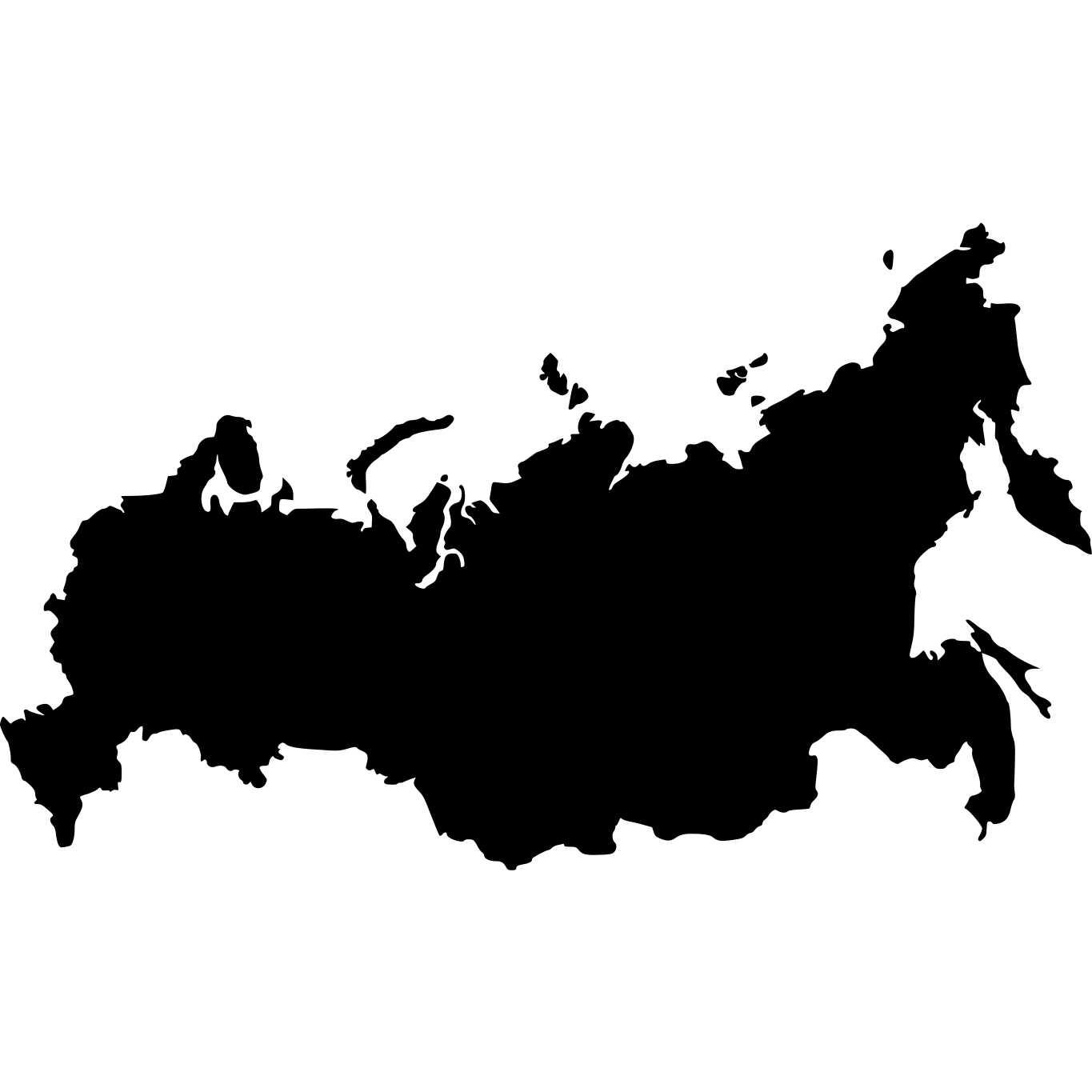
BeCurly is a Russian brand

We're dedicated to providing you with the most up-to-date and science-backed ingredient info out there.
The data we've presented on this page has been verified by a member of the SkinSort Team.
Read more about us· Updated October 13, 2025 • Added by furosy


