This acne treatment is formulated around Benzoyl Peroxide to clear breakouts.
This acne treatment is formulated around Benzoyl Peroxide to clear breakouts.


What's inside
What's inside
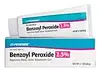 Key Ingredients
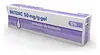
Benefits
Concerns
Ingredients Side-by-side
















Reviews
Ingredients Explained
These ingredients are found in both products.
Ingredients higher up in an ingredient list are typically present in a larger amount.
Benzoyl Peroxide (BPO) is one of the most studied and widely used acne-fighting ingredients on the market for over five decades.
It works by releasing oxygen into your pores to kill Cutibacterium acne, or the bacteria closely linked to acne breakouts. This bacteria has a hard time surviving in an oxygen-rich environment.
On top of that, BPO has keratolytic properties to help shed dead skin cells and keep pores from getting clogged.
One of the coolest things about BPO is that bacteria do not develop resistance to it the way they can with antibiotics. That's why dermatologists recommend pairing it with topical antibiotics to keep resistance at bay.
BPO is usually available in 2.5%, 5%, and 10% concentrations. Research has shown that 2.5% tends to be just as effective as the higher strengths while being more gentle on the skin.
The FDA has classified BPO as a safe and effective acne treatment. You'll be able to find this ingredient in over-the-counter products in many countries.
Just so you know, BPO is a known mild irritant. It's common to see dryness, peeling, and some redness when you first start using it. This usually goes away as your skin adjusts.
A very small number of people might develop allergic contact dermatitis from it as patch test studies show positive reactions in about 1-5% of patients.
Once BPO is absorbed into the skin, our bodies turn it into benzoic acid and quickly exits in urine. It's also worth noting that BPO will bleach fabrics and hair, so watch your towels and pillowcases!
Learn more about Benzoyl PeroxideCarbomer is a synthetic thickening and gelling agent. It's basically the ingredient that gives a lot of serums, gels, creams, and sunscreens their smooth, non-sticky texture.
Although legally permitted at very high levels, carbomers are normally used at concentrations below 1%.
It also needs to be neutralized to actually thicken, and because it is a large molecule, it doesn't really penetrate the skin barrier.
Allergy-wise, the risk is very low. Clinical studies show carbomers have low potential for skin irritation/sensitization even at concentrations up to 100%.
A 2024 UK study patch-tested 1,302 patients and found true allergy to the parent group of carbomer to be rare with no confirmed relevant reactions.
Learn more about CarbomerDisodium EDTA is a chelating agent. It grabs onto and deactivates metal ions that sneak into your products from water, packaging, or air.
This ingredient mainly works behind the scenes and helps with:
On top of that, this ingredient can counteract the effects of hard water by binding to the minerals in it.
One thing worth knowing is that Disodium EDTA has been shown to be a mild penetration enhancer. It can help other ingredients absorb into skin more effectively which can be a double-edged sword (great for actives, but can also make the active too strong if you have sensitive skin).
Clinical patch testing showed no significant skin irritation at typical use concentrations and minimal dermal absorption.
You'll most likely see this ingredient near the end of an ingredient list. It's typically found in concentrations less than 1%.
Learn more about Disodium EDTAGlycerin (or glycerol) is a compound naturally found in your skin. It's a powerhouse humectant that pulls water into the stratum corneum.
Topically, glycerin does several things at once:
Your skin makes glycerin on its own (mostly from sebaceous oil breakdown) and shuttles it to your outermost layer of skin, or your epidermis, via aquaporin-3.
Aquaporin-3 is a transporter that is essential for normal skin hydration, elasticity, and repair. Interestingly, mice lacking in AQP3 have dry and less elastic skin that can be fully corrected with glycerin.
This ingredient is non-irritating, plays well with almost every ingredient, and works across all skin types. Typical use is anywhere between 3-10% but can go up to 79% in some leave-on products.
Just know very high concentrations (>40%) can feel tacky in low humidity.
Glycerin is the name for this ingredient in American English. British English uses Glycerol/Glycerine.
Learn more about GlycerinWe don't have a description for Poloxamer 182 yet.
Sodium Hydroxide is also known as lye or caustic soda. It is used to adjust the pH of products; many ingredients require a specific pH to be effective.
In small amounts, sodium hydroxide is considered safe to use. However, large amounts may cause chemical burns due to its high alkaline.
Your skin has a natural pH and acid mantle. This acid mantle helps prevent harmful bacteria from breaking through. The acid mantle also helps keep your skin hydrated.
"Alkaline" refers to a high pH level. A low pH level would be considered acidic.
Learn more about Sodium Hydroxide

