

What's inside
What's inside
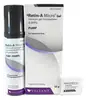 Key Ingredients

Benefits
Concerns
Ingredients Side-by-side



























Reviews
Ingredients Explained
These ingredients are found in both products.
Ingredients higher up in an ingredient list are typically present in a larger amount.
Carbomer is a synthetic thickening and gelling agent. It's basically the ingredient that gives a lot of serums, gels, creams, and sunscreens their smooth, non-sticky texture.
Although legally permitted at very high levels, carbomers are normally used at concentrations below 1%.
It also needs to be neutralized to actually thicken, and because it is a large molecule, it doesn't really penetrate the skin barrier.
Allergy-wise, the risk is very low. Clinical studies show carbomers have low potential for skin irritation/sensitization even at concentrations up to 100%.
A 2024 UK study patch-tested 1,302 patients and found true allergy to the parent group of carbomer to be rare with no confirmed relevant reactions.
Learn more about CarbomerPropylene Glycol is a synthetic, colorless, odorless liquid that has been a staple in cosmetics for decades. It is a skin conditioning agent, humectant, and solvent.
As a humectant, it draw water to the skin to reduce flaking and restore suppleness. It's also a solvent that helps dissolve other actives and keeps formulas stable across temperature changes.
The CIR Expert Panel has confirmed this ingredient to be nontoxic and clinical studies show no sensitization at cosmetic use concentrations.
True allergic reactions are quite rare: a 15-year retrospective study of 6,751 patients found only 0.31% had a positive reaction (and less than half were considered clinically relevant).
It seemed that when sensitization does occur, it's most commonly linked to topical medication (like corticosteroids) and not cosmetics. Allergic contact dermatitis also appears largely limited to individuals with underlying skin conditions.
Overall, propylene glycol is a well-studied ingredient that most people can tolerate without issue.
Learn more about Propylene GlycolTriethanolamine (TEA) is an emulsifier and pH adjuster. It is created using ethylene oxide and ammonia. This gives Triethanolamine a nitrogen core and a similar scent to ammonia.
As an emulsifier, it prevents ingredients from separating and enhances texture by adding volume to a product.
PH adjusters are common in cosmetic products. The pH of a product can affect the effectiveness of other ingredients. A product with a high pH may also irritate the skin.
If you are looking for the tea leaf ingredient, click here.
Learn more about TriethanolamineWater. It's the most common cosmetic ingredient of all. You'll usually see it at the top of ingredient lists, meaning that it makes up the largest part of the product.
So why is it so popular? Water most often acts as a solvent - this means that it helps dissolve other ingredients into the formulation.
You'll also recognize water as that liquid we all need to stay alive. If you see this, drink a glass of water. Remember to stay hydrated!
Learn more about WaterTretinoin (aka retinoic acid) is the gold standard retinoid in dermatology because it's the form of vitamin A that your skin can use right away. It's a prescription drug and regulated as medication in most countries.
Unlike retinol, it skips the conversion steps and goes straight to work.
Inside your skin cells, it binds to receptors called retinoic acid receptors and switches on the genes that control how skin cells behave.
For acne, it helps your skin shed dead cells properly instead of letting them build up and clog your pores (this is what turns into blackheads and pimples). It also calms redness/swelling, which is why it's a FDA-approved acne treatment.
Tretinoin also tells your skin to make more collagen and slows down the stuff that breaks collagen apart too. Over time, your skin looks smoother, softer, and more even, with fewer lines lines and sun spots.
The evidence for this ingredient is strong:
A systematic review of randomized controlled trials found that topical tretinoin consistently improved wrinkles, pigmentation, sallowness, and dark spots. Results typically showed up as early as one month and lasted out to 24 months.
All studies also found this ingredient to be safe and well-tolerated.
Typical concentrations run from about 0.01-0.1%, with 0.025%-0.1% being the usual range studied for photoaging and a 0.05% cream producing measurable wrinkle/roughness improvements in large six-month trials.
The main trade-off is irritation; dryness, peeling, redness, and sun sensitivity are common in the first few weeks so be sure to pair it well with a good moisturizer and daily sunscreen.
Learn about a form of retinoid you can purchase at the store, retinol.
Learn more about Tretinoin

