Youth Lab Blemish Dots
A facial treatment with 13 ingredients, including BHA.
This blemish patch uses Hydrocolloid to cover open blemishes and absorb the fluid they release.
Worth noting
Contains Salicylic Acid, an exfoliating acid best introduced gradually.
We independently verify ingredients, backed by peer-reviewed research. Suggest an update.
What's inside
Ingredients List
Acrylates Copolymer
Butylene Glycol
Humectant

Melaleuca Alternifolia Leaf Water
Antimicrobial


Salicylic Acid
Masking








1,2-Hexanediol
Skin Conditioning
Phellodendron Amurense Bark Extract
Skin ConditioningCoptis Chinensis Root Extract
Antioxidant
Scutellaria Baicalensis Root Extract
Astringent
Sciadopitys Verticillata Root Extract
AntimicrobialCanavalia Gladiata Fruit Extract
Skin ConditioningChamaecyparis Obtusa Leaf Extract
Skin ConditioningGlycerin
Humectant
Kochia Scoparia Fruit Extract
Skin ConditioningAcrylates Copolymer, Butylene Glycol, Melaleuca Alternifolia Leaf Water, Salicylic Acid, 1,2-Hexanediol, Phellodendron Amurense Bark Extract, Coptis Chinensis Root Extract, Scutellaria Baicalensis Root Extract, Sciadopitys Verticillata Root Extract, Canavalia Gladiata Fruit Extract, Chamaecyparis Obtusa Leaf Extract, Glycerin, Kochia Scoparia Fruit Extract
Key Ingredients
Benefits
Concerns
Ingredients Explained
Acrylates Copolymer is used as a film-forming agent and texture enhancer.
After applied, Acrylates Copolymer forms a thin film cover that helps skin feel more soft. It can help sunscreens become more water-resistant.
It is also used to make a product more thick.
Learn more about Acrylates CopolymerButylene Glycol (or BG) is used within cosmetic products for a few different reasons:
Overall, Butylene Glycol is a safe and well-rounded ingredient that works well with other ingredients.
Though this ingredient works well with most skin types, some people with sensitive skin may experience a reaction such as allergic rashes, closed comedones, or itchiness.
Learn more about Butylene GlycolThis ingredient is also known as tea tree leaf water or tea tree hydrosol. It functions as an antimicrobial, anti-sebum, astringent, and tonic ingredient.
You can think of it as a gentler, water-version of tea tree oil.
Its star active is terpinen-4-ol, a broad-spectrum antimicrobial.
The water-soluble compounds of tea tree have been shown to calm inflammation by roughly 50% in vitro (with Terpinen-4-ol driving this).
Terpinen-4-ol has also demonstrated strong inhibitory activity against Propionibacterium acnes and Staphylococcus aureus.
Before slathering on tea tree water, just know concentrations under 5% are considered more suitable and safer than higher concentrations.
The European Medicines Agency recognizes tea tree-derived ingredients as having well-established use for mild acne and small superficial wounds.
It's a well-researched and skin-friendly option for oily or acne-prone skin.
As with most actives, patch testing is a good idea if your skin leans sensitive.
Learn more about Melaleuca Alternifolia Leaf WaterSalicylic Acid (also known as beta hydroxy acid or BHA) is a well-known ingredient for treating skin that struggles with acne and clogged pores. It exfoliates both the skin's surface and deep within the pores to help clear out buildup, control oil, and reduce inflammation.
Unlike AHAs (alpha hydroxy acids), salicylic acid is oil-soluble. This allows it to penetrate into pores which makes it especially effective for treating blackheads and preventing future breakouts.
Salicylic acid is also known for its soothing properties. It has a similar structure to aspirin and can calm inflamed or irritated skin, making it a good option for acne-prone skin that is also sensitive.
Concentrations of 0.5-2% are recognized by the U.S. FDA as an over-the-counter topical acne product.
It can cause irritation and/or dryness if one's skin already has a compromised moisture barrier, so it's best to focus on repairing that before introducing this ingredient into your routine.
While salicylic acid does not increase sun sensitivity, it’s still important to wear sunscreen daily to protect your skin.
If you are looking for the ingredient called BHA or Butylated Hydroxyanisole, click here.
Learn more about Salicylic Acid1,2-Hexanediol is a synthetic liquid and another multi-functional powerhouse.
It is a:
- Humectant, drawing moisture into the skin
- Emollient, helping to soften skin
- Solvent, dispersing and stabilizing formulas
- Preservative booster, enhancing the antimicrobial activity of other preservatives
This ingredient is also known as Amur cork tree bark. It is a botanical extract with skin conditioning and tonic properties.
Amur tree bark is rich in compounds, such as berberine and palmatine, that are widely studied for antioxidant and anti-inflammatory activity.
In lab research, this ingredient has been shown to reduce inflammation in skin cells exposed to pollution. The results were also linked to PAR-2 signaling, a pathway involved in irritation and barrier stress. This is why you'll see this ingredient in "anti-pollution" skincare.
Preclinical work also suggests anti-inflammatory benefits in atopic-dermatitis models when used topically.
Please note that these studies do not offer strong proof because they do not involve humans. However, this ingredient has low irritation/risk and there's no harm in trying it out.
Learn more about Phellodendron Amurense Bark ExtractCoptis Chinensis Root Extract is also known as huanglian or Chinese goldthread. It is a plant extract with soothing and antioxidant properties.
This plant naturally contains berberine, a compound that lab studies suggest can help "turn down" inflammation signals and oxidative stress, and make it harder for certain microbes to thrive. While topical berberine research does support anti-inflammatory potential in dermatitis-like models, most of the stronger evidence is preclinical.
That's why you'll frequently see this ingredient in formulations aimed at redness, blemish-prone skin, or sensitive skin.
A small human photopatch study reported that "coptis" at 5% did not trigger photoallergic/photosensitive reactions in the tested group. Like other botanical extracts, it may cause allergies in some. Be sure to patch test if you're weary.
Learn more about Coptis Chinensis Root ExtractScutellaria Baicalensis Root Extract comes from the Baikal skullcap or Chinese skullcap plant. This plant is native to Northeast Asia and can be found in China, Mongolia, Korea, and Siberia.
In cosmetics, Scutellaria Baicalensis Root Extract provides antioxidant and anti-inflammatory benefits. This is due to the flavonoid composition of Scutellaria Baicalensis Root Extract.
In Chinese traditional folk medicine, Scutellaria Baicalensis Root Extract is used to help treat lung issues and hypertension.
Learn more about Scutellaria Baicalensis Root ExtractWe don't have a description for Sciadopitys Verticillata Root Extract yet.
We don't have a description for Canavalia Gladiata Fruit Extract yet.
This ingredient comes from the leaves of the Japanese cypress tree that is also called Hinoki. The leaves are rich in flavonoids with quercitrin being one of its key actives.
A 2023 study tested a 70% ethanol extract on UVA-stressed, collagen-producing skin cells. Across multiple antioxidant tests, this extract protected skin from free radicals at meaningful rates.
And the coolest part? At 1000 µg/mL, it blocked two enzymes (collagenase and elastase) almost as well as vitamin C did at the same dose. Collagenase and elastase are the enzymes that break down your skin's collagen and elastin over time.
The same study found this ingredient lowered skin-breakdown enzymes and inflammation signals while bumping up collagen production in UV-stressed cells.
A 2024 follow-up tested a fermented version (fermented with mushroom) and it calmed down several key inflammation markers in irritated immune cells. So besides anti-aging, this ingredient can also help soothe skin.
Most of the data right now is still at the cell-culture stage rather than from human clinical trials. However, there's no harm in adding this ingredient to your routine.
Just be sure to patch test if you have a history of sensitivity toward botanical extracts.
Learn more about Chamaecyparis Obtusa Leaf ExtractGlycerin (or glycerol) is a compound naturally found in your skin. It's a powerhouse humectant that pulls water into the stratum corneum.
Topically, glycerin does several things at once:
Your skin makes glycerin on its own (mostly from sebaceous oil breakdown) and shuttles it to your outermost layer of skin, or your epidermis, via aquaporin-3.
Aquaporin-3 is a transporter that is essential for normal skin hydration, elasticity, and repair. Interestingly, mice lacking in AQP3 have dry and less elastic skin that can be fully corrected with glycerin.
This ingredient is non-irritating, plays well with almost every ingredient, and works across all skin types. Typical use is anywhere between 3-10% but can go up to 79% in some leave-on products.
Just know very high concentrations (>40%) can feel tacky in low humidity.
Glycerin is the name for this ingredient in American English. British English uses Glycerol/Glycerine.
Learn more about GlycerinWe don't have a description for Kochia Scoparia Fruit Extract yet.
Reviews
No written reviews yet. Be the first to review this product.
Recent searches
Search reviews by skin type, ingredient, or keyword.
Where it's from
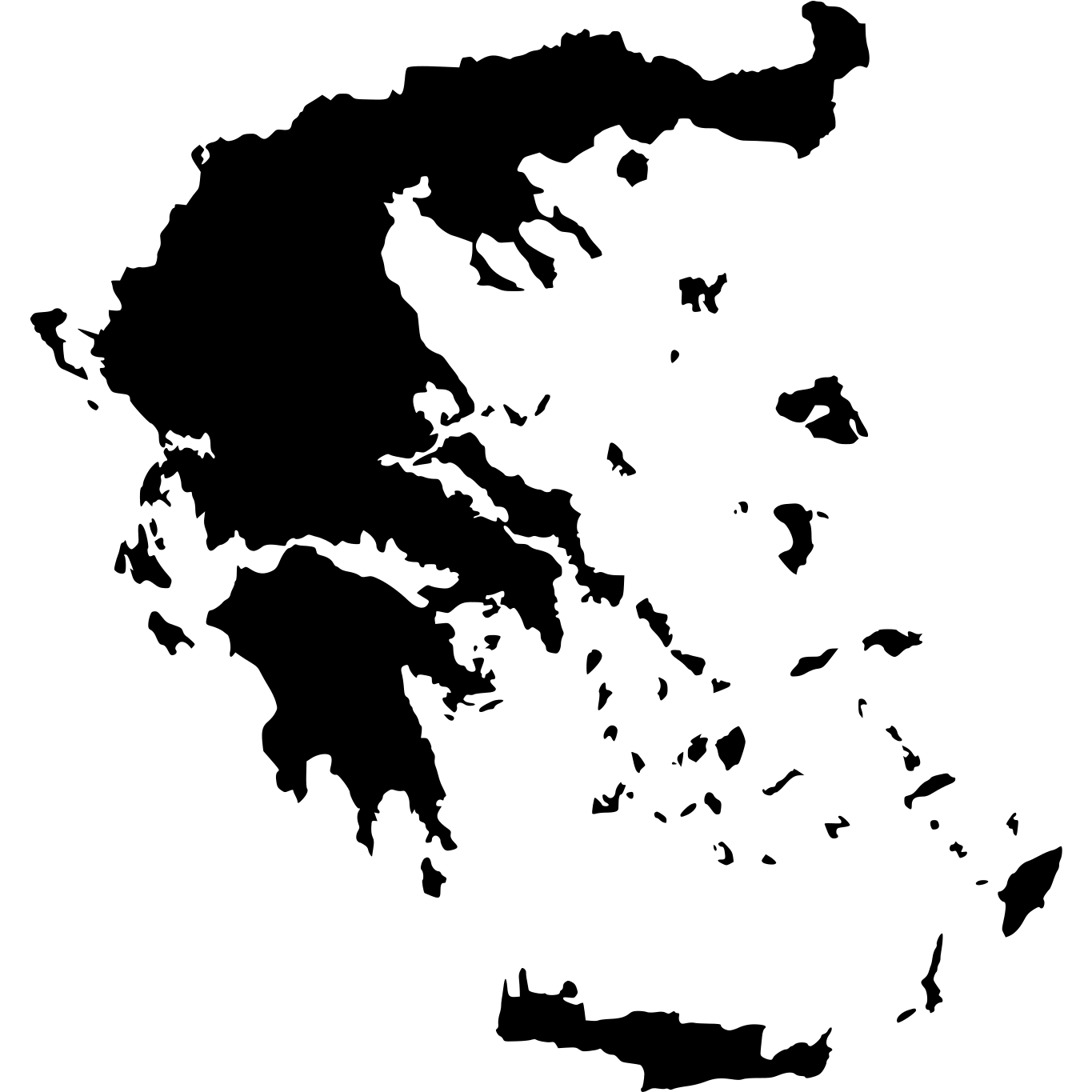
Youth Lab is a Greek brand
Often compared with

We're dedicated to providing you with the most up-to-date and science-backed ingredient info out there.
The data we've presented on this page has been verified by a member of the SkinSort Team.
Read more about us· Updated May 20, 2025 • Added by stefaniabelu2016


