Ferrer Internacional Nadixa Cream
A prescription with 13 ingredients.
Prescription with 13 ingredients
We independently verify ingredients, backed by peer-reviewed research. Suggest an update.
What's inside













Benefits
Concerns
Ingredients Explained
This is not an INCI ingredient. It is an antibiotic. Please consult with a medical professional about using this ingredient.
Benzalkonium Chloride (aka BAC) is a preservative that has been around since the 1930's. It is also a surfactant that gives it mild cleansing and antistatic properties.
BAC works because it carries a positive electrical charge that attract the negative charge of microbe cells (like a magnet). Once BAC sticks to a microbe, it breaks the microbe cell's outer wall and scrambles its proteins to kill it.
The maximum usage percentage for this ingredient is 0.1% in both the EU and Chinese cosmetic regulations.
The CIR Expert Panel has concluded it to be a safe antimicrobial agent in concentrations up to 0.1% and it is permitted up to 3% in rinse off hair products.
BAC can be irritating at higher concentrations but a true allergy to it is pretty rare. Be sure to patch test if you have a damaged skin barrier or just sensitive skin.
Because it's a cation, it is incompatible with anionic surfactants like SLS (they neutralize each other).
Learn more about Benzalkonium ChlorideParaffinum Liquidum is a highly-refined cosmetic-grade mineral oil. It is also known as liquid paraffin.
Despite its controversial reputation, the science is pretty clear: it's one of the most well-studied and effective moisturizing ingredients out there.
As an occlusive, it forms a protective layer on the skin that locks in moisture and prevents transepidermal water loss (TEWL). This makes it especially great for compromised skin barriers.
The "it clogs your pores" myth has been around for decades; a study found that industrial-grade mineral oil may be comedogenic but cosmetic-grade mineral oil is not (these two are very, very different).
A 2017 review concluded that cosmetic use of mineral oils and waxes does not present a risk to consumers due to absorption.
Mineral oil got a bad rap from the old rabbit ear studies. When tested on actual human skin, cosmetic-grade mineral oil showed no comedogenic activity. The rating of 0 is a correction of outdated science.
Mineral oil is an inert substance with no fatty acids so there's nothing to feed Malassezia. This ingredient is fungal acne safe.
Learn more about Paraffinum LiquidumGlycerin (or glycerol) is a compound naturally found in your skin. It's a powerhouse humectant that pulls water into the stratum corneum.
Topically, glycerin does several things at once:
Your skin makes glycerin on its own (mostly from sebaceous oil breakdown) and shuttles it to your outermost layer of skin, or your epidermis, via aquaporin-3.
Aquaporin-3 is a transporter that is essential for normal skin hydration, elasticity, and repair. Interestingly, mice lacking in AQP3 have dry and less elastic skin that can be fully corrected with glycerin.
This ingredient is non-irritating, plays well with almost every ingredient, and works across all skin types. Typical use is anywhere between 3-10% but can go up to 79% in some leave-on products.
Just know very high concentrations (>40%) can feel tacky in low humidity.
Glycerin is the name for this ingredient in American English. British English uses Glycerol/Glycerine.
Learn more about GlycerinWe don't have a description for Diethanolamine yet.
Paraffin is a solid wax that pulls its weight as an emollient, occlusive, and consistency-booster.
It softens skin and lays down a protective film to slow water loss and gives products a stable body and structure.
The cosmetic grade stuff is highly refined with a solid safety record. The CIR Expert Panel has repeatedly reaffirmed this ingredient to be safe in current practices of use and concentration.
The worry about carcinogenic compounds only applies to industrial grades, not the purified version used in skincare.
Despite its reputation, the highly reformed form is non-comedogenic and doesn't penetrate deeply into skin.
The good news for fungal-acne prone folks: the Malassezia yeast feeds on fatty acids and lipids and paraffin doesn't contain any of these (so there's nothing for the yeast to metabolize). This ingredient is considered fungal acne safe.
Learn more about ParaffinCetyl Alcohol is a fatty alcohol. Fatty Alcohols are most often used as an emollient or to thicken a product.
Its main roles are:
Though it has "alcohol" in the name, it is not related to denatured alcohol or ethyl alcohol.
The FDA allows products labeled "alcohol-free" to have fatty alcohols.
This ingredient may not be fungal acne safe. It is a primary fatty alcohol with a chain length above 12 carbons. A study from 2019 show Malassezia can feed on fatty alcohols in this range, so it may trigger fungal acne in those prone to it.
Learn more about Cetyl AlcoholSodium Hydroxide is also known as lye or caustic soda. It is used to adjust the pH of products; many ingredients require a specific pH to be effective.
In small amounts, sodium hydroxide is considered safe to use. However, large amounts may cause chemical burns due to its high alkaline.
Your skin has a natural pH and acid mantle. This acid mantle helps prevent harmful bacteria from breaking through. The acid mantle also helps keep your skin hydrated.
"Alkaline" refers to a high pH level. A low pH level would be considered acidic.
Learn more about Sodium HydroxideStearyl Alcohol is a type of fatty alcohol from stearic acid. It is a white, waxy compound used to emulsify ingredients used as an emollient or to thicken a product.
Emollients help soothe and hydrate the skin by trapping moisture.
Fatty alcohols are usually derived from natural fats and oils and therefore do not have the same drying or irritating effect as solvent (ethanol) alcohols.
The FDA allows products labeled "alcohol-free" to have fatty alcohols.
This ingredient may not be fungal acne safe. It is a primary fatty alcohol with a chain length above 12 carbons. A study from 2019 show Malassezia can feed on fatty alcohols in this range, so it may trigger fungal acne in those prone to it.
Learn more about Stearyl AlcoholDisodium EDTA is a chelating agent. It grabs onto and deactivates metal ions that sneak into your products from water, packaging, or air.
This ingredient mainly works behind the scenes and helps with:
On top of that, this ingredient can counteract the effects of hard water by binding to the minerals in it.
One thing worth knowing is that Disodium EDTA has been shown to be a mild penetration enhancer. It can help other ingredients absorb into skin more effectively which can be a double-edged sword (great for actives, but can also make the active too strong if you have sensitive skin).
Clinical patch testing showed no significant skin irritation at typical use concentrations and minimal dermal absorption.
You'll most likely see this ingredient near the end of an ingredient list. It's typically found in concentrations less than 1%.
Learn more about Disodium EDTAWater. It's the most common cosmetic ingredient of all. You'll usually see it at the top of ingredient lists, meaning that it makes up the largest part of the product.
So why is it so popular? Water most often acts as a solvent - this means that it helps dissolve other ingredients into the formulation.
You'll also recognize water as that liquid we all need to stay alive. If you see this, drink a glass of water. Remember to stay hydrated!
Learn more about WaterWe don't have a description for PPG-50 Cetyl Ether yet.
We don't have a description for PPG-20 Cetyl Ether yet.
Reviews
No written reviews yet. Be the first to review this product.
Recent searches
Search reviews by skin type, ingredient, or keyword.
Where it's from
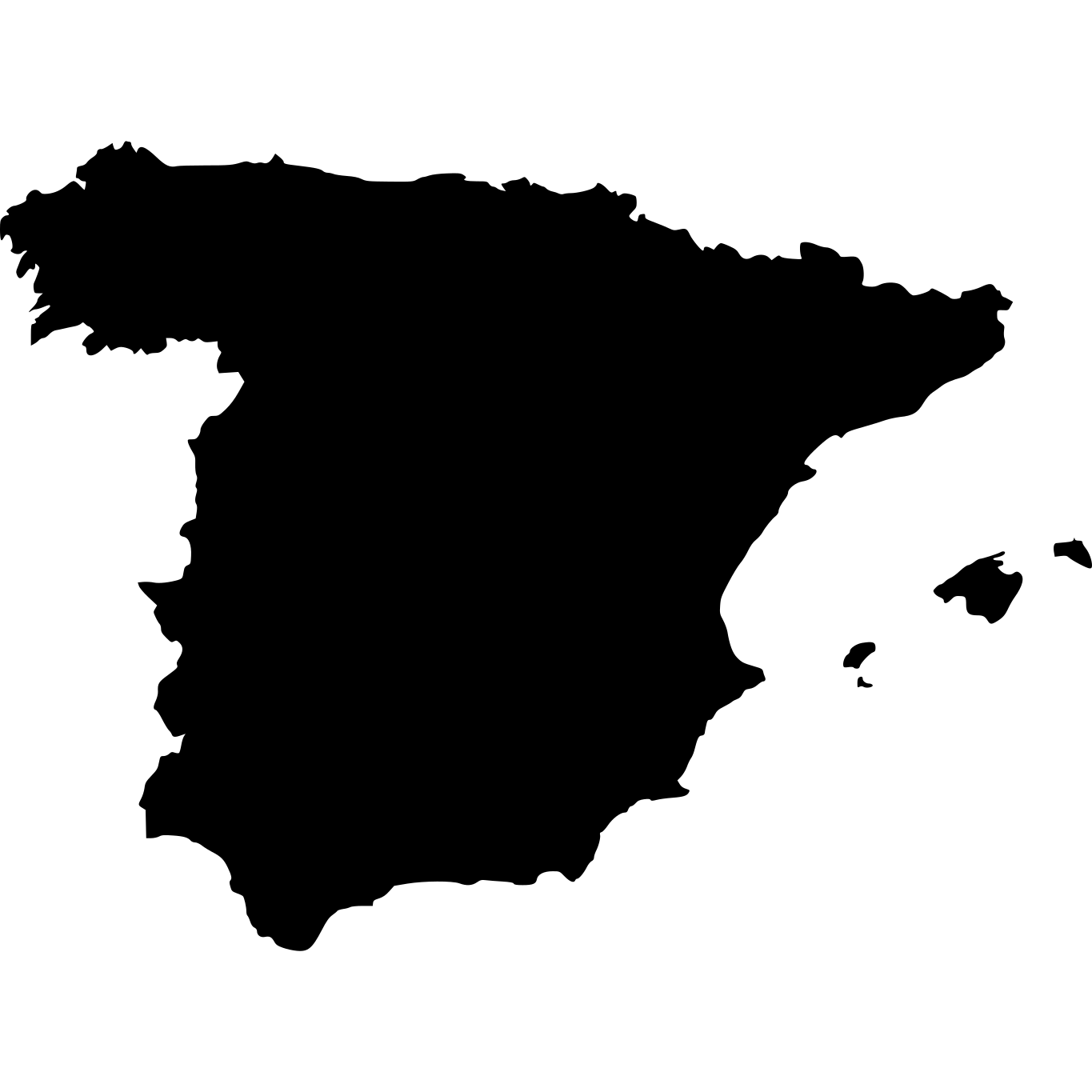
Ferrer Internacional is a Spanish brand

We're dedicated to providing you with the most up-to-date and science-backed ingredient info out there.
The data we've presented on this page has been verified by a member of the SkinSort Team.
Read more about us· Updated September 15, 2025 • Added by Maelie234


