Tanamera Black Formulation Facial Soap
A face cleanser with 15 ingredients, including exfoliants.
Face cleanser with 15 ingredients that contains exfoliants
Worth noting
Contains Lavandula Angustifolia Oil, an EU-listed fragrance allergen.
We independently verify ingredients, backed by peer-reviewed research. Suggest an update.
What's inside
Ingredients List
Sodium Palmate
CleansingSodium Palm Kernelate
CleansingWater
Skin ConditioningOryza Sativa Powder
Oryza Sativa
Glycine Max Seed Powder
Abrasive
Acacia Catechu Seed Powder
Skin ConditioningCurcuma Xanthorrhiza Root Powder
Antimicrobial
Curcuma Longa Root Powder
Skin ConditioningVetiveria Zizanoides Root Powder
Skin ConditioningCitrus Aurantifolia Peel
Skin ConditioningCinnamomum Zeylanicum Bark Powder
Skin ConditioningMyristica Fragrans Powder
MaskingLavandula Angustifolia Oil
Masking




Glycerin
Humectant


Sodium Palmate, Sodium Palm Kernelate, Water, Oryza Sativa Powder, Oryza Sativa, Glycine Max Seed Powder, Acacia Catechu Seed Powder, Curcuma Xanthorrhiza Root Powder, Curcuma Longa Root Powder, Vetiveria Zizanoides Root Powder, Citrus Aurantifolia Peel, Cinnamomum Zeylanicum Bark Powder, Myristica Fragrans Powder, Lavandula Angustifolia Oil, Glycerin
Key Ingredients
Benefits
Concerns
Ingredients Explained
Sodium Palmate is a surfactant and used to saponify fatty acids. It can be derived from palm oil or synthetically created.
As a surfactant, it helps lift dirt and oil off the skin to be cleansed.
Sodium Palmate is also used during the soap-making process to saponify fatty acids. This helps soap creates bubbles without leaving residue on the skin.
This ingredient is sometimes called saponified palm oil.
Learn more about Sodium PalmateThis ingredient is derived from the fatty acids of palm kernel oil and is considered a traditional soap.
It acts as a surfactant by making it easier for water to wash away dirt, oil, and other impurities.
Water. It's the most common cosmetic ingredient of all. You'll usually see it at the top of ingredient lists, meaning that it makes up the largest part of the product.
So why is it so popular? Water most often acts as a solvent - this means that it helps dissolve other ingredients into the formulation.
You'll also recognize water as that liquid we all need to stay alive. If you see this, drink a glass of water. Remember to stay hydrated!
Learn more about WaterOryza Sativa Powder is created by grinding dried seeds of rice, Oryza Sativa.
It is used to add volume and increase the thickness of a product. This ingredient may also have mildly exfoliating properties.
Rice contains numerous antioxidants which may help with anti-aging, such as vitamin E.
Learn more about Oryza Sativa PowderWe don't have a description for Oryza Sativa yet.
Glycine Max Seed Powder is an exfoliant.
We don't have a description for Acacia Catechu Seed Powder yet.
Curcuma Xanthorrhiza Root Powder is an antioxidant.
We don't have a description for Curcuma Longa Root Powder yet.
We don't have a description for Vetiveria Zizanoides Root Powder yet.
We don't have a description for Citrus Aurantifolia Peel yet.
We don't have a description for Cinnamomum Zeylanicum Bark Powder yet.
This ingredient is also known as ground nutmeg.
Lavandula Angustifolia Oil is more commonly known as lavender essential oil. It is considered a fragrancing ingredient.
Lavender imparts a famous scent. While the smell is lovely, this ingredient and may sensitize skin in topical products. This is because about 85% of the oil is made up of linalool and linalyl acetate.
When exposed to air, these two compounds become strong allergens. This ingredient exhibits cytotoxicity at low concentrations; amounts of 0.25% have been shown to damage skin cells.
A study from Japan found this ingredient caused lavender sensitivity after widespread exposure.
Lavender essential oil has some antimicrobial, antibacterial, and anti-inflammatory properties. However, the cons of this ingredient may outweight the pros.
More research is needed to confirm lavender essential oil's effects when used in aromatherapy.
Lavandula Angustifolia is known as the English Lavender and famous for creating purple fields in Provence, France.
Learn more about Lavandula Angustifolia OilGlycerin (or glycerol) is a compound naturally found in your skin. It's a powerhouse humectant that pulls water into the stratum corneum.
Topically, glycerin does several things at once:
Your skin makes glycerin on its own (mostly from sebaceous oil breakdown) and shuttles it to your outermost layer of skin, or your epidermis, via aquaporin-3.
Aquaporin-3 is a transporter that is essential for normal skin hydration, elasticity, and repair. Interestingly, mice lacking in AQP3 have dry and less elastic skin that can be fully corrected with glycerin.
This ingredient is non-irritating, plays well with almost every ingredient, and works across all skin types. Typical use is anywhere between 3-10% but can go up to 79% in some leave-on products.
Just know very high concentrations (>40%) can feel tacky in low humidity.
Glycerin is the name for this ingredient in American English. British English uses Glycerol/Glycerine.
Learn more about GlycerinReviews
No written reviews yet. Be the first to review this product.
Recent searches
Search reviews by skin type, ingredient, or keyword.
Where it's from
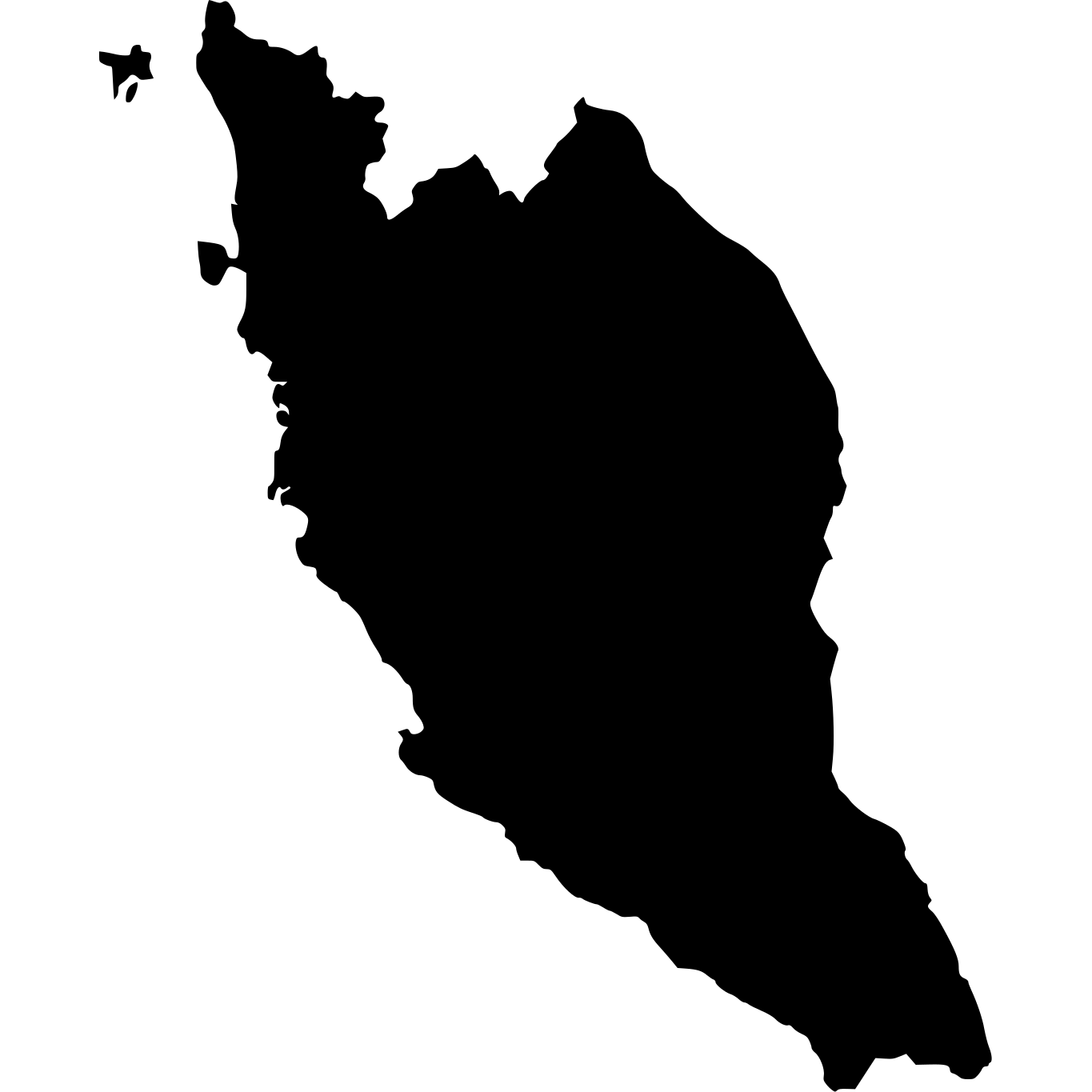
Tanamera is a Malaysian brand

We're dedicated to providing you with the most up-to-date and science-backed ingredient info out there.
The data we've presented on this page has been verified by a member of the SkinSort Team.
Read more about us· Updated April 6, 2026 • Added by syarifahnuraishah


