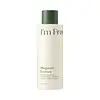
This calming essence is formulated around Artemisia Princeps Extract and Sodium Hyaluronate to calm redness and hydrate skin.
This calming essence is formulated around Artemisia Princeps Extract and Sodium Hyaluronate to calm redness and hydrate skin.


What's inside
What's inside
 Key Ingredients
Benefits
Concerns
Ingredients Side-by-side









Reviews
Ingredients Explained
These ingredients are found in both products.
Ingredients higher up in an ingredient list are typically present in a larger amount.
1,2-Hexanediol is a synthetic liquid and another multi-functional powerhouse.
It is a:
- Humectant, drawing moisture into the skin
- Emollient, helping to soften skin
- Solvent, dispersing and stabilizing formulas
- Preservative booster, enhancing the antimicrobial activity of other preservatives
Artemisia Princeps Extract comes from the Japanese mugwort. This plant has been used in East Asian medicine for a long time and it earns its place in modern formulas as a soothing and barrier-supporting ingredient.
Lab studies show its flavonoid compounds (like eupatilin and jaceosidin) can calm inflammation by switching off one of the main "alarm" signals inside skin cells (NF-kB) and turning down several of the chemicals that drive redness and swelling.
It also acts as an antioxidant. It switched on the skin's own protective enzymes that help mop up free radicals in skin cells.
The barrier side is worth mentioning as well; a 2017 study found this extract boosted two proteins your skin needs for a strong, hydrated barrier (Filaggrin and Loricrin). This is likely why mugwort products tend to ease dryness and flaking in conditions like eczema.
Separate-skin moisture testing on volunteers showed a measurable jump in water content one hour after applying an Artemisia extract.
Just keep in mind most of this evidence sits at the cell-culture and animal-model level, and human data is stronger for Artemisia annua than Artemisia princeps.
This ingredient shows real promise and there's little downside to including it as a supporting player in your routine.
Controlled studies tested the extract roughly between 0.1-1% on cells and finished cosmetics generally use botanical extracts like this in low single digits.
Though this ingredient is generally well-tolerated, people with sensitivities toward mugwort or ragweed should patch test.
Learn more about Artemisia Princeps ExtractButylene Glycol (or BG) is used within cosmetic products for a few different reasons:
Overall, Butylene Glycol is a safe and well-rounded ingredient that works well with other ingredients.
Though this ingredient works well with most skin types, some people with sensitive skin may experience a reaction such as allergic rashes, closed comedones, or itchiness.
Learn more about Butylene GlycolEthylhexylglycerin is created from glycerin. It is a multitasker ingredient that:
The CIR Expert Panel found minimal skin absorption or sensitization of any kind in a safety assessment. Though this ingredient is considered well-tolerated, a small number of cases of allergic dermatitis have been published since 2002. Just be sure to patch test if you are unsure.
Industry-reported use ranges from 8% in rinse-off products and 2% in leave-on formulations.
Learn more about EthylhexylglycerinSodium Hyaluronate is the salt form of hyaluronic acid. It is a long sugar chain that is naturally found in your skin, joints, and connective tissue that maintains hydration and elasticity.
In skincare, it works as a humectant. It pulls water from the environment and deeper layers of skin and binds it to the surface.
Interestingly, the size of the molecule affects its behavior:
Some clinical evidence links low molecular weight versions to improved wrinkle depth, elasticity, anti-inflammatory effects, and barrier repair.
Many serums use a blend of both weights so you can get surface hydration plus longer-lasting and deeper effects.
You'll typically see concentrations between 0.1-2% for this ingredient.
Learn more about Sodium HyaluronateWater. It's the most common cosmetic ingredient of all. You'll usually see it at the top of ingredient lists, meaning that it makes up the largest part of the product.
So why is it so popular? Water most often acts as a solvent - this means that it helps dissolve other ingredients into the formulation.
You'll also recognize water as that liquid we all need to stay alive. If you see this, drink a glass of water. Remember to stay hydrated!
Learn more about Water

