Lip Intimate Care Lip Balm Macadamia + Oat
A body lotion with 6 ingredients, including vitamin E.
Body lotion with 6 ingredients that contains Vitamin E
We independently verify ingredients, backed by peer-reviewed research. Suggest an update.
What's inside















Key Ingredients
Benefits
Concerns
Ingredients Explained
Helianthus Annuus Hybrid Oil is an oil and isn't fungal acne safe.
This is another name for beeswax; it's a natural wax produced by honey bees to build their honeycomb.
Because it forms a protective layer on your skin, it can help lock in moisture and reduce water loss. It is also widely used as a thickener and emulsifier in lip balms and lotions. Research suggests beeswax containing moisturizers can support skin barrier integrity.
In comedogenic testing, Beeswax scored a 0-2, which is on the low end. Whether or not a product clogs your pores really comes down to the formula as a whole (not any single ingredient on its own) and your skin.
Beeswax is not vegan since it is animal-derived. It cannot be removed with water, but can be taken off with an oil cleanser.
People with a known Propolis allergy also report to have reactions from beeswax.
Beeswax's wax esters are derived primarily from palmitic and oleic acid (C16 and C18:1). Both of these fall within the C11-C24 feeding window.
The Malassezia yeast can potentially cleave these esters and release usable fatty acids, so this ingredient may not be fungal acne safe. However, not everyone will react to this ingredient.
Learn more about Cera AlbaThis ingredient is also known as Macadamia Seed Oil. It's an emollient with a fatty acid profile that closely mirrors the skin's own lipid makeup.
The palmitoleic acid content is especially notable as it's somewhat rare in plant oils. Palmitoleic acid is something your skin already makes naturally. It helps keep cell membranes structured and plays a role in fighting off harmful microbes.
This palmitoleic content is also part of why macademia seed oil absorbs quickly and doesn't leave much of a greasy residue.
It also contains oleic acid, linoleic acid, and phytosterols that can help reduce redness.
In vitro research has shown the oil to have meaningful antioxidant activity, protect fats in the skin from oxidative damage, and slow down the enzyme that breaks down hyaluronic acid.
A 2024 clinical study found it effective at improving skin hydratino and reducing wrinkle appearance when formulated into nanoemulsions.
Because it carries oleic acid (C18) and palmitic acid (C16), this ingredient may not be fungal acne safe. This is because the Malassezia yeast metabolizes in the C11-24 chain length range.
You'll also see this ingredient listed as: Macadamia Integrifolia Seed Oil .
These two oils are identical in composition and M. ternifolia is an older INCI naming convention for the edible macadamia nut while M. integrifolia is the species actually cultivated for oil production. Both names refer to the same oil.
Learn more about Macadamia Ternifolia Seed OilThis ingredient is also known as oat kernel oil. It's an emollient and skin conditioning agent that is great for barrier support, hydrating skin, and calming irritation.
The fatty acid profile is dominated by linoleic acid (~22.8-43.1%), oleic acid (~31.4-51.3%), and palmitic acid (~13.9-18.8%).
Plus, it contains ceramides, phytosterols, phospholipids, vitamin E, and avenanthramides (oat's signature anti-inflammatory polyphenols).
One study found an oat lipid extract applied to human skin cells switched on receptors that tell skin cells to mature properly and make more barrier lipids (including a 70% boost in ceramides).
Basically, oat kernel oil doesn't just sit on top of skin, it nudges your skin to build more its of its own barrier.
Typical usage levels range from 1-10%.
Note: This ingredient may not be fungal acne safe due to the fatty acids present.
Learn more about Avena Sativa Kernel OilTocopherol is a fat-soluble antioxidant known as Vitamin E.
You'll find this ingredient in the vast majority of skincare (for good reason). It works to neutralize free radicals, or unstable molecules generated by UV exposure, pollution, and other environmental stressors, before they can cause oxidative damage to your skin cells.
Topically applied tocopherol has been shown to protect against UV damage by ramping up the skin's own natural defense enzymes.
It also acts as a skin conditioning agent; some studies show that regular topical use can improve the skin's water-binding capacity over 2-4 weeks.
This ingredient is especially loved for being a team player. When combined with Vitamin C, the photoprotective effect of both ingredients roughly doubles and the combo also helps reduce UV-induced DNA damage.
This ingredient has some brightening potential but it's more of a prevention ingredient than spot-fader. Cell studies show it can slow down melanin production but it's worth noting that it's not the most powerful brightener out there.
In formulations, it also serves as a stabilizer that helps protect other oxidation-prone ingredients from degrading.
Concentrations usually range from 0.1-1% in most leave-on products.
Learn more about TocopherolHelianthus Annuus Seed Oil is a plant oil derived from the seeds of a sunflower.
It is rich in fatty acids, primarily linoleic acid and oleic acid. This gives it emollient and skin conditioning properties.
The reason this ingredient is so effective is because it forms a thin film on the skin that reduces transepidermal water loss (TEWL) while supplying linoleic acid to the stratum corneum to improve barrier strength.
The high linoleic acid content is particularly noteworthy for acne-prone skin.
Research suggests that acne-prone skin tends to be deficient in linoleic acid in sebum. Topical application may help replenish this to support a healthier follicular environment and less comedone-promoting sebum.
One randomized study found sunflower seed oil preserved skin barrier integrity in adult volunteers with and without atopic dermatitis (outperforming olive oil).
This ingredient is well-studied, gentle, and an effective emollient suitable for most skin types.
On fungal acne: This ingredient may not be Fungal acne (Malassezia folliculitis) safe. This is because it contains fatty acids with carbon chain lengths in the C11-C24 range.
Learn more about Helianthus Annuus Seed OilReviews
No written reviews yet. Be the first to review this product.
Recent searches
Search reviews by skin type, ingredient, or keyword.
Where it's from
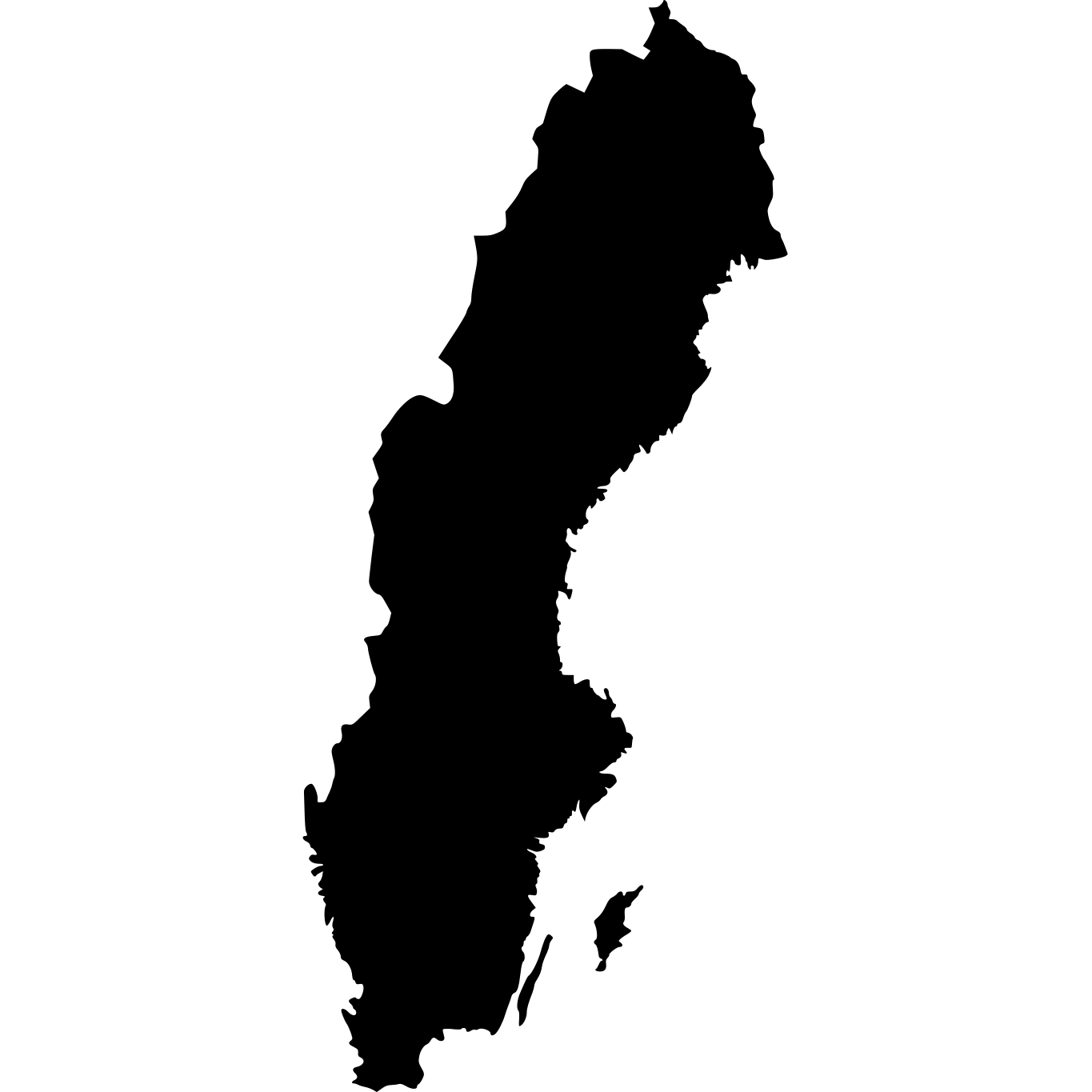
Lip Intimate Care is a Swedish brand

We're dedicated to providing you with the most up-to-date and science-backed ingredient info out there.
The data we've presented on this page has been verified by a member of the SkinSort Team.
Read more about us· Updated April 30, 2024 • Added by starstellastar_407


