Alaffia Authentic African Black Soap All-In-One
A body wash with 8 ingredients.
Body wash with 8 ingredients
We independently verify ingredients, backed by peer-reviewed research. Suggest an update.
What's inside







Concerns
Ingredients Explained
Water. It's the most common cosmetic ingredient of all. You'll usually see it at the top of ingredient lists, meaning that it makes up the largest part of the product.
So why is it so popular? Water most often acts as a solvent - this means that it helps dissolve other ingredients into the formulation.
You'll also recognize water as that liquid we all need to stay alive. If you see this, drink a glass of water. Remember to stay hydrated!
Learn more about WaterLauryl Glucoside sugar- and lipid-based cleansing agent. It is created from glucose and lauryl alcohol.
This ingredient is a surfactant, making it easier to rinse oil, dirt, and other pollutants away.
A British study found lauryl glucoside to cause skin sensitivity for some people. We recommend speaking with a professional if you have concerns.
Other names for this ingredient include "Lauryl Polyglucose", "Lauryl glycoside", and "D-Glucopyranoside".
Learn more about Lauryl GlucosidePotassium Shea Butterate isn't fungal acne safe.
We don't have a description for Potassium Palm Kernelate yet.
Ocimum Sanctum Leaf Extract comes from the Holy Basil plant. Holy Basil is native to India.
Holy Basil is rich in antioxidants due to its high romarinic acid, ferulic acid, and rutin content. This gives it skin brightening and soothing properties.
While Holy Basil has many claims to help fight acne, more research is needed.
One thing to note is the presence of tannins; tannins are naturally found in nature. However, this compound may be skin-sensitizing.
Learn more about Ocimum Sanctum Leaf ExtractThis ingredient is the essential oil from the leaves of cornmint. It is one of the richest natural sources of menthol on our planet (about 70-78%).
In cosmetics, this ingredient mostly works as a fragrance and/or masking agent used to cover up unpleasant smells of other ingredients.
The "cooling" sensation from mint isn't a real temperature change; menthol actives a nerve receptor in skin that gets triggered by cold. Your brain essentially gets a "cool" signal from it.
Just so you know, allergic contact dermatitis to menthol is documented in literature (but it's kind of uncommon). This is why the percentages allowed in leave-on products are quite low (0.2%). Be sure to patch test if you have sensitive skin.
Though this ingredient is not listed as an EU allergen, it's cousins (Mentha Piperita Oil, menthol and Mentha Viridis Leaf Oil) are.
Due to the high Menthol content of this ingredient, brands are required to label "menthol" as a separate ingredient on the list. The EU regulation labels the allergenic substance, not just the source ingredient, so the menthol carried in this ingredient still has to be declared.
Learn more about Mentha Arvensis Leaf OilLimonene is the compound that gives citrus peel its smell.
In skincare, it shows up as a standalone fragrance ingredient or as a natural compound of citrus and other essential oils.
You'll typically see this ingredient used in very small amounts; anything above 0.001% in a leave-on product or 0.01% in a rinse-off has to be named on the label in the EU. The citrus oils that carry it sit around 0.5-1% in a finished formula.
Fresh limonene is a weak allergen; the real issue is that it slowly reacts with air and then breaks down from oxidation to create hydroperoxides (which are strong sensitizers). This is why suppliers are required to keep the peroxide value below 20 mmol.
Positive reactions in people being investigated for eczema vary:
It's worth skipping if you have a known fragrance allergy or a compromised barrier, but the risk is low for most people.
Older or long-opened products are also more likely to bother you than fresh ones due to oxidation.
Learn more about LimonenePotassium Hydroxide (also known as potash) is a strong alkaline ingredient that does one job: it nudges a product's pH up so the whole formula lands in a skin-friendly range.
It's also the base that turns oils into liquid soap during the soap making process.
An expert safety panel reviewed it and found it safe when formulations are made to be non-irritating.
As a pH adjuster, it's typically used well under 1% though regulatory caps go much higher: 5% in nail cuticle removers and 2-4.5% in hair straighteners.
Though there is some concern for irritation from raw or high pH material, a well-balanced formula will be a non-issue for the vast majority of people.
Learn more about Potassium HydroxideReviews
No written reviews yet. Be the first to review this product.
Recent searches
Search reviews by skin type, ingredient, or keyword.
Where it's from
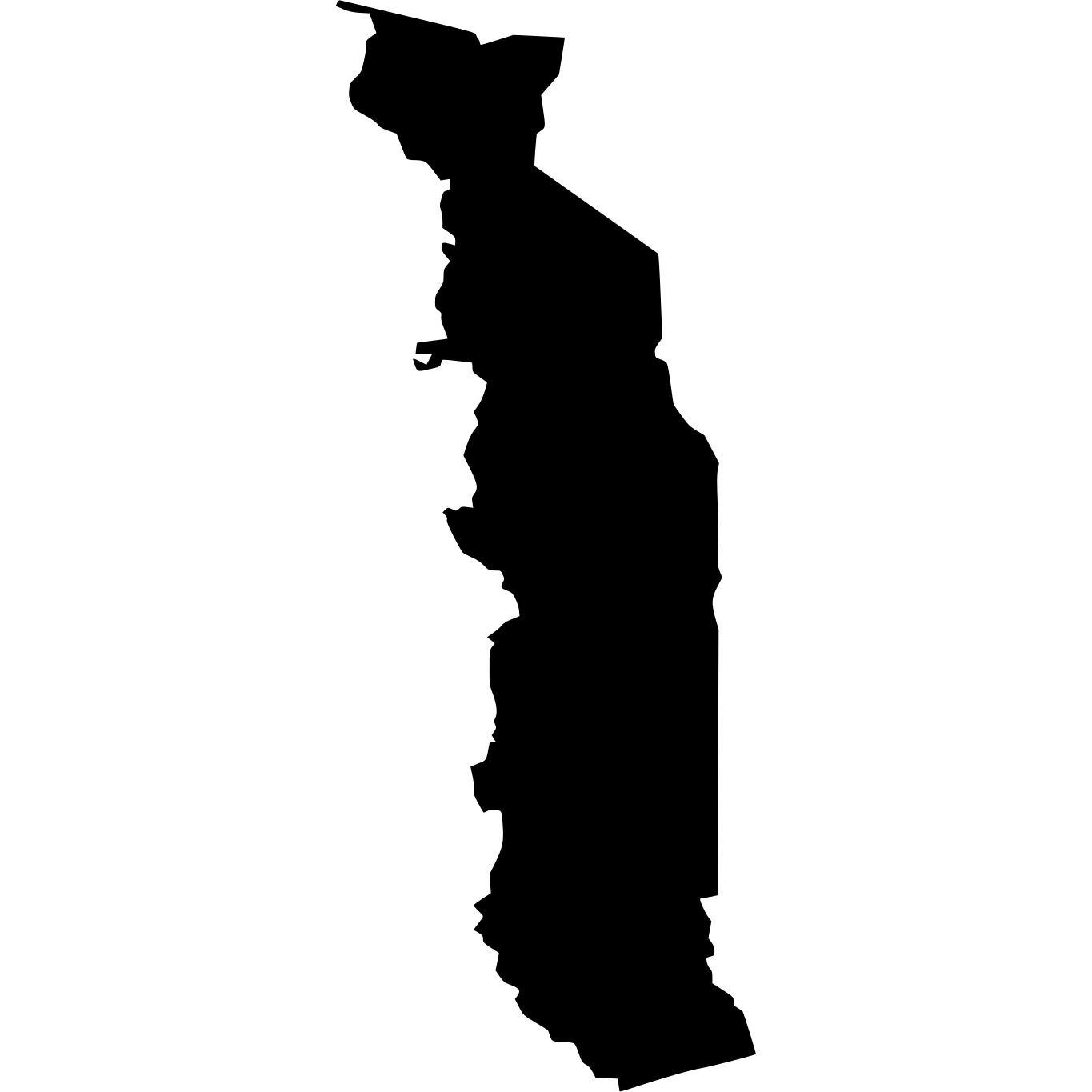
Alaffia is a Togolese brand
Often compared with

We're dedicated to providing you with the most up-to-date and science-backed ingredient info out there.
The data we've presented on this page has been verified by a member of the SkinSort Team.
Read more about us· Published June 11, 2024 • Added by weirdolei


