Khaokho Talaypu 100% Natural Tamarind Mask
A sheet mask with 12 ingredients.
This sheet mask is formulated around Honey to hydrate.
We independently verify ingredients, backed by peer-reviewed research. Suggest an update.
What's inside






Key Ingredients
Benefits
Ingredients Explained
We don't have a description for Tamarindus Indica Fruit Juice yet.
Honey mostly shows up in skincare as a humectant and skin conditioning agent. This is because its natural sugars (fructose and glucose) help hold onto water so skin feels softer and more hydrated.
Beyond hydration, honey also has antibacterial and wound-supporting properties. Its antibacterial action comes from a mix of things:
Manuka-type honey has an extra bacteria-killing compound called methylglyoxal, while all Honey contains a natural antibacterial protein called bee defensin-1.
Honey also nudges your immune cells to release signals that start the healing process. This is why medical-grade Honey is actually used in real wound dressings.
Just keep in mind that most of the strong clinical evidence is for wound care and not everyday cosmetic claims.
On concentrations and safety:
According to industry data, honey is used up to 22% in paste/mud packs, 7% as a honey extract in body/hand products, and face skincare levels sit well below that.
A human repeat insult patch test of 7% honey extract in 112 subjects showed no sensitization.
Allergy-wise, honey itself is a rare sensitizer. The bigger culprit is usually propolis that sometimes tags along in less-refined honey.
People allergic to propolis, conifer, poplar, salicylates, or Balsam of Peru are advised to avoid this ingredient due to shared allergens.
You might see this ingredient listed as either Honey or Mel (they're the same thing). Mel is simply the Latin word for honey.
A lot of people wonder if Honey is vegan, and technically it isn't.
Honey is made by bees; they gather nectar and their natural enzymes turn it into the Honey we know. So because it comes from an animal, it doesn't fit a vegan lifestyle.
And please remember to be kind to bees :). They're vital to so many ecosystems, and many species are struggling so they're worth protecting.
Learn more about HoneyMilk comes from cows. It contains proteins, lactic acid, and vitamin A, D, and E.
Milk contains fatty acids in the C12-18 range that are the exact carbon chain lengths that the Malassezia yeast feeds on, like oleic acid and palmitic acid.
Water. It's the most common cosmetic ingredient of all. You'll usually see it at the top of ingredient lists, meaning that it makes up the largest part of the product.
So why is it so popular? Water most often acts as a solvent - this means that it helps dissolve other ingredients into the formulation.
You'll also recognize water as that liquid we all need to stay alive. If you see this, drink a glass of water. Remember to stay hydrated!
Learn more about WaterWe don't have a description for Limonia Acidissima Bark Powder yet.
Glycyrrhiza Glabra Root is the roots of the Licorice, Glycyrrhiza glabra L., Leguminosae.
Extracts of licorice have demonstrated to have antibacterial, anti‐inflammatory, antiviral, antioxidant properties.
One component, glabridin, has extra potent antioxidant and soothing properties. It has also been found to block pigmentation from UVB rays in guinea pigs.
Licorice Root also contains a flavonoid. Flavonoids are a natural substance from in plants. Flavonoids also have antioxidant properties.
Another component, glycyrrhizin, has been found to have anti-inflammatory and antimicrobial benefits. This may make licorice root extract effective at treating acne. However, more research is needed to support this.
Liquiritin is one of the flavone compounds found in licorice. It has been found to help lighten skin by preventing tyrosinase from reacting with tyrosine. When the two react, protein is converted to melanin. Melanin is the substance in your body that gives your features pigmentation.
Learn more about Glycyrrhiza Glabra RootLonicera Japonica Flower Extract comes from the honeysuckle flower.
Honeysuckles have skin protecting, anti-viral, and anti-inflammatory properties. It contains many antioxidants, such as luteolin, caffeic acid, loniflavone, and chlorogenic acids.
This honeysuckle is native to East Asia and used in traditional Chinese medicine to treat fever and inflammation.
Learn more about Lonicera Japonica Flower ExtractOcimum Basilicum Extract is an antioxidant.
We don't have a description for Curcuma Longa Callus Extract yet.
Glycerin (or glycerol) is a compound naturally found in your skin. It's a powerhouse humectant that pulls water into the stratum corneum.
Topically, glycerin does several things at once:
Your skin makes glycerin on its own (mostly from sebaceous oil breakdown) and shuttles it to your outermost layer of skin, or your epidermis, via aquaporin-3.
Aquaporin-3 is a transporter that is essential for normal skin hydration, elasticity, and repair. Interestingly, mice lacking in AQP3 have dry and less elastic skin that can be fully corrected with glycerin.
This ingredient is non-irritating, plays well with almost every ingredient, and works across all skin types. Typical use is anywhere between 3-10% but can go up to 79% in some leave-on products.
Just know very high concentrations (>40%) can feel tacky in low humidity.
Glycerin is the name for this ingredient in American English. British English uses Glycerol/Glycerine.
Learn more about GlycerinWe don't have a description for Citrus Paradisi Fruit Extract yet.
We don't have a description for Usnea Barbata Extract yet.
Reviews
No written reviews yet. Be the first to review this product.
Recent searches
Search reviews by skin type, ingredient, or keyword.
Where it's from
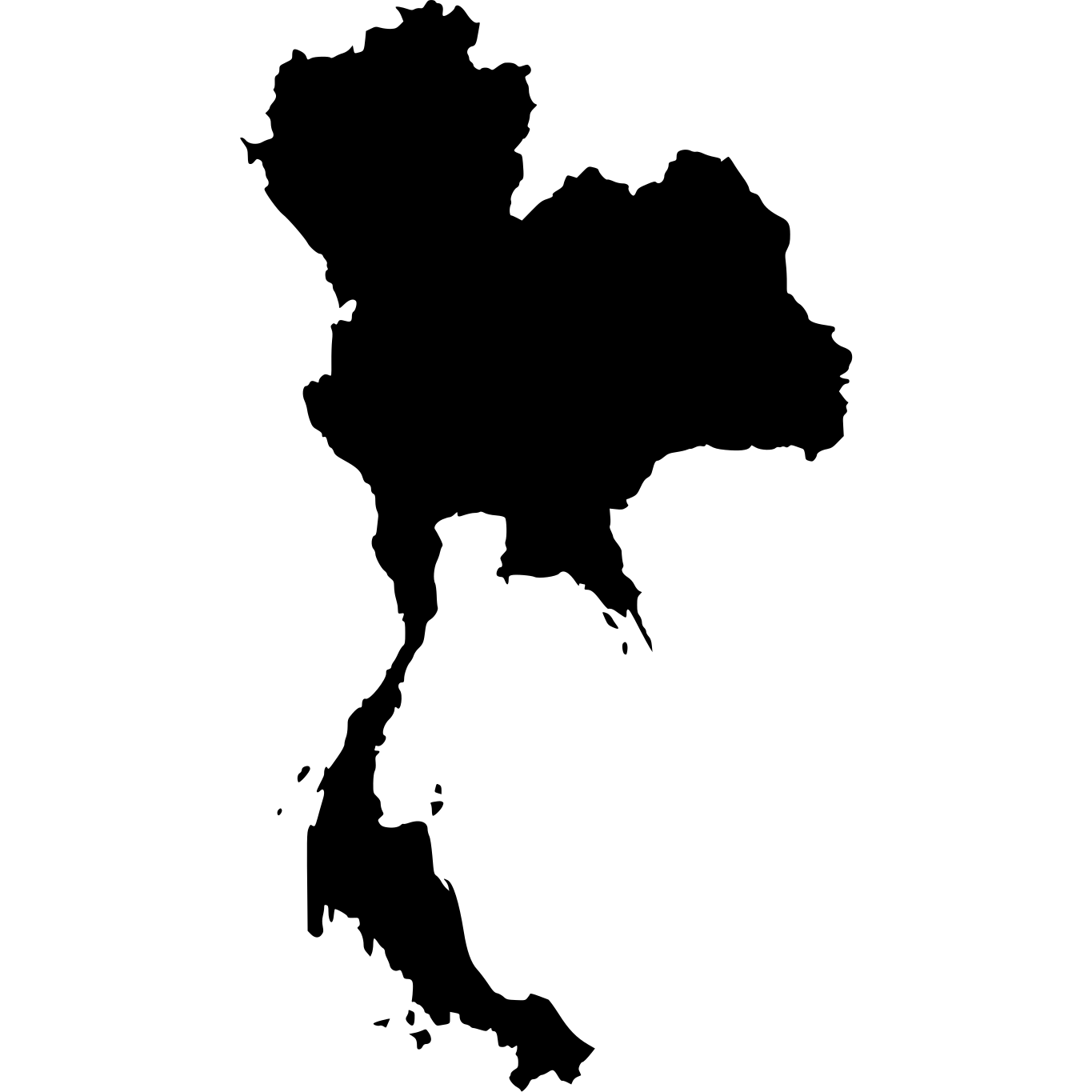
Khaokho Talaypu is a Thai brand

We're dedicated to providing you with the most up-to-date and science-backed ingredient info out there.
The data we've presented on this page has been verified by a member of the SkinSort Team.
Read more about us· Updated September 5, 2025 • Added by skingeek.arushi


