Löwengrip Facial Serum
A serum with 4 ingredients.
This barrier-repair serum is formulated around Simmondsia Chinensis Seed Oil to strengthen the skin barrier and hydrate skin.
We independently verify ingredients, backed by peer-reviewed research. Suggest an update.
What's inside










Benefits
Concerns
Ingredients Explained
Caprylic/Capric Triglyceride (aka MCT Oil) is a lightweight emollient, solvent, and texture enhancer. It is considered a skin-softener by helping to prevent moisture loss.
Though it behaves like an oil, it is not technically one due to its chemical composition. One perk of this ingredient is that it is very stable, resistant to oxidation, and unlikely to go rancid.
In practice, that translates to a long shelf life and a consistently elegant skin feel.
While there is an assumption Caprylic Triglyceride can clog pores due to it being derived from coconut oil, there is no research supporting this. Just patch test if you have concerns.
Fractionated coconut oil and MCT Oil are both listed as Caprylic/Capric Triglyceride according to INCI. This is because INCI names are based on the ingredient’s final chemical composition and not its marketing name or source.
This ingredient is treated as the gold standard fungal acne safe oil. Even though it is coconut derived, the problematic lauric acid is stripped out.
This leaves just caprylic (C8) and capric (C10) acid. These chain lengths actually trend antifungal; a 2020 study found caprylic acid was enough to disrupt Malassezia furfur cell membrane, with a caprylic acid derivative damaging membrane structures at concentrations as low as 0.2%.
Learn more about Caprylic/Capric TriglycerideIsopropyl Isostearate is a synthetic ester made by combining isopropyl alcohol and isostearic acid. Its an emollient that helps hydrate skin.
This also allows it to improve spreadability of a product and give products a silky feel on skin.
While this ingredient was given a comedogenic rating of 4-5, research has shown that finished products containing comedogenic ingredients don't always increase the formation of microcomedones.
Since isostearic acid is a C18 fatty acid, this ingredient falls within the range that Malassezia feeds on. This ingredient may not be fungal acne safe.
Learn more about Isopropyl IsostearateJojoba oil is one of the most well-studied plant-derived ingredients in cosmetics. It is an emollient with a special structure.
Because it is made up of 97-98% wax esters, it closely mirrors the linear monoesters found in human sebum. This makes it skin compatible, non-greasy, and lightweight.
Unlike other plant oils, jojoba wax doesn't easily penetrate skin. It mostly works in the uppermost layers as an emollient. This just means it forms a light barrier on the skin to help retain moisture.
Formulations with jojoba esters up to 90% reduced transepidermal water loss (TEWL) and increased barrier recovery by 81% (outperforming bisabolol at 47%).
Besides barrier support, the science also suggests jojoba to have anti-inflammatory effects and potential applications for skin infections, aging, and wound healing.
Fun fact: Indigenous cultures have used jojoba as a moisturizer and to help treat burns for centuries.
Fungal acne: The Malassezia yeast is known to metabolize fatty acids in the C11-24 range and jojoba's dominant fatty acid components fall into this range. This ingredient may not be fungal acne safe.
Learn more about Simmondsia Chinensis Seed OilThis ingredient comes from winged kelp; it's an edible brown seaweed found on exposed rocky Atlantic shores.
In cosmetics, it has skin protecting and hair conditioning properties.
Lab testing has shown it to be an impressive antioxidant: out of 3 Icelandic seaweeds, Alaria had the most phenolics, flavonoids, and strongest antioxidant capacity. It also blocked the enzymes that break down collagen, elastin, hyaluronic acid, and the enzyme that drives pigment creation.
Cell studies found it could lower progerin production in aged skin cells (with no effect in cells from young donors). Progerin is a protein that weakens the cell nucleus and drives both premature aging and normal aging processes
Just keep in mind these results are all from test tube and cell studies and there are currently no human trials on the extract itself.
Safety-wise, this one has a solid record. Human sensitization tests at 0.5 to 2.5% and under 5% all came back negative, and brown algae ingredients aren't restricted in the EU.
You'll see algae listed as a 5/5 on a lot of pore-clogging charts and that number doesn't come from anywhere; it's not in the original rabbit-ear studies that most comedogenic ratings trace back to.
The reasoning behind the reputation is that seaweed is high in iodine and iodine can trigger acne-like breakouts when eaten. This traces back to a 1976 letter in Archives of Dermatology describing two women whose breakouts cleared after they stopped taking high-dose kelp supplements orally.
And the reaction of these two women wasn't clogged pores at all: it was an iodine-triggered pustular rash. Later research found normal dietary iodine doesn't meaningfully affect acne either and nobody has shown topical algae delivers enough iodine to matter.
What we do have is dozens of brown and red algae ingredients found to be non-irritating and non-sensitizing, and a handful of studies that found algae compounds may actually help acne.
However, plenty of people do report breaking out from algae-containing products. Skin is individual and it's worth avoiding if yours has reacted to algae before.
Learn more about Alaria Esculenta ExtractReviews
No written reviews yet. Be the first to review this product.
Recent searches
Search reviews by skin type, ingredient, or keyword.
Where it's from
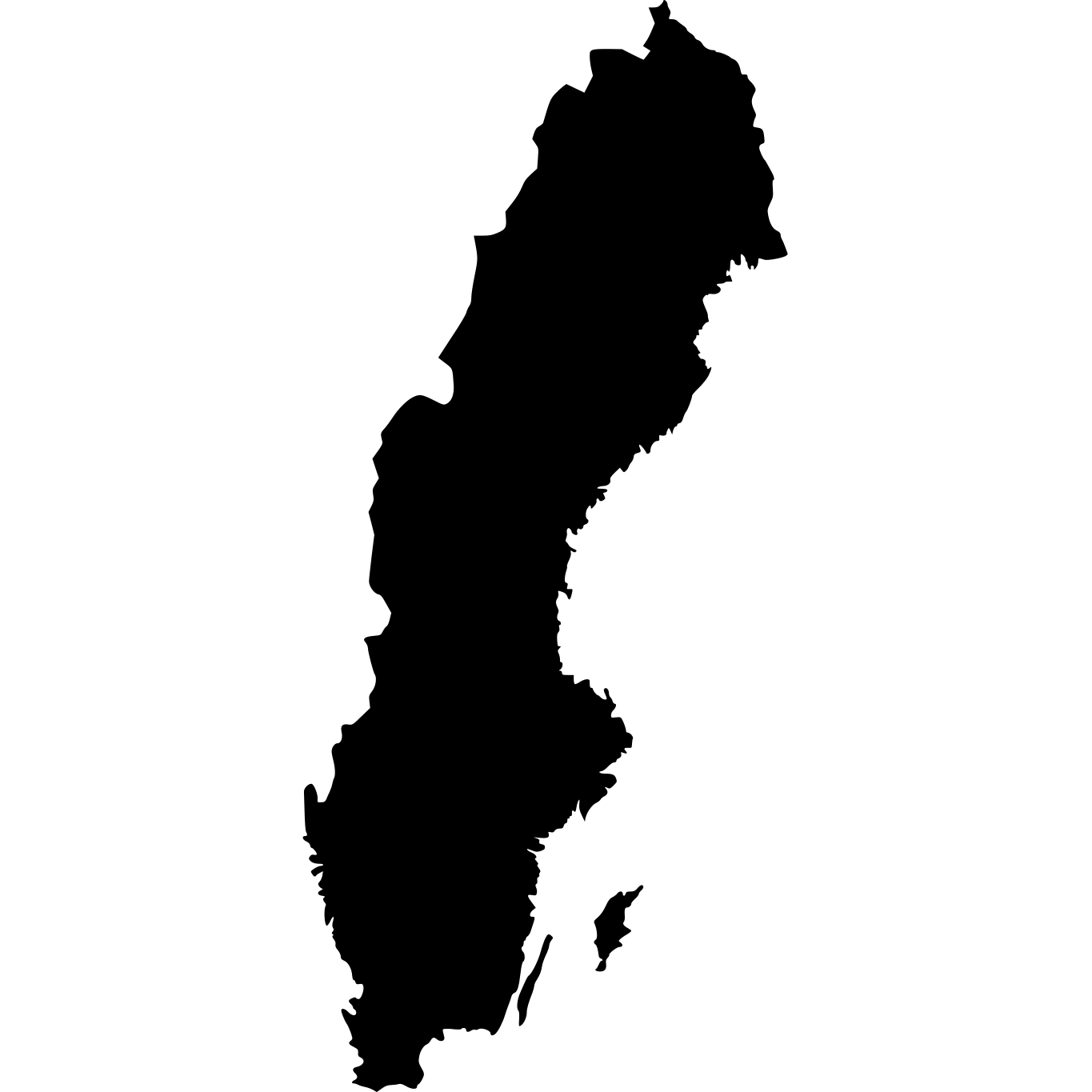
Löwengrip is a Swedish brand
Often compared with

We're dedicated to providing you with the most up-to-date and science-backed ingredient info out there.
The data we've presented on this page has been verified by a member of the SkinSort Team.
Read more about us· Updated December 10, 2025 • Added by starstellastar_407


