Farmatodo Jabón Neutro Limpiador Facial
A face cleanser with 5 ingredients.
Face cleanser with 5 ingredients
We independently verify ingredients, backed by peer-reviewed research. Suggest an update.
Warning: Incomplete INCI list
This happens when the brand does not publicly disclose the full list of ingredients.
If you've found the full list, please suggest an edit.










Benefits
Concerns
Ingredients Explained
Sodium Lauryl Sulfate (SLS) is a surfactant, cleansing agent, and foaming agent. You'll find it in a wide range of products from shampoos to face cleansers.
SLS has two main roles:
The Cosmetic Ingredient Review Panel has assessed it in 1983, 2002, and 2005 and found it to be safe in formulations at low concentrations.
SLS is a well-documented skin irritant at higher concentrations or with prolonged exposure. It's actually the gold standard positive control used in dermatological patch testing, meaning doctors use it because they know it will cause a reaction in people.
In one large study of 43,000 patiences tested with 0.25% SLS, about 22% showed some level of reactivity. It increases transepidermal water loss that disrupts your outermost layer of skin.
Face cleansers often pair this ingredient with mild co-surfactants like Cocamidopropyl Betaine to buffer its harshness.
Just so you know, SLS does not trigger true allergic contact dermatitis. This just means it can irritate your skin but doesn't cause your immune system to develop a lasting allergy to it.
Despite internet rumors, SLS is not considered a carcinogen by any major regulatory body.
Learn more about Sodium Lauryl SulfateWe don't have a description for Cocamide yet.
Methylparaben is a synthetic preservative and one of the most widely used in the world. It has a simple, but important job: prevent your products from going bad by stopping bacteria, yeast, and mold from growing.
Typical use levels are low, often 0.1-0.3%.
This is also one of the most heavily studied preservatives out there and major regulatory bodies have repeatedly given it the green light.
In 2023, the EU's Scientific Committee on Consumer Safety (SCCS) confirmed that this ingredient is safe up to 0.4% on its own, of up to 0.8% when mixed with other paraben esters.
Here's the science behind the noise behind parabens/hormones as well:
Methylparaben shows very weak estrogen-like activity in vitro tests (more than 1,000x weaker than your body's own estradiol). In vivo (live-organism) studies don't support a meaningful endocrine-disrupting effect either.
You get a stronger estrogenic effect from eating tofu, actually.
It's also a low sensitizer and allergic reactions are uncommon; they usually happen on damage or broken skin.
There is a caveat: France has proposed to formally re-examine its endocrine classification in 2025 so the regulatory conversation isn't fully closed as of yet.
But as it stands today, this ingredient is considered safe at permitted levels.
Learn more about MethylparabenPropylparaben is a preservative and one of the most widely used members of the paraben family (it's been used in cosmetics for over a century now).
It works by disrupting microbial cell membranes and enzymes, and is a broad-spectrum protector that works exceptionally well against molds, yeasts, and gram-positive bacteria.
You'll likely see it paired with methylparaben to cover the full range (including gram-negative bacteria).
This ingredient is effective at low concentrations (~0.2-0.5%) and stable across a wide pH range (4.5-7.5 pH). It's effectiveness drops off above pH 8 and it can lose potency when combined with non-ionic surfactants like polysorbate 80 due to micellization.
The regulatory bodies have concluded this ingredient to be safe as used in cosmetics. The EU has capped it at 0.14% and combined parabens are not to exceed 0.8%.
While parabens do cross the stratum corneum, only about 1% remains for absorption into the body. This is because most of it is metabolized within living skin.
Learn more about PropylparabenAzulene comes from chamomile oil. It is a blue pigment with skin soothing properties, great for fighting inflammation.
Reviews
No written reviews yet. Be the first to review this product.
Recent searches
Search reviews by skin type, ingredient, or keyword.
Where it's from
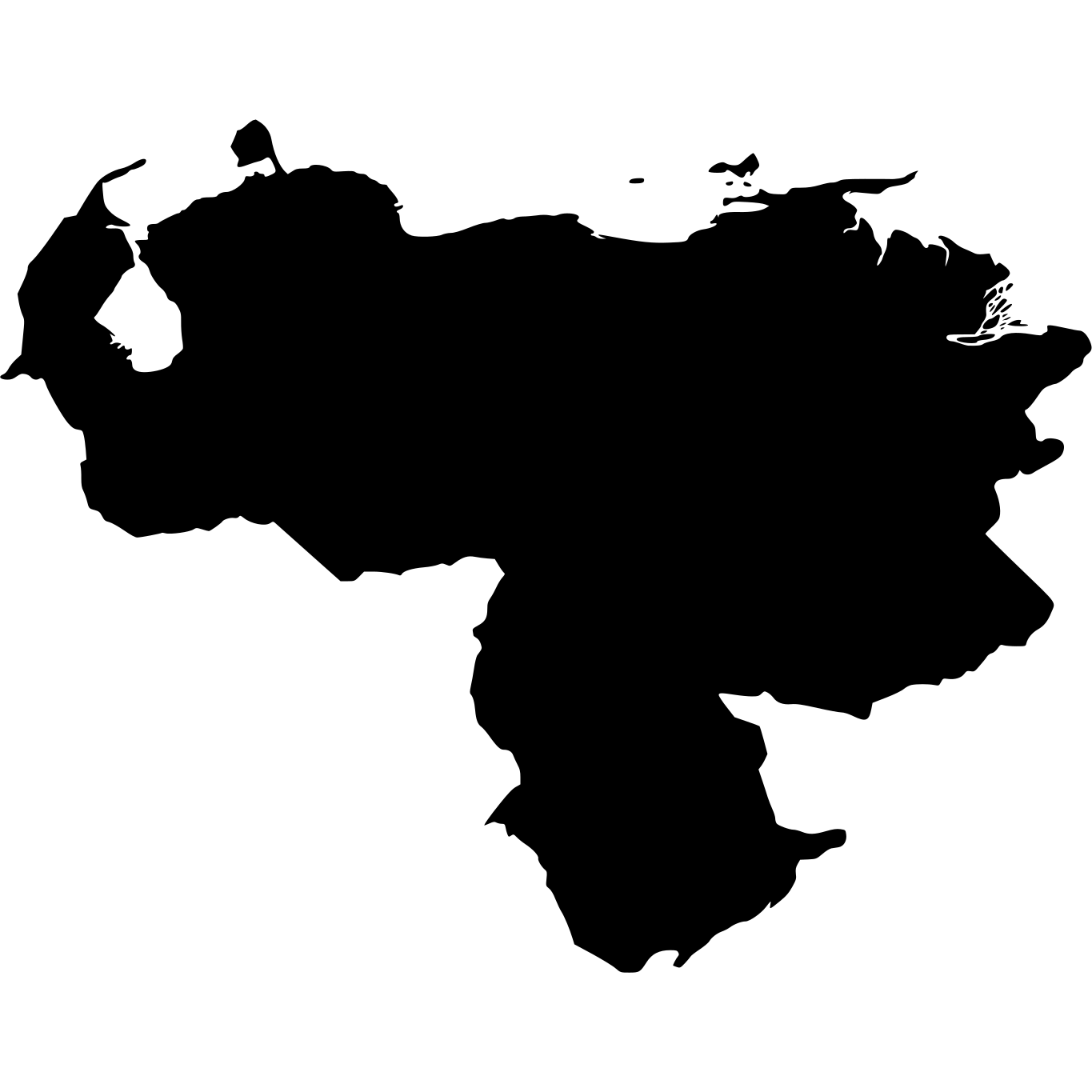
Farmatodo is a Venezuelan brand

We're dedicated to providing you with the most up-to-date and science-backed ingredient info out there.
The data we've presented on this page has been verified by a member of the SkinSort Team.
Read more about us· Published August 18, 2026 • Added by alondraverde


