Farfalla Regenerierend Rosenblüte Bio-Pflanzenwasser
A toner with 6 ingredients.
Toner with 6 ingredients
Worth noting
Contains EU-listed fragrance allergens, including Rose Flower Oil/Extract and Citronellol.
We independently verify ingredients, backed by peer-reviewed research. Suggest an update.
What's inside









Benefits
Concerns
Ingredients Explained
Rosa Damascena Flower Water is the water-based byproduct of steam-distilling damask rose petals. It has skin conditioning, masking, and skin protecting properties.
Research shows that Rosa damascena is rich in flavonoids and phenolic compounds like gallic acid that contribute to its antioxidant activity.
In vitro studies have shown that Rosa damascena can scavenge free radicals and reduce melanin overproduction. Research has also found this extract offers some degree of UV absorption but this should not replace your sunscreen.
Learn more about Rosa Damascena Flower WaterPentylene Glycol (1,2-pentanediol) is a multitasking little diol with three main roles in a formula:
Research on alkanediols (the family pentylene glycol belongs to) show they work by disrupting microbial cell membranes. This disruption helps the primary preservative system in a product work more effectively at lower doses.
On the safety side, the Cosmetic Ingredient Review Expert Panel has concluded this ingredient to be safe as used in current cosmetic practices + concentrations.
Typical use levels in a formula run about 1-5%.
Learn more about Pentylene GlycolRose Flower Oil/Extract is an oil.
Citronellol is used to add fragrance/parfum to a product. It is often derived from plants such as roses. In fact, it can be found in many essential oils including geranium, lavender, neroli, and more. The scent of Citronellol is often described as "fresh, grassy, and citrus-like".
Since the Citronellol molecule is already unstable, Citronellol becomes irritating on the skin when exposed to air.
Citronellol is a modified terpene. Terpenes are unsaturated hydrocarbons found in plants. They make up the primary part of essential oils.
Citronellol is not able to be absorbed into deeper layers of the skin. It has low permeability,
Citronellol is also a natural insect repellent.
Learn more about CitronellolGeraniol is used to add fragrance/parfum to a product. It is the main component of citronellol. It is a monoterpenoid and an alcohol.
Monoterpenes are naturally found in many parts of different plants.
Geraniol can be found in many essential oils including Rose Oil and Citronella Oil. The scent of Geraniol is often described as "rose-like". Many foods also contain Geraniol for fruit flavoring.
Geraniol can irritate the skin when exposed to air. However, irritation depends on the ability of geraniol to penetrate into the skin. In general, geraniol is not able to penetrate skin easily.
Geraniol is colorless and has low water-solubility. However, it is soluble in common organic solvents.
Like citronellol, it is a natural insect repellent.
2,6-Octadien-1-ol, 3,7-dimethyl-, (2E)-
Learn more about GeraniolEugenol is the phenylpropanoid that gives cloves their smell, and it makes up roughly 78% of clove essential oil. It also shows up in cinnamon leaf, bay, nutmeg, and basil, or made synthetically.
Officially, its CosIng functions are perfuming and tonic. So its job in a formula is almost always scent rather than skin benefit.
There's some lab work behind its reputation; in one study, it acted as an antioxidant and calmed inflammation in human immune cells. But it also killed skin cells (keratinocytes) in a dish.
It stopped damaging those cells and still reduced swelling in mice when the researchers wrapped it in tiny capsules to slow its release.
One study that is quoted out of context frequently: clove oil killed human skin and blood vessel cells at levels as low as 0.03%, and about 73% of that came down to eugenol. Keep in mind those were bare cells sitting in a dish with no skin barrier in the way (which is a lot harsher than what happens on your actual face).
On concentrations, it is restricted to 0.64% in leave-on products + body products, 0.21% in baby + lip products, 2.5% in fine fragrance and 4.9% in rinse-off. Real formulas usually land far below those caps.
Allergy is the actual story with this ingredient. It is one of the eight markers dermatologists use for allergy testing, and the EU requires it to be named on the label above 0.001% in leave-on and 0.01% in rinse-off products.
It is also a prohapten, meaning it needs enzymatic activation in skin to become allergenic, so sensitivity varies between people.
Rates are modest but not trivial: in a classic EECDRG multicentre study, 13 of about 1,300 patch-tested patients reacted to eugenol, and in eugenol-allergic subjects the lowest positive patch test concentration was 0.031%, with 56% reacting in a 21-day repeated open application test at 0.5% to 2.7%.
Normal use levels are generally fine if you are not already sensitized.
Learn more about EugenolReviews
No written reviews yet. Be the first to review this product.
Recent searches
Search reviews by skin type, ingredient, or keyword.
Where it's from
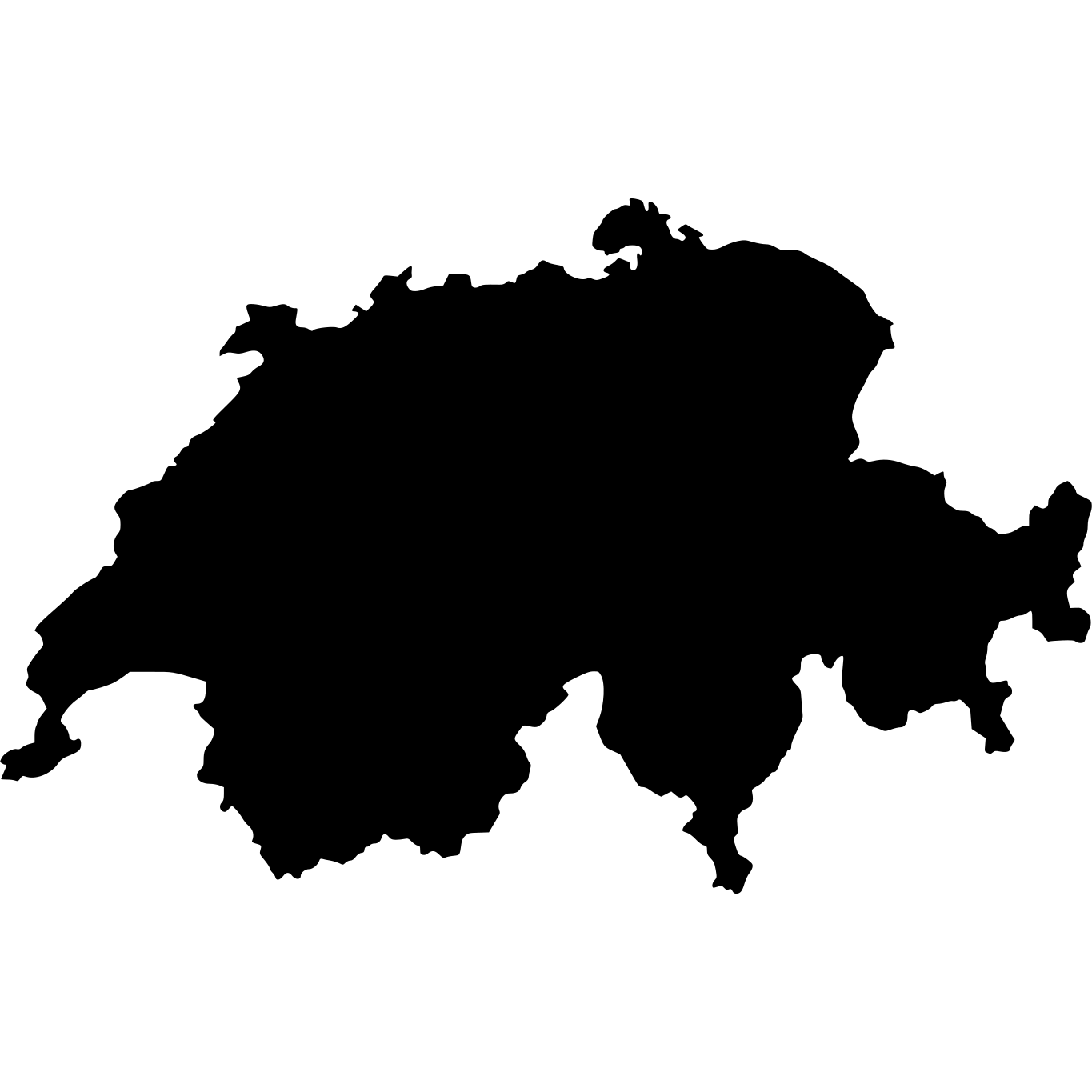
Farfalla is a Swiss brand

We're dedicated to providing you with the most up-to-date and science-backed ingredient info out there.
The data we've presented on this page has been verified by a member of the SkinSort Team.
Read more about us· Updated July 13, 2026 • Added by Rieza


