Dododots Beauty Patch
A facial treatment with 2 ingredients.
This acne treatment is formulated around Hydrocolloid and Melaleuca Alternifolia Leaf Oil to clear breakouts and fade the look of dark spots.
We independently verify ingredients, backed by peer-reviewed research. Suggest an update.
What's inside









Key Ingredients
Benefits
Concerns
Ingredients Explained
Hydrocolloid is not an INCI ingredient. It's a soft, gel-forming material that got its start in hospital wound care.
A typical hydrocolloid layer is coated with a mix of gelatin, pectin, xanthan gum, carrageenan, and Sodium Carboxymethylcellulose (the parts that soak up fluid) into a sticky rubber base, and then pressed into a thin film backing.
When you stick it on an open or "popped" pimple, these polymers pull in the fluid and turn it into a gel. This helps keep the spot moist and creates a barrier against outside bacteria. Plus, there's some UV blocking as well so the spot is less likely to leave a dark mark.
The current research is small but encouraging. A 2006 study found hydrocolloid dressings on acne lesions:
A 2024 manufacturer study in 41 subjects aged 12-35 showed patches significantly improved the appearance of popped pimples by Days 1 and 4, with improvements in smoothness, crusting, redness, size, and dryness.
Another 2025 trial on a related hydrogel patch reported a 35% reduction in lesion size and a 44% improvement in lesion severity by Day 2 versus the control group.
Just remember patches mostly help surface whiteheads; they generally cannot treat blackheads and do not help deeper cystic or persistent hormonal acne. There are a few case reports that link rosin-based tackifier in some dressings to contact dermatitis as well.
Because it is a patch, there's no meaningful "usage percentage".
The adhesive itself is usually 50-70% hydrocolloid powders with the rest as elastomer.
Learn more about HydrocolloidThis ingredient is also known as tea tree oil. It has antioxidant, anti-inflammatory, and antimicrobial properties.
Tea tree oil is a complex lipophilic (fat-loving) oil that contains around 100 compounds with terpinen-4-ol being the most abundant (~40%).
Terpinen-4-ol is responsible for tea tree oil's broad-spectrum antimicrobial activity and makes it a well-researched option for acne.
Clinical studies support 5% tea tree oil as an effective topical treatment for mild to moderate acne. A study with 124 patients compared 5% tea tree oil gel to 5% benzoyl peroxide and both reduced acne (though tea tree oil worked more slowly).
Besides acne, it is also seen in anti-dandruff shampoos and scalp treatments for it's antimicrobial and anti-seborrheic properties.
Safety-wise, the allergic potential of low concentrations on healthy skin is considered low. However, oxidized (old or improperly stored) tea tree oil is a stronger sensitizer.
Irritation can also occur if using the undiluted oil on skin; it's best to use this ingredient as part of a carefully crafted cosmetic formula. This is because regulations require tea tree oil in cosmetics to be stabilized to prevent degradation.
This ingredient has been deemed safe up to 2% in shampoo, 1% in cleansers, and 0.1% in face cream by the EU's Scientific Committee on Consumer Safety (SCCS).
There is some lab evidence that tea tree oil is antifungal against Malassezia, but it is a supportive option at best and not a replacement for proven antifungal treatments.
Learn more about Melaleuca Alternifolia Leaf OilReviews
No written reviews yet. Be the first to review this product.
Recent searches
Search reviews by skin type, ingredient, or keyword.
Where it's from
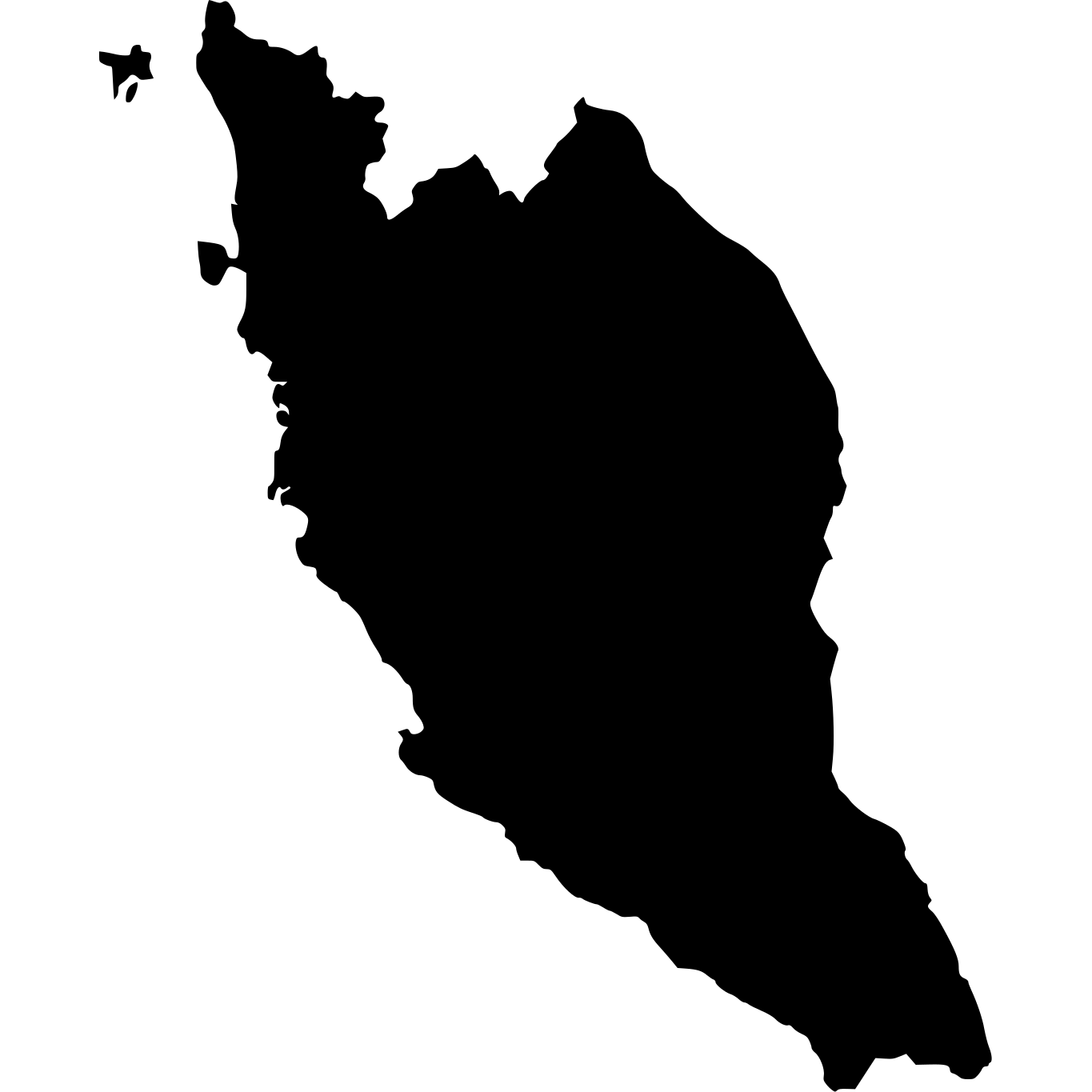
Dododots is a Malaysian brand
Often compared with

We're dedicated to providing you with the most up-to-date and science-backed ingredient info out there.
The data we've presented on this page has been verified by a member of the SkinSort Team.
Read more about us· Updated September 8, 2025 • Added by gcvjhkjvyuhjmn


