Alfaparf Milano Yellow Professional Reparative Shampoo
A shampoo with 31 ingredients, including AHA and vitamin E.
Overview
What it is
Shampoo with 31 ingredients that contains AHA and Vitamin E
Cool Features
It is vegan and cruelty-free
Suited For
It has ingredients that are good for anti aging, dry skin, brightening skin, sensitive skin, oily skin, reducing pores, scar healing, dark spots and better texture
Free From
It doesn't contain any harsh alcohols, common allergens, parabens or silicones
Fun facts
Alfaparf Milano is from Italy.
We independently verify ingredients and our claims are backed by peer-reviewed research. Does this product need an update? Let us know.
What's inside
Ingredients List
Water
Skin ConditioningSodium Laureth Sulfate
Cleansing

Cocamidopropyl Betaine
Cleansing

Phenoxyethanol
Preservative
Parfum
Masking
Polyquaternium-10
Sodium Chloride
Masking
Glycol Distearate
Emollient
Cocamide Mea
EmulsifyingPolyquaternium-7
Sodium Benzoate
Masking
Ethylhexylglycerin
Skin ConditioningGuar Hydroxypropyltrimonium Chloride
Skin ConditioningLaureth-2
CleansingPEG/PPG-120/10 Trimethylolpropane Trioleate
Lactic Acid
Buffering







Hydrolyzed Rice Protein
Skin ConditioningAloe Barbadensis Leaf Juice
Skin Conditioning


Sodium PCA
Humectant
Arginine
Masking
Proline
Skin ConditioningHelianthus Annuus Seed Oil
Emollient
Theobroma Cacao Seed Butter
Emollient
Theobroma Grandiflorum Seed Butter
Skin Conditioning
Citric Acid
Buffering
Hydrolyzed Wheat Protein
Skin ConditioningPropanediol
Solvent
Hydrolyzed Sweet Almond Protein
Skin ConditioningEthylhexyl Methoxycinnamate
UV Absorber


Potassium Sorbate
Preservative
Tocopherol
Antioxidant

Water, Sodium Laureth Sulfate, Cocamidopropyl Betaine, Phenoxyethanol, Parfum, Polyquaternium-10, Sodium Chloride, Glycol Distearate, Cocamide Mea, Polyquaternium-7, Sodium Benzoate, Ethylhexylglycerin, Guar Hydroxypropyltrimonium Chloride, Laureth-2, PEG/PPG-120/10 Trimethylolpropane Trioleate, Lactic Acid, Hydrolyzed Rice Protein, Aloe Barbadensis Leaf Juice, Sodium PCA, Arginine, Proline, Helianthus Annuus Seed Oil, Theobroma Cacao Seed Butter, Theobroma Grandiflorum Seed Butter, Citric Acid, Hydrolyzed Wheat Protein, Propanediol, Hydrolyzed Sweet Almond Protein, Ethylhexyl Methoxycinnamate, Potassium Sorbate, Tocopherol
Key Ingredients
Benefits
Concerns
Ingredients Explained
Water. It's the most common cosmetic ingredient of all. You'll usually see it at the top of ingredient lists, meaning that it makes up the largest part of the product.
So why is it so popular? Water most often acts as a solvent - this means that it helps dissolve other ingredients into the formulation.
You'll also recognize water as that liquid we all need to stay alive. If you see this, drink a glass of water. Stay hydrated!
Learn more about WaterSodium Laureth Sulfate (SLES) is a foaming, cleansing, and emulsifying ingredient. It is created from palm kernel oil or coconut oil. SLES is not the same as sodium lauryl sulfate. It is much milder and less likely to irritate.
SLES helps create foam in personal products. It also prevents ingredients from separating, helping to elongate the shelf life.
Sodium Laureth Sulfate is a type of sulfate. It can be drying. We recommend speaking with a professional about using this ingredient if you have concerns.
Learn more about Sodium Laureth SulfateCocamidopropyl Betaine is a fatty acid created by mixing similar compounds in coconut oil and dimethylaminopropylamine, a compound with two amino groups.
This ingredient is a surfactant and cleanser. It helps gather the dirt, pollutants, and other impurities in your skin to be washed away. It also helps thicken a product and make the texture more creamy.
Being created from coconut oil means Cocamidopropyl Betaine is hydrating for the skin.
While Cocamidopropyl Betaine was believed to be an allergen, a study from 2012 disproved this. It found two compounds in unpure Cocamidopropyl Betaine to be the irritants: aminoamide and 3-dimethylaminopropylamine. High-grade and pure Cocamidopropyl Betaine did not induce allergic reactions during this study.
Learn more about Cocamidopropyl BetainePhenoxyethanol is a preservative that has germicide, antimicrobial, and aromatic properties. Studies show that phenoxyethanol can prevent microbial growth. By itself, it has a scent that is similar to that of a rose.
It's often used in formulations along with Caprylyl Glycol to preserve the shelf life of products.
Parfum is a catch-all term for an ingredient or more that is used to give a scent to products.
Also called "fragrance", this ingredient can be a blend of hundreds of chemicals or plant oils. This means every product with "fragrance" or "parfum" in the ingredients list is a different mixture.
For instance, Habanolide is a proprietary trade name for a specific aroma chemical. When used as a fragrance ingredient in cosmetics, most aroma chemicals fall under the broad labeling category of “FRAGRANCE” or “PARFUM” according to EU and US regulations.
The term 'parfum' or 'fragrance' is not regulated in many countries. In many cases, it is up to the brand to define this term.
For instance, many brands choose to label themselves as "fragrance-free" because they are not using synthetic fragrances. However, their products may still contain ingredients such as essential oils that are considered a fragrance by INCI standards.
One example is Calendula flower extract. Calendula is an essential oil that still imparts a scent or 'fragrance'.
Depending on the blend, the ingredients in the mixture can cause allergies and sensitivities on the skin. Some ingredients that are known EU allergens include linalool and citronellol.
Parfum can also be used to mask or cover an unpleasant scent.
The bottom line is: not all fragrances/parfum/ingredients are created equally. If you are worried about fragrances, we recommend taking a closer look at an ingredient. And of course, we always recommend speaking with a professional.
Learn more about ParfumPolyquaternium-10 is an ammonium salt of hydroxyethylcellulose. It is a white and granular powder used as a film-former and anti-static agent.
This ingredient is commonly found in hair conditioning products. According to a manufacturer, its positive charge makes it great for absorbing hair proteins. The manufacturer also states this ingredient helps with curl retention.
For haircare friends: this ingredient is not a silicone.
Learn more about Polyquaternium-10Chances are, you eat sodium chloride every day. Sodium Chloride is also known as table salt.
This ingredient has many purposes in skincare: thickener, emulsifier, and exfoliator.
You'll most likely find this ingredient in cleansers where it is used to create a gel-like texture. As an emulsifier, it also prevents ingredients from separating.
There is much debate on whether this ingredient is comedogenic. The short answer - comedogenic ratings don't tell the whole story. Learn more about comegodenic ratings here.
The concensus about this ingredient causing acne seems to be divided. Research is needed to understand if this ingredient does cause acne.
Scrubs may use salt as the primary exfoliating ingredient.
Learn more about Sodium ChlorideGlycol Distearate serves as a pearlizing or opacifying agent in cosmetic products.
It's often included in cleansers and haircare products to give them a lustrous or shimmering appearance.
It is derived from stearic acid, a natural fatty acid commonly found in vegetable oils and animal fats.
Glycol Distearate isn't fungal acne safe.
Learn more about Glycol DistearateWe don't have a description for Cocamide Mea yet.
Polyquaternium-7 is a light to clear colored liquid. It is commonly found in haircare products for its film-forming and anti-static properties.
According to a manufacturer, it is a non-paraben and specially developed for negatively charged surfactant systems. This makes it a great hairstyle holder and helps to improve wet hair detangling without adding buildup.
Sodium Benzoate is a preservative. It's used in both cosmetic and food products to inhibit the growth of mold and bacteria. It is typically produced synthetically.
Both the US FDA and EU Health Committee have approved the use of sodium benzoate. In the US, levels of 0.1% (of the total product) are allowed.
Sodium benzoate works as a preservative by inhibiting the growth of bacteria inside of cells. It prevents the cell from fermenting a type of sugar using an enzyme called phosphofructokinase.
It is the salt of benzoic acid. Foods containing sodium benzoate include soda, salad dressings, condiments, fruit juices, wines, and snack foods.
Studies for using ascorbic acid and sodium benzoate in cosmetics are lacking, especially in skincare routines with multiple steps.
We always recommend speaking with a professional, such as a dermatologist, if you have any concerns.
Learn more about Sodium BenzoateEthylhexylglycerin (we can't pronounce this either) is commonly used as a preservative and skin softener. It is derived from glyceryl.
You might see Ethylhexylglycerin often paired with other preservatives such as phenoxyethanol. Ethylhexylglycerin has been found to increase the effectiveness of these other preservatives.
This ingredient is derived from guar gum.
It is a conditioning ingredient, meaning it helps soften skin and hair.
We don't have a description for Laureth-2 yet.
PEG/PPG-120/10 Trimethylolpropane Trioleate isn't fungal acne safe.
Lactic Acid is another well-loved alpha hydroxy acid (AHA). It is gentler than glycolic acid but still highly effective.
Its main role is to exfoliate the surface of the skin by loosening the “glue” that holds dead skin cells together. Shedding those old cells leads to smoother, softer, and more even-toned skin.
Because lactic acid molecules are larger than glycolic acid, they don’t penetrate as deeply. This means they’re less likely to sting or irritate, making it a great choice for beginners or those with sensitive skin.
Like glycolic acid, it can:
Lactic acid also acts as a humectant (like hyaluronic acid). It can draw water into the skin to improve hydration and also plays a role in the skin's natural moisturizing factor (NMF) in the form of sodium lactate.
Studies show it can boost ceramide production to strengthen the skin barrier and even help balance the skin’s microbiome.
To get results, choose products with a pH between 3-4.
Lower strengths (5-12%) focus on surface exfoliation; higher strengths (12% and up) can reach deeper in the dermis (deeper, supportive layer) to improve skin texture and firmness over time.
Though it was originally derived from milk, most modern lactic acid used in skincare is vegan. It is made through non-dairy fermentation to create a bio-identical and stable form suitable for all formulations.
When lactic acid shows up near the end of an ingredient list, it usually means the brand added just a tiny amount to adjust the product’s pH.
Legend has it that Cleopatra used to bathe in sour milk to help reduce wrinkles.
Lactic acid is truly a gentle multitasker: it exfoliates, hydrates, strengthens, and brightens. It's a great ingredient for giving your skin a smooth, glowing, and healthy look without the harshness of stronger acids.
Read more about some other popular AHA's here:
Learn more about Lactic AcidHydrolyzed Rice Protein is protein extracted from rice. This ingredient is rich in antioxidants and peptides.
Studies show this ingredient may help with blocking the melanin creation process when skin is exposed to UV.
Aloe Barbadensis Leaf Juice comes from leaves of the aloe plant. Aloe Barbadensis Leaf Juice is best known for helping to soothe sunburns. It is also anti-inflammatory, moisturizing, antiseptic, and can help heal wounds.
Aloe is packed with good stuff including Vitamins A, C, and E. These vitamins are antioxidants, which help fight free-radicals and the damage they may cause. Free-radicals are molecules that may damage your skin cells, such as pollution.
Aloe Barbadensis Leaf Juice also contains sugars. These sugars come in the form of monosaccharides and polysaccharides, folic acid, and choline. These sugars are able to help bind moisture to skin.
It also contains minerals such as calcium, 12 anthraquinones, fatty acids, amino acids, and Vitamin B12.
Learn more about Aloe Barbadensis Leaf JuiceSodium PCA is the sodium salt of pyroglutamic acid. It is naturally occurring in our skin's natural moisturizing factors where it works to maintain hydration.
The PCA stands for pyrrolidone carboxylic acid, a natural amino acid derivative.
This ingredient has skin conditioning, anti-inflammatory, and humectant properties. Humectants help hydrate your skin by drawing moisture from the air. This helps keep your skin moisturized.
Learn more about Sodium PCAArginine is an amino acid that is important for human development. Your body uses is it to produce hair keratin and skin collagen.
As a cosmetic ingredient, Arginine has antioxidant properties and can also help repair damaged skin. This ingredient is derived either synthetically or from animals.
Arginine isn't fungal acne safe when used in the presence of other lipids (fats, fatty acids, oils, esters, etc). Oils and fats occur naturally within the skin, so take caution when using Arginine if you're prone to fungal acne.
Learn more about ArginineProline is an amino-acid. It helps moisturize the skin and plays an important role in creating proteins.
Our skin uses proline as one of the building blocks for producing collagen.
In medicine, proline is used as an osmoprotectant. This means it helps prevent oxidative degradation in other drugs.
Our bodies are able to produce proline naturally, but certain conditions may inhibit this production. In that case, proline can be obtained from eating egg whites, soy protein, dairy products, asparagus, mushrooms, and seaweed.
Learn more about ProlineHelianthus Annuus Seed Oil is the oil derived from the seeds of a Sunflower. Sunflower seed oil is non-fragrant. It is an emollient, meaning it helps to soften the skin.
Sunflower seed oil contains many fatty acids. The fatty acids found in sunflower seeds include (from highest amount to least): linoleic acid, myristic acid, palmitic acid, stearic acid, arachidic acid, oleic acid, and linolenic acid.
These fatty acids help the skin create ceramides. Ceramides play a role in repairing the skin barrier.
Helianthus Annuus Seed Oil helps moisturize the skin. This in turn helps the skin look more rejuvenated and smoother.
Sunflowers are rich in vitamin E.
Historians believe Indigenous cultures of North America domesticated sunflowers before corn. Thus they relied on sunflower oil for a variety of uses. One such use is moisturizing skin and hair.
Sunflower seed oil may not be fungal acne safe. We recommend speaking with a professional if you have any concerns.
Learn more about Helianthus Annuus Seed OilTheobroma Cacao Seed Butter comes from the Theobroma cacoa, or Cacao tree. Cacao trees are native to tropical landscapes.
Like other plant butters, Cacao seed butter is an emollient. Emollients help soothe and soften your skin. By creating a barrier to trap moisture in, emollients help keep your skin hydrated.
Cacao seed butter contains antioxidants known as polyphenols. Antioxidants help fight free-radical molecules by stabilizing them. Unstable free-radicals may cause damage to your skin cells. Antioxidants may help with anti-aging.
Theobroma Cacao Seed Butter can be bad for acne prone skin.
Learn more about Theobroma Cacao Seed ButterTheobroma Grandiflorum Seed Butter isn't fungal acne safe.
Citric Acid is an alpha hydroxy acid (AHA) naturally found in citrus fruits like oranges, lemons, and limes.
Like other AHAs, citric acid can exfoliate skin by breaking down the bonds that hold dead skin cells together. This helps reveal smoother and brighter skin underneath.
However, this exfoliating effect only happens at high concentrations (20%) which can be hard to find in cosmetic products.
Due to this, citric acid is usually included in small amounts as a pH adjuster. This helps keep products slightly more acidic and compatible with skin's natural pH.
In skincare formulas, citric acid can:
While it can provide some skin benefits, research shows lactic acid and glycolic acid are generally more effective and less irritating exfoliants.
Most citric acid used in skincare today is made by fermenting sugars (usually from molasses). This synthetic version is identical to the natural citrus form but easier to stabilize and use in formulations.
Read more about some other popular AHA's here:
Learn more about Citric AcidWe don't have a description for Hydrolyzed Wheat Protein yet.
Propanediol is an all-star ingredient. It softens, hydrates, and smooths the skin.
It’s often used to:
Propanediol is not likely to cause sensitivity and considered safe to use. It is derived from corn or petroleum with a clear color and no scent.
Learn more about PropanediolWe don't have a description for Hydrolyzed Sweet Almond Protein yet.
Ethylhexyl Methoxycinnamate is an organic compound that provides UVB protection. It often goes by the more common name of octinoxate. It is created from methoxycinnamic acid and 2-ethylhexanol.
Ethylhexyl Methoxycinnamate absorbs UVB rays with wavelengths between 280-320 nm. UV absorbers protect your skin by using chemical reactions to convert UV rays into heat and energy.
UVB (290-320 nm) rays emit more energy than UVA rays. They are capable of damaging DNA, causing sunburns and are thought to be linked to skin cancer.
The state of Hawaii has banned sunscreens containing octinoxate due to its potential impact on coral reefs. More research is needed to bridge gaps in this research. The European Union allows higher levels of octinoxate in sunscreens than the US and Australia.
Ethylhexyl Methoxycinnamate is oil soluble. It is not stable and may lose efficacy when exposed to sunlight.
Learn more about Ethylhexyl MethoxycinnamatePotassium Sorbate is a preservative used to prevent yeast and mold in products. It is commonly found in both cosmetic and food products.
This ingredient comes from potassium salt derived from sorbic acid. Sorbic acid is a natural antibiotic and effective against fungus.
Both potassium sorbate and sorbic acid can be found in baked goods, cheeses, dried meats, dried fruit, ice cream, pickles, wine, yogurt, and more.
You'll often find this ingredient used with other preservatives.
Learn more about Potassium SorbateTocopherol (also known as Vitamin E) is a common antioxidant used to help protect the skin from free-radicals and strengthen the skin barrier. It's also fat soluble - this means our skin is great at absorbing it.
Vitamin E also helps keep your natural skin lipids healthy. Your lipid skin barrier naturally consists of lipids, ceramides, and fatty acids. Vitamin E offers extra protection for your skin’s lipid barrier, keeping your skin healthy and nourished.
Another benefit is a bit of UV protection. Vitamin E helps reduce the damage caused by UVB rays. (It should not replace your sunscreen). Combining it with Vitamin C can decrease sunburned cells and hyperpigmentation after UV exposure.
You might have noticed Vitamin E + C often paired together. This is because it is great at stabilizing Vitamin C. Using the two together helps increase the effectiveness of both ingredients.
There are often claims that Vitamin E can reduce/prevent scarring, but these claims haven't been confirmed by scientific research.
Learn more about TocopherolReviews
No written reviews yet. Be the first to review this product.
Where it's from
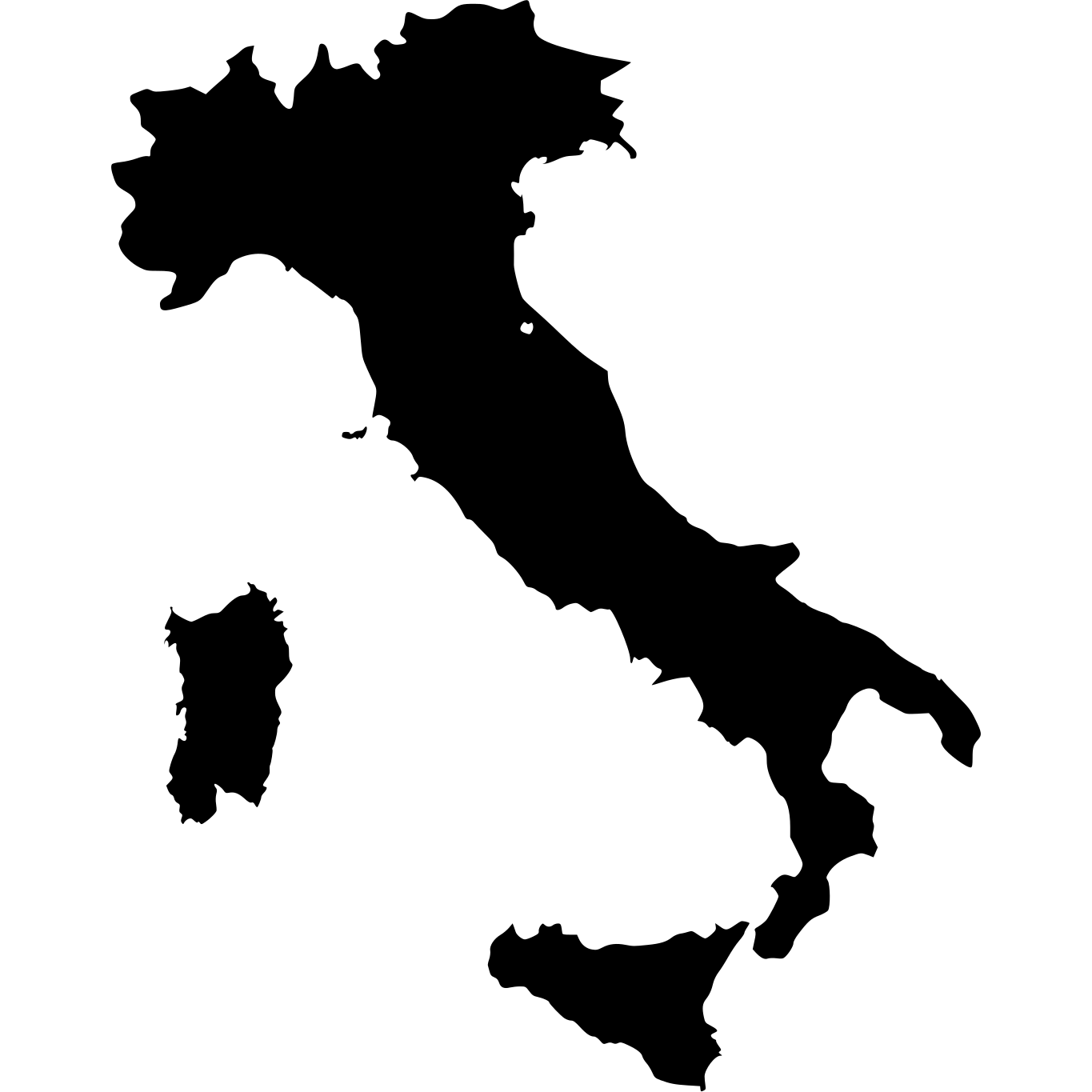
Alfaparf Milano is a Italian brand

We're dedicated to providing you with the most up-to-date and science-backed ingredient info out there.
The data we've presented on this page has been verified by a member of the SkinSort Team.
Read more about us· Published December 7, 2025 • Added by BlackCat808

